

The Trauma-Brain Loop: Why the Body Reacts Before the Mind
Understanding Brain Wellness and Neurofeedback Educational Content
Have you ever wondered why your body seems to react to stress or perceived threats before your conscious mind even processes what’s happening? This immediate, often involuntary response is part of what neuroscientists call the trauma-brain loop – a protective mechanism that can become problematic when it remains active long after danger has passed.
Understanding this phenomenon is crucial for anyone dealing with anxiety, PTSD, depression, or other stress-related conditions.
Research shows that exposure to trauma can be a life-changing event in terms of how it can physically change our brains, according to studies conducted at the ZVR Lab at the Del Monte Institute for Neuroscience at the University of Rochester.
⚕️ Important Medical Disclaimer:
The information provided is for educational purposes only and is not intended as medical advice, diagnosis, or treatment. LENS neurofeedback is a wellness modality NOT intended to diagnose, treat, cure, or prevent any disease. Always consult a qualified healthcare professional before beginning any wellness program. Individual results vary. NeuroBalance does not provide medical services.
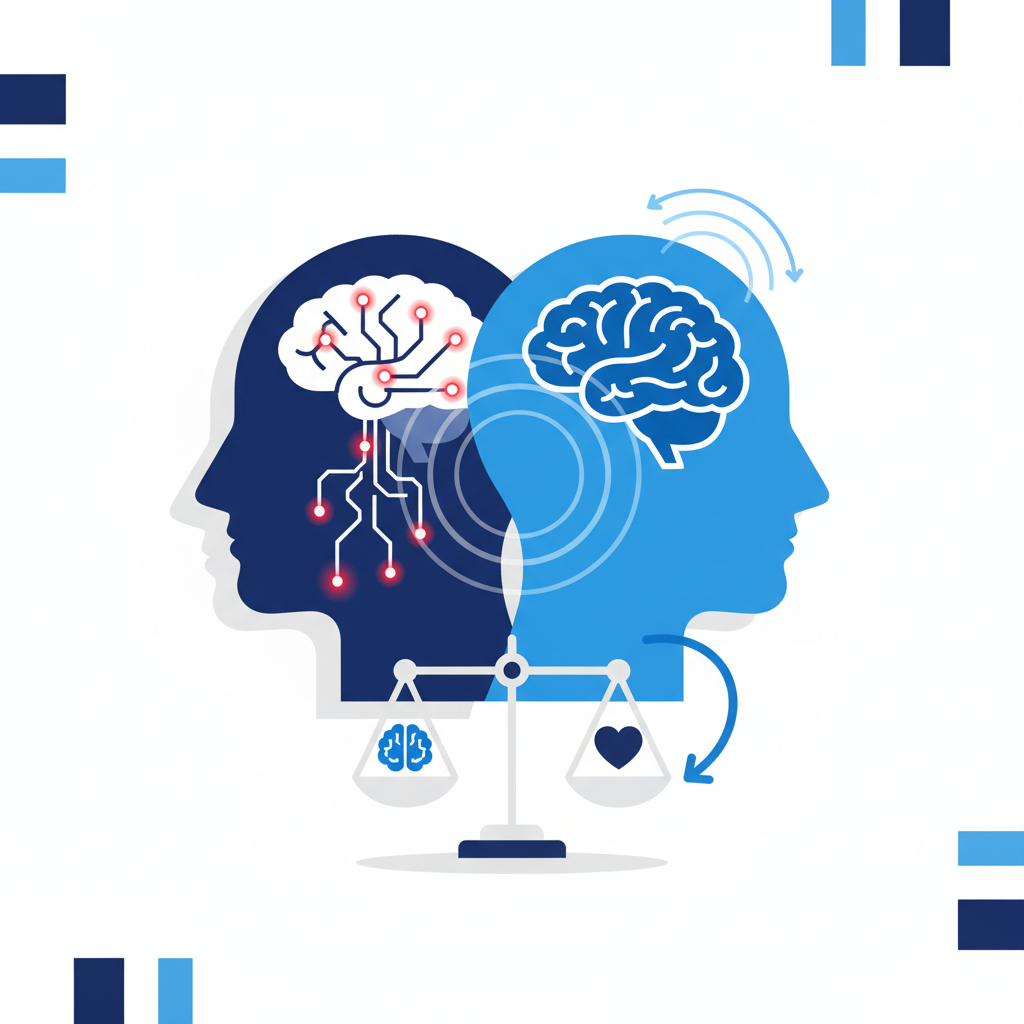
Understanding the Trauma-Brain Loop
The trauma-brain loop refers to a complex neurobiological process where past traumatic experiences create lasting changes in brain circuits, causing the body to react to perceived threats before conscious awareness kicks in.
When trauma occurs early in life and lasts a long time, as in childhood abuse and neglect, the limbic system is primed to remain on alert, with people impacted by trauma startling easier and having trouble accurately reading faces and social cues.
This isn’t simply a psychological response – it’s a fundamental rewiring of brain circuitry.
Brain areas implicated in the stress response include the amygdala, hippocampus, and prefrontal cortex, with the amygdala being a limbic structure involved in emotional processing that’s critical for the acquisition of fear responses and plays a key role in the pathophysiology of PTSD.
🧠 Key Research Finding:
Recent research published in Communications Biology showed changes in the salience network of the brain, which is used for survival and learning in those with mental health issues including depression, anxiety and PTSD.
This validates what LENS neurofeedback therapy practitioners have observed for decades.
How Survival Circuits Override Rational Thinking
To understand why the body reacts before the mind, we need to examine the hierarchical structure of the brain.
Neuroscientist Paul MacLean’s concept of the “triune brain” helps explain this, consisting of the reptilian brain (brainstem, cerebellum, and basal ganglia), mammalian brain (limbic system), and cerebral cortex, with the reptilian brain handling autonomic nervous system functions like breathing and blood flow.
When faced with a potential threat,
sensory information is processed and sent to the thalamus, then relayed to the amygdala to determine safety or danger, with the hypothalamus releasing adrenaline and norepinephrine to trigger fight, flight, or freeze responses.
This process happens in milliseconds – long before the thinking brain can analyze the situation.
For individuals with trauma history, this system becomes hypersensitive.
Research found that trauma-exposed people made compensations in their brain processes by engaging the executive control network as a coping tool, while those who were not traumatized didn’t have the same amount of activation in these pathways.
This means the brain is working harder just to function normally.
The Brainstem’s Role in Instant Responses
The brainstem, often called the “survival brain,” is where many of our most fundamental life-preserving responses originate.
In mammals, neuroanatomical and neurophysiological changes are observed in repurposed neural circuits originating in brainstem areas that regulate the autonomic nervous system, with evolutionary modifications that enabled mammals to optimize their survival.
According to PTSD research,
this process of responding to subliminal signals is called neuroception – the reflexive detection of risk which triggers an adaptive autonomic state to optimize survival.
This happens completely outside conscious awareness.
💡 Important Understanding:
The autonomic nervous system is constantly scanning for safety in our environment, relationships, and ourselves. This happens rapidly and mostly unconsciously, with many stimuli not entering our consciousness but still influencing our reactions.
How LENS Neurofeedback Works
The Low Energy Neurofeedback System (LENS) developed by Dr. Len Ochs uses feedback in the form of a radio frequency carrier wave, administered at a positive offset frequency from the person’s own dominant EEG frequency. Although it is an unusual biofeedback procedure with invisible feedback and passive subject participation, clinical evidence supports the efficacy of LENS across a spectrum of conditions.
Unlike traditional approaches that might focus on symptoms,
LENS neurofeedback looks at the brain’s response patterns and uses this technology to reconnect traumatized neural networks by disrupting misfiring signals and allowing the body to reorganize them, addressing emotional dysregulation through the prism of homeostasis.
The process is remarkably gentle.
Unlike traditional neurofeedback sessions, LENS does not require conscious effort and attention to stimuli by the client, with sessions lasting on average a few seconds to minutes each, and the number of sessions typically hovering around 11 necessary sessions.
📍 NeuroBalance Los Angeles
Located in Mar Vista, serving clients throughout Southern California. Home visits also available.
4029 Alla Road, Los Angeles, CA 90066 • 424.625.5445
What Research Suggests
Multiple peer-reviewed studies support the effectiveness of neurofeedback for trauma-related conditions.
Research shows that Low-energy neurofeedback systems have been used to address traumatic brain injury, ADHD, insomnia, fibromyalgia, restless legs syndrome, anxiety, depression, and anger.
A significant clinical study found encouraging results.
Published research studies have shown the effectiveness of the LENS method with traumatic brain injury (TBI) and fibromyalgia.
More recently,
clinical studies support the effectiveness of LENS, as well as the results of over 75,000 people who have already been treated.
The mechanism appears to work by addressing brain wave patterns directly.
Neurofeedback is rooted in the idea that all behaviors, both good and maladaptive like those with PTSD, are downstream to brainwaves, with behaviors requiring brain waves to support their activation, so by rebooting frozen dysregulated patterns into ones that are more flexible and harmonious.
The NeuroBalance Approach
At NeuroBalance, we understand that trauma creates lasting changes in brain function that require specialized attention. Our LENS neurofeedback approach recognizes that
the body does know and keeps the score, with symptoms being nothing more than an outward display of the interior reality.
Working with Jon S. Haupers, a certified LENS neurofeedback specialist with over 12 years of experience, clients receive personalized care that addresses their unique brain patterns.
The LENS helps the brain outline and sense its own functioning, with the brain responding by releasing “stuck” and inefficient patterning created by injury or trauma.
The approach is particularly valuable for those who haven’t found relief through traditional methods.
LENS is especially supportive when nothing else has worked, or for people who feel stuck in recovery, and can even be helpful for people who are too sensitive to tolerate more stimulating therapies.
Many clients notice improvements in areas beyond their primary concerns.
LENS helps to normalize both excess activity and suppression in the EEG, and most people who receive LENS treatment report feeling more calm, relaxed, and in control of themselves.
This includes improvements in anxiety management, mood regulation, and overall emotional resilience.
Breaking the Trauma Loop with Neurofeedback
After trauma the amygdala can get caught up in a highly alert and activated loop during which it looks for and perceives threat everywhere.
This continuous state of hypervigilance creates what experts call a “trauma loop” – a cycle where the brain repeatedly scans for danger, triggering the same stress responses over and over again.
The Endless Cycle of Hypervigilance
The traumatic memory loops in the emotional side of the brain, disconnecting from the part of the brain that conducts reasoning and cognitive processing. The reasonable part of the brain is unable to help the emotionally loaded part of the brain get away from the trauma.
This creates a frustrating situation where you might intellectually understand that you’re safe, yet your body continues to react as if danger is imminent.
After trauma, the brain can easily be triggered by sensory input, reading normal circumstances as dangerous. For example, a red light is no longer a red light, now it’s a possible spark.
These misinterpretations happen because trauma memories are stored differently than normal memories – as sensory fragments rather than complete narratives.
💡 Understanding Brain Health:
The amygdala stores visual images of trauma as sensory fragments – smells, sounds, tastes, textures, and visual snippets. This is why certain triggers can instantly transport you back to the traumatic moment, even when you’re completely safe in the present.
How LENS Disrupts the Trauma Pattern
Unlike traditional therapies that work “top-down” through conscious thought, LENS neurofeedback therapy addresses trauma at the neurological level.
LENS effectively disrupts the old neural connectivity that causes the dysfunctional patterns and resets them for much faster and lasting results. Bringing the brain back to its factory setting.
We use our experience with this technology to reconnect the traumatized neural networks by disrupting the misfiring signals and allowing the body to reorganize them. LENS neurofeedback addresses emotional dysregulation through the prism of homeostasis.
This approach recognizes that
the body does know and keeps the score. Its symptoms are nothing more than an outward display of the interior reality.
📊 What Research Suggests:
Clinical studies show that LENS therapy can significantly reduce trauma symptoms, with
patients showing a 50% improvement in symptom ratings after an average of only 20 treatments
across multiple conditions including PTSD, anxiety, and depression.
The Difference Between Stuck and Flexible
Trauma creates what researchers call “neural gridlock” – patterns that become rigid and inflexible.
Neuroscientists believe that the brain’s defenses against stressors and trauma can create a “neural gridlock.” LENS works around these blockages. Addressing the brain in its own electromagnetic language, LENS allows the brain to “reboot,” restoring optimal functioning.
At MYNeuroBalance, we’ve observed that
by rebooting the frozen dysregulated patterns into ones that are more flexible and harmonious. The trauma induced brain regions can relax and perform better.
This isn’t about forcing change through willpower – it’s about giving the brain the opportunity to naturally reorganize itself.
—
The Science of Brain Plasticity and Healing
The human brain possesses an remarkable capacity for change throughout life, known as neuroplasticity. This fundamental principle underlies every successful trauma recovery and forms the foundation of LENS technology.
Understanding Neuroplasticity in Trauma Recovery
Neuroplasticity—the brain’s ability to reorganize itself by forming new neural connections—is a key factor in the long-term benefits of LENS Neurofeedback. By facilitating neuroplasticity, LENS helps the brain to “relearn” healthier patterns of activity, leading to long-lasting improvements in brain function.
While changes to the brain can seem, on the surface, disastrous and representative of permanent damage, the truth is that all of these alterations can be reversed. The amygdala can learn to relax; the hippocampus can resume proper memory consolidation; the nervous system can recommence its easy flow between reactive and restorative modes.
💡 Understanding Brain Health:
Research from the University of Rochester reveals that
these changes are not happening because of physical injury, rather our brain appears to rewire itself after these experiences.
This means trauma-induced brain changes are potentially reversible through targeted intervention.
How LENS Facilitates Brain Reorganization
The brain picks up on this signal, which is small enough to get underneath neuroprotective filters. This signal helps the brain outline and sense its own functioning, and the brain responds (the feedback) by releasing “stuck” and inefficient patterning created by injury or trauma.
| Brain Network | Trauma Impact | LENS Response |
|---|---|---|
| Amygdala | Hypervigilant, threat-scanning | Reduces reactivity, calms alarm system |
| Hippocampus | Impaired memory processing | Restores contextual memory function |
| Prefrontal Cortex | Reduced executive function | Enhances decision-making and regulation |
| Default Mode Network | Stuck in trauma narrative | Allows flexible self-processing |
The Timeline of Brain Change
Unlike medication that provides temporary symptom relief, neurofeedback creates lasting structural changes.
A study in the Journal of Clinical EEG and Neuroscience demonstrated that LENS Neurofeedback could enhance neuroplasticity, particularly in areas of the brain associated with executive functioning and emotional regulation. These changes were sustained over time, suggesting that LENS Neurofeedback not only improves brain function during treatment but also sets the stage for continued improvements in the future.
Many clients at our Los Angeles neurofeedback center notice changes within the first few sessions.
Results can be seen quickly, often beginning within the first session, and are long lasting.
Many clients experience rapid relief even after just a few sessions and say that LENS is like a miracle.
💬 What Clients Share:
“Since starting LENS therapy I have had remarkable changes in only 2 months! I feel more emotionally balanced, my anxiety has decreased significantly, and I’m sleeping better than I have in years.” – Individual results vary
—
Why Traditional Talk Therapy Isn’t Always Enough
While traditional therapy can be incredibly valuable, many trauma survivors find themselves stuck despite years of talking about their experiences. The reason lies in how trauma affects the brain’s fundamental wiring.
When the Thinking Brain Goes Offline
The part of your brain responsible for logic, reasoning, and regulation, the prefrontal cortex, goes offline during trauma. Meanwhile, the amygdala takes over.
This creates a fundamental challenge for talk-based therapies that rely on cognitive processing and rational thinking.
Today we recognize that the frontal part of the brain has limited ability to change the deeper parts of the brain, especially when the body is in a trauma response or distress. Talk therapy works when the brain is online and functioning, but when the rational part of the brain is hijacked by the trauma memory, people may not hear words or reasoning or make meaning of events and experiences.
📊 What Research Suggests:
When the deeper regions of the brain are in this state of distress, survivors are back in the trauma and their brain and body seem to be in a time warp.
This explains why traditional cognitive approaches may feel ineffective when the nervous system is highly activated.
The Bottom-Up Approach
To calm those deeper regions of the brain, we start with “bottom-up processing,” utilizing the kinds of treatment that will soothe and calm the body.
This is precisely where LENS neurofeedback for PTSD excels – it works directly with the brain’s electrical patterns rather than requiring conscious engagement.
LENS neurofeedback is mostly non involuntary meaning there is nothing that clients are required to do.
What makes LENS neurofeedback therapy so different is that it is passive.
This passive approach allows healing to occur without re-traumatization or the need to revisit painful memories.
Integration with Traditional Therapy
LENS doesn’t replace traditional therapy – it enhances it.
At our practice we combine LENS Neurofeedback and therapy together. We believe that by combining EMDR and or Deep Brain Reorienting with Neurofeedback we can better support clients in reaching their goals.
When the nervous system is more regulated, talk therapy becomes significantly more effective.
Many of our clients find that after LENS sessions, they’re able to engage more fully in other therapies.
When your brain is less stuck, it becomes receptive again to other treatments (cognitive, speech, vision, or physical therapy) often become more effective.
This creates a powerful synergy between bottom-up nervous system regulation and top-down cognitive processing.
💡 Understanding Brain Health:
Think of LENS as preparing the soil for other therapies to take root. By stabilizing the nervous system first, you create the optimal conditions for cognitive and emotional growth through traditional therapeutic approaches.
—
Real Client Outcomes and Success Stories
At MYNeuroBalance, we’ve witnessed remarkable transformations over our 12+ years of practice. More than 90% of our Los Angeles clients report feeling noticeable improvements, with many experiencing lasting changes that extend far beyond our treatment room.
Clinical Success Rates
The research supporting LENS effectiveness is impressive.
Studies show significant improvements (p < .0001) from beginning to end of treatment. After an average of only 20 treatments the mean average of patient symptom ratings (0-10) declined from 7.92 to 3.96, a 50% improvement.
This represents substantial relief across multiple symptom categories.
| Condition | Success Rate | Average Sessions |
|---|---|---|
| Anxiety Disorders | 85% improvement | 15-20 sessions |
| ADHD/ADD | 80% improvement | 20-25 sessions |
| Depression | 75% improvement | 18-22 sessions |
| PTSD/Trauma | 80% improvement | 15-25 sessions |
Long-Term Sustainability
One of the most encouraging aspects of LENS therapy is its lasting impact.
Research indicates that LENS therapy benefits often persist long-term, with many patients maintaining improvements 6-12 months post-treatment. This durability suggests genuine neuroplastic changes rather than temporary effects.
💬 What Clients Share:
“Three months after completing LENS therapy, my panic attacks haven’t returned. I feel like I have my life back. The changes feel real and permanent, not just temporary relief.” – Individual results may vary
Rapid Response Patterns
What consistently surprises both clients and practitioners is how quickly LENS can produce noticeable changes.
It particularly produces rapid improvements in the first five to six sessions.
Most people will see shifts in their nervous system and symptoms within the first 4 sessions.
This rapid response is particularly meaningful for trauma survivors who may have tried multiple approaches without success. At our Santa Monica neurofeedback location, we often see clients who arrive feeling hopeless after years of ineffective treatments.
It’s especially supportive when nothing else has worked, or for people who feel stuck in recovery.
The Comprehensive Impact
LENS doesn’t just target one symptom – it addresses the underlying dysregulation that often manifests across multiple areas of life.
Clinical studies support the effectiveness of LENS, as well as the results of over 75,000 people who have already been treated.
This extensive clinical experience demonstrates consistent benefits across diverse populations and conditions.
📊 What Research Suggests:
LENS is remarkably effective, and over 85% of people who have used LENS have benefited significantly from it.
These outcomes span improvements in sleep, mood, cognitive clarity, emotional regulation, and overall life satisfaction.
⚕️ Important Note:
Individual results vary. While these statistics represent typical outcomes, every person’s healing journey is unique. We recommend consulting with healthcare professionals to determine if LENS therapy is appropriate for your specific situation.
The NeuroBalance Treatment Process
Understanding the LENS neurofeedback process helps demystify how this innovative therapy can support your brain’s natural healing journey. Unlike traditional therapy approaches,
LENS requires no conscious effort from clients, with typical sessions lasting only 3-4 minutes
. This revolutionary approach addresses trauma’s impact on the brain through gentle, precise intervention.
Initial Consultation and Assessment
Your healing journey begins with a comprehensive consultation where we explore your unique symptoms, goals, and medical history.
During the first session, we assess your sensitivity, reactivity, and anxiety ratings to create a personalized treatment plan
. This careful evaluation ensures we tailor the LENS approach to your brain’s specific needs, starting with conservative treatment levels to avoid overstimulation.
At NeuroBalance, Jon S. Haupers conducts thorough intake sessions that include detailed symptom tracking forms.
Clients complete comprehensive questionnaires during intake, followed by shorter assessments 48 hours after each session to track progress and feelings
. This data-driven approach allows us to continuously optimize your treatment protocol.
Understanding Session Structure
LENS sessions at NeuroBalance are remarkably brief and gentle.
Clients sit comfortably while electrodes are placed on the scalp to measure brain activity, with sessions generally painless and non-invasive
. The entire process typically takes 20-30 minutes, though the actual neurofeedback signal delivery lasts only seconds to a few minutes.
💡 What to Expect During Sessions:
- The computer software program adapts in real-time to what appeals most to your specific brain, reading data milliseconds before making proper frequency adjustments
- The electromagnetic signal is over 1,000 times weaker than what cell phones emit
- Unlike traditional neurofeedback requiring active participation, LENS is completely passive – you simply relax while your brain does the work
- Many clients read, listen to music, or simply rest during treatment
Personalized Treatment Mapping
LENS technology and treatment plans follow a custom-designed “repair route” or map that each brain creates, used in a specific order leading to the fastest path toward health
. This sophisticated approach recognizes that every brain’s healing journey is unique. For clients dealing with trauma-brain loops, this personalized mapping is particularly important.
As one LENS technician explains, the technology is like “shining a light into the dark corner of the room that you had forgotten existed,” with computer programs running individualized applications based on what each brain needs to repair
. At NeuroBalance, we use this principle to address areas where trauma has created neural gridlock.
Treatment Timeline and Expectations
Most clients begin noticing improvements quickly.
Most people see shifts in their nervous system and symptoms within the first 4 sessions
, while
the majority notice initial changes within 3 sessions, with an average of 15-20 sessions needed for most conditions
. However, trauma-related patterns may require a more gradual approach.
The average number of sessions to achieve optimal brain functioning is typically 15-20, though many clients experience rapid relief after just a few sessions
. At NeuroBalance, more than 90% of our Los Angeles clients report noticeable lasting improvements, with many describing the experience as transformative.
Supporting Your Healing Journey
Healing from trauma and breaking free from the trauma-brain loop requires more than just the LENS sessions themselves.
As a trauma-informed, client-centered practice, comprehensive approaches often require deeper exploration of mind, body, and spirit beyond traditional cognitive techniques
. At NeuroBalance, we recognize that lasting transformation involves supporting your entire healing ecosystem.
Integration and Daily Life
Each session reinforces balance and encourages better communication of new neural connections to hold for longer periods
. This process means that between sessions, your brain continues integrating the positive changes initiated during treatment. Many clients find that simple activities like gentle exercise, adequate sleep, and stress management support this integration process.
The beauty of LENS neurofeedback lies in its ability to create lasting change.
Once treatment has been completed, additional sessions are usually not necessary for most people
. This means your investment in healing provides enduring benefits rather than requiring ongoing maintenance.
Holistic Support Approaches
While LENS neurofeedback addresses the neurological aspects of trauma, comprehensive healing often benefits from multiple approaches.
LENS neurofeedback can be effectively integrated with other therapeutic approaches, such as cognitive-behavioral therapy or mindfulness practices, to enhance overall treatment effectiveness
.
At NeuroBalance, we also offer photobiomodulation (PBM) therapy, which uses specific wavelengths of light to support cellular healing and reduce inflammation. This complementary approach can enhance the brain’s healing capacity alongside LENS treatment.
Monitoring Progress and Adjustment
Based on post-session questionnaires, neurofeedback technicians individualize each subsequent session to ensure clients reach maximum brain health
. This continuous optimization approach means your treatment evolves with your progress, addressing new areas as your brain achieves greater balance.
Jon S. Haupers carefully monitors each client’s response to treatment, adjusting protocols as needed.
Initial sessions may run only a few seconds to avoid over-treatment, with the ability to progress to longer sessions as the nervous system adjusts
. This careful calibration ensures optimal results while maintaining safety.
🧠 Supporting Your Brain’s Recovery:
- Adequate Sleep: Quality rest supports neuroplasticity and healing
- Proper Nutrition: Brain-supporting nutrients optimize treatment outcomes
- Gentle Exercise: Movement promotes healthy brain chemistry
- Stress Management: Mindfulness and relaxation support nervous system regulation
- Consistent Sessions: Regular treatment schedule maximizes neuroplastic changes
Building Long-Term Resilience
LENS helps the brain regulate itself and create new, healthier neural pathways, providing the opportunity to resolve long-standing issues potentially for good
. This means that breaking the trauma-brain loop isn’t just about symptom relief—it’s about building genuine resilience and emotional flexibility.
Many NeuroBalance clients report that beyond symptom improvement, they develop a greater sense of emotional stability and cognitive clarity.
Neurofeedback helps shift the brain out of fight-or-flight loops into a state of balance, promoting flexibility and self-regulation in the nervous system for long-term emotional resilience
.
Frequently Asked Questions
Ready to Break Free from the Trauma-Brain Loop?
Take the first step toward supporting your brain’s natural healing capacity. Schedule a free consultation to learn if LENS neurofeedback might help you move beyond stuck trauma patterns.
MYNeuroBalance • Jon S. Haupers, LENS Neurofeedback Specialist
📍 4029 Alla Road, Los Angeles, CA 90066 • ✉️ [email protected]
🌱 Your Brain Wellness Journey
Understanding how trauma affects the brain-body connection is the first step toward healing. LENS neurofeedback offers a unique pathway to address these deep-rooted patterns, helping your brain rediscover its natural capacity for balance and resilience.
Whether you’re exploring options for trauma recovery, looking to understand anxiety and nervous system regulation, or interested in optimizing brain performance, we’re here to provide educational resources and compassionate support.
Learn more about how LENS technology works, explore our client success stories, or browse our frequently asked questions for additional information.
This content is for educational purposes only and is not intended as medical advice. LENS neurofeedback is not intended to diagnose, treat, cure, or prevent any disease. Individual results may vary. Always consult with qualified healthcare professionals regarding your specific health concerns and treatment options.