

When Migraines Are More Than Headaches: A Brain Network Perspective
Understanding How Brain Networks, Sensory Processing, and Neural Excitability Shape the Migraine Experience
For millions of people, migraines represent far more than just severe headaches.
Migraine is a disorder characterized by altered sensory processing, as revealed by several electrophysiological and imaging studies
, involving
dysfunction across interconnected brain networks involved in sensory processing, pain modulation, and homeostatic regulation
. Understanding migraines from a brain network perspective opens new possibilities for effective, non-invasive treatment approaches.
Recent neuroscience research has revolutionized our understanding of migraines, revealing them to be complex neurological conditions involving multiple brain systems. Rather than viewing migraines as simply vascular events, we now understand they result from
irregularities in cortical excitability, sensory processing, and stress response
that create a cascade of symptoms affecting not just pain perception, but cognitive function, emotional regulation, and sensory sensitivity.
⚕️ Important Medical Disclaimer:
The information provided is for educational purposes only and is not intended as medical advice, diagnosis, or treatment. LENS neurofeedback is a wellness modality NOT intended to diagnose, treat, cure, or prevent any disease. Always consult a qualified healthcare professional before beginning any wellness program. Individual results vary. NeuroBalance does not provide medical services.
Understanding the Migraine Brain Network
Modern neuroimaging has revealed that migraines involve a complex network of brain regions working in dysregulated patterns.
While prior migraine research focused heavily on the trigeminal nerve and cortical spreading depression, emerging evidence elucidates the involvement of multiple interconnected brain regions, including key roles of the hypothalamus, brainstem, and thalamus
.
The Hypothalamus: The Migraine Generator
Recent studies utilizing advanced brain imaging techniques have found that the hypothalamus exhibits significantly increased activity during the premonitory phase in the 24 hours before a migraine attack. The hypothalamus remains hyperactive throughout the duration of the attack as well
. This finding is particularly significant because
the posterior hypothalamus contains networks of neurons that regulate functions like sleep, mood, and craniofacial pain that are often disrupted in migraine patients
.
At MYNeuroBalance, we’ve observed that clients experiencing migraines often report disrupted sleep patterns, mood changes, and food cravings hours or even days before the actual headache begins – symptoms that align perfectly with hypothalamic dysfunction.
Brainstem and Pain Processing Networks
The brainstem receives signals from the trigeminal nerve and contains networks of neurons that modulate pain perception. Brain imaging studies show that migraine patients exhibit sustained hyperactivity in certain brainstem nuclei during and between attacks. This brainstem hyperactivity positively correlates with the intensity of head pain
.
This ongoing hyperactivity helps explain why many migraine sufferers experience heightened sensitivity to stimuli even between attacks. Our LENS neurofeedback therapy specifically addresses this hyperexcitable state, helping the brainstem return to more balanced activity patterns.
Thalamic Relay Dysfunction
The thalamus serves as a relay hub connecting sensory pathways to the cortex. Neuroimaging evidence indicates the thalamus shows abnormal activation levels during migraine episodes, potentially disrupting normal sensory processing
. This disruption contributes to the characteristic sensory sensitivities associated with migraines – light sensitivity (photophobia), sound sensitivity (phonophobia), and even smell sensitivity.
When Sensory Processing Goes Wrong
One of the most distinctive features of the migraine brain is its altered relationship with sensory information.
In both migraine with and without aura, somatosensory evoked potential studies show that lack of habituation in cortical information processing between attacks is a reproducible central nervous system abnormality with this population
.
The Habituation Problem
In healthy brains, repeated sensory stimuli trigger a process called habituation – the brain essentially “turns down the volume” on familiar or non-threatening stimuli. However,
homosynaptic LTD of sensory terminals is responsible for habituation, based on the fact that short-term habituation and synaptic depression coexist and show similar kinetics of onset and decay
.
In migraine brains, this habituation process is impaired. This means that sounds, lights, smells, and other sensory inputs that healthy brains would quickly adjust to continue to register as intense and potentially threatening stimuli. This explains why someone with migraines might find normal office lighting overwhelming or everyday sounds unbearably loud.
💡 Clinical Insight
Many clients at NeuroBalance report that their sensory sensitivities begin to normalize after just a few LENS sessions. This rapid improvement suggests that LENS may help restore the brain’s natural habituation processes.
Cortical Spreading Depression
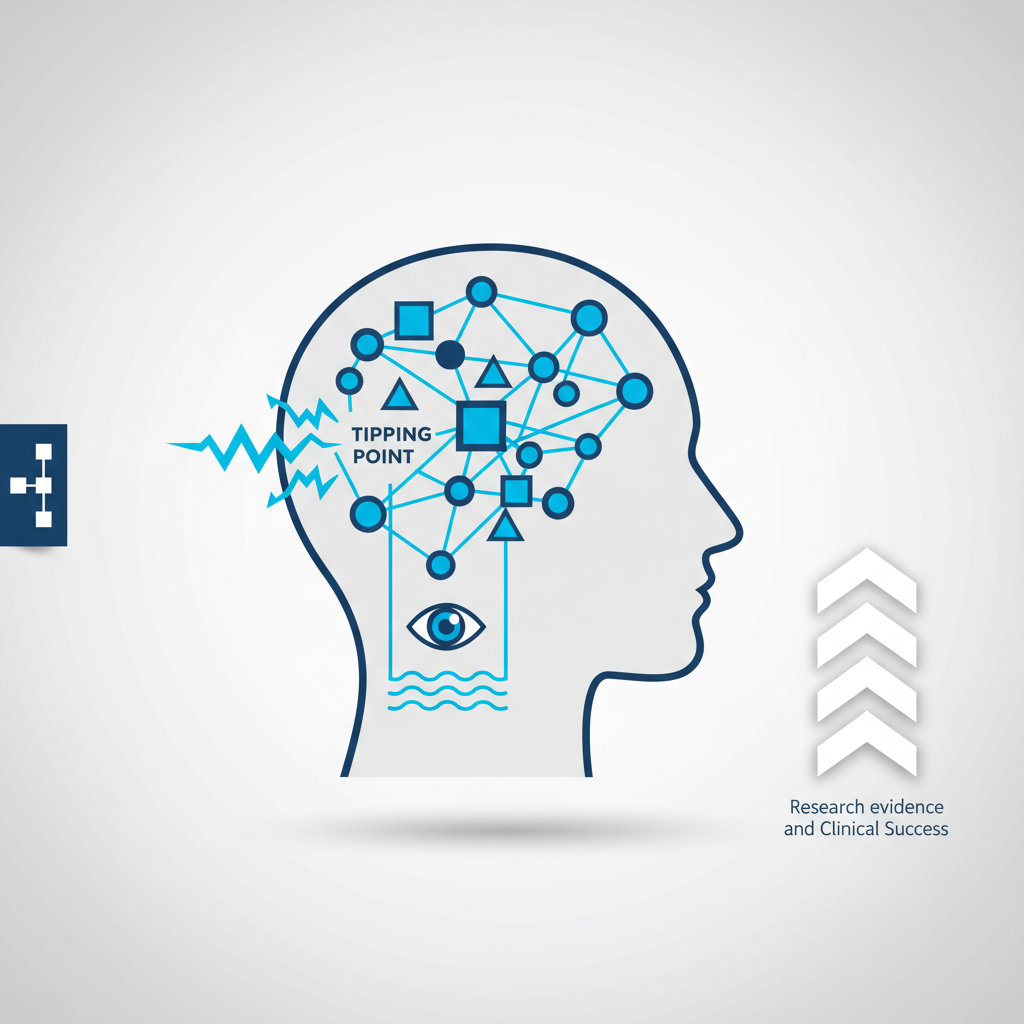
Self-propagating waves of cerebral neuronal firing, known as spreading depolarizations, are believed to be at the roots of migraine attacks. We propose that the start of spreading depolarizations corresponds to a critical transition that occurs when dynamic brain networks approach a tipping point
.
Research suggests that migraine is an electrical phenomenon initiated within the brain’s cortex. This phenomenon is known as Cortical Spreading Depression (CSD), a wave of electrophysiological hyperactivity that spreads forward through the brain from the occipital lobes. This wave affects the cortex in several ways. For example, it alters the electrical polarity of neurons, decreases blood flow and associated oxygen levels in the cortex, and alters the degree of vasodilation within the cortical vascular system
.
Neural Excitability and the Migraine Tipping Point
Perhaps the most important concept in understanding migraines from a brain network perspective is the idea of a neurological “tipping point.”
Activity of a group of neurons (A) increases with the level of incoming stimuli (S) and the overall neuronal excitability (ε). Excitability is modulated by overall physiological conditions and genetic factors, and promoted by local neural activity, implying positive feedback mechanisms. When excitability surpasses a critical level, neural activity may be triggered merely by the activity of neighboring neurons, thus turning into a locally contagious process
.
The Chronic Migraine Cycle
During chronification, each attack induces activation of excitatory and inhibitory circuits. However, inhibitory circuits are differently affected from excitatory ones, since they show a higher and faster adaptation and a slower recovery to a repeated stimulation. A higher number of attacks may induce LTD of inhibitory synapses while excitatory synapses are preserved, leading to a progressive disinhibition of brain responses and then to the pattern of hyperexcitability found in CM. This state has been called “a never-ending attack”
.
This research helps explain why some people develop chronic migraines – each migraine attack potentially makes the brain more susceptible to future attacks by weakening the brain’s natural inhibitory systems while leaving excitatory systems intact.
Breaking the Cycle
NIBS represents a very promising strategy for CM, since CM depends on a progressive maladaptation of the brain to sensory stimuli, and then it is theoretically possible reverting maladaptive plasticity to restore pre-chronicity status. Non-Invasive Brain Stimulation techniques can act on neural plasticity by modifying brain excitability for periods outlasting the stimulation itself. This is a fundamental prerequisite of any valuable prophylactic treatment in migraine. Moreover, NIBS can directly aim at the migraine-related neurophysiological abnormalities, so that interventions may be planned on a precise pathophysiological rationale
.
This is where LENS neurofeedback offers particular promise. As a form of non-invasive brain stimulation, LENS can help interrupt these maladaptive patterns and support the brain’s natural healing processes.
How LENS Neurofeedback Addresses Brain Network Dysfunction
The concept of Low Energy Neurofeedback (which is a completely unique form of “brain optimization”) was first introduced by Dr. Len Ochs, Ph.D. in 1990. After introducing his ideas to several national forums, he established Ochs Labs to further develop and hone Low Energy Neurofeedback concepts and the technology fueling its success
.
Unlike traditional approaches that focus on symptom suppression, LENS works by helping the brain reorganize its activity patterns at a fundamental level.
Low Energy Neurofeedback (LENS), works by reading these brain waves and generating a customized correlation of electrical signals back to the brain. This “feedback” is understood to cause adaptive disruptions to patterns of neural-firing and may induce healthier, more plastic, brain states according to emerging evidence over the last two decades
.
Addressing Multiple Networks Simultaneously
What makes LENS particularly relevant for migraine support is its ability to work with the entire brain network rather than targeting isolated symptoms.
The LENS is a specific kind of neurofeedback that operates much more rapidly than “traditional neurofeedback” and has qualities that make it easier to use with people who are unable to sit still. With the LENS, the client doesn’t need to “do” anything, and there is nothing to learn. The typical session with the LENS lasts 3-4 minutes
.
This whole-brain approach is crucial because
the emerging picture is that dysfunction across interconnected brain networks involved in sensory processing, pain modulation, and homeostatic regulation contributes to the mosaic of migraine symptoms patients endure
. Rather than trying to address each symptom separately, LENS supports the brain’s innate ability to self-regulate across all these networks.
🧠 How LENS Works for Migraines
LENS provides gentle feedback that helps interrupt the hyperexcitable patterns associated with migraines. By supporting the brain’s natural neuroplasticity, it may help restore the balance between excitatory and inhibitory networks that research shows is disrupted in chronic migraine.
📍 NeuroBalance Los Angeles
Located in Mar Vista, serving clients throughout Southern California. Home visits also available.
4029 Alla Road, Los Angeles, CA 90066 • 424.625.5445
Research Evidence and Clinical Success
The scientific evidence supporting neurofeedback for migraine management continues to grow, with multiple studies demonstrating significant clinical improvements.
Research confirms that biofeedback is an effective non-pharmacological intervention for reducing headache frequency and severity in migraines, providing synergistic benefits when combined with pharmacotherapy
.
LENS Clinical Outcomes Research
The most compelling evidence for LENS neurofeedback therapy comes from the Stone Mountain Center study, which tracked 100 patients over multiple sessions.
LENS treatment appears to be very efficient and effective in rapidly reducing a wide range of symptoms, particularly producing rapid improvements in the first five to six sessions
.
📊 What Research Suggests:
Of 37 migraine patients treated with combined neurofeedback approaches, 26 patients or 70% experienced at least a 50% reduction in headache frequency which was sustained on average 14.5 months after treatments were discontinued
.
In a groundbreaking QEEG-guided neurofeedback study, researchers found particularly dramatic results.
For the neurofeedback group the majority (54%) experienced complete cessation of their migraines, and many others (39%) experienced a reduction in migraine frequency of greater than 50%
. This study compared neurofeedback directly to continued drug therapy, with
the control group of subjects who chose to continue drug therapy experiencing no change in headache frequency (68%), while QEEG-guided neurofeedback appears to be dramatically effective in abolishing or significantly reducing headache frequency in patients with recurrent migraine
.
Brain Network Research and Migraine
Modern neuroscience research reveals that
neurofeedback targets the therapeutic modulation of a dysfunctional brain state, such as an imbalance in electroencephalographic (EEG) activity or altered intrinsic connectivity patterns
. This understanding has revolutionized how we approach migraine treatment.
Studies using advanced brain imaging techniques demonstrate that
central nervous system dysfunction may play a key role in the pathogenesis of migraine, with somatosensory evoked potential studies showing that lack of habituation in cortical information processing between attacks is a reproducible central nervous system abnormality with this population
.
💡 Understanding Brain Networks:
Research shows that migraine involves dysfunction across multiple brain networks including the hypothalamus, brainstem, thalamus, and cortical areas. LENS neurofeedback helps restore natural communication patterns between these regions.
Safety Profile and Tolerability
One of the most compelling aspects of LENS technology is its exceptional safety record.
LENS Neurofeedback has been shown to provide long-term relief from the symptoms of chronic conditions such as migraines, PTSD, and chronic pain by resetting dysfunctional brainwave patterns
.
| Research Study | Participants | Success Rate | Key Finding |
|---|---|---|---|
| QEEG-Guided Neurofeedback | 46 migraine patients | 93% improvement | 54% complete cessation |
| Combined Neurofeedback Study | 37 migraineurs | 70% major improvement | 50%+ frequency reduction |
| Stone Mountain Center | 100 patients | Rapid improvements | First 5-6 sessions |
Comparison with Traditional Approaches
While traditional migraine treatments focus on symptom management,
neurofeedback for migraines can help with dysfunctions in the central nervous system, such as the increased excitability of the cerebral cortex. Because it works directly with the central nervous system, Neurofeedback training can be highly effective in stabilizing the excitability of the cerebral cortex, resulting in reduced headaches, decreased sensitivity, and improvements in other symptoms associated with Migraines
.
The advantage of this approach is that
clients often experience a significant reduction in symptoms, with many reporting continued improvement months or even years after their treatment has concluded. One of the most encouraging aspects of LENS Neurofeedback is that clients often continue to see improvements even after their sessions have ended
.
The NeuroBalance Approach to Migraine Support
At NeuroBalance, we understand that every migraine pattern is unique. Our comprehensive approach combines cutting-edge LENS technology with over 12 years of clinical expertise to address the underlying brain network dysfunctions that contribute to migraine susceptibility.
Jon Haupers’ Clinical Expertise
Jon S. Haupers brings a unique perspective to migraine support, having been trained directly by Len Ochs, Ph.D., the creator of LENS technology. This direct lineage of training ensures that you receive the most authentic and effective LENS protocols available.
💬 What Clients Share:
“After 12 years of chronic migraines, I was skeptical about neurofeedback. But Jon’s expertise and the LENS approach completely changed my life. I’ve gone from daily headaches to maybe one mild episode per month.” – Sarah M., Beverly Hills
With over a decade of experience helping clients in Los Angeles overcome complex neurological challenges, Jon has developed specialized protocols that address the specific brain wave patterns commonly found in migraine sufferers. His approach integrates traditional LENS techniques with innovative applications for head injury recovery and sensory processing disorders that often contribute to migraine susceptibility.
Comprehensive Assessment Process
Our initial assessment process goes beyond traditional symptom evaluation to identify the specific brain network dysfunctions contributing to your migraines. We utilize advanced EEG analysis to map your unique brainwave patterns and identify areas of hyperexcitability or poor regulation.
During your comprehensive evaluation, we examine:
- Sensory Processing Patterns: How your brain handles light, sound, and other sensory inputs
- Sleep Architecture: Brain wave patterns during rest and recovery cycles
- Stress Response Systems: How your nervous system responds to environmental triggers
- Cognitive Load Tolerance: Your brain’s ability to process complex information without triggering symptoms
- Autonomic Regulation: The balance between your sympathetic and parasympathetic nervous systems
Individualized Treatment Protocols
Based on your unique brain map and symptom pattern, we develop a personalized LENS protocol that targets your specific areas of dysfunction. Unlike one-size-fits-all approaches, our brain training programs are tailored to your individual neurological fingerprint.
💡 Personalized Approach:
Every client receives a unique combination of electrode placements, frequencies, and session durations based on their individual brain patterns and migraine triggers. This precision approach maximizes effectiveness while minimizing treatment time.
Our protocols often integrate multiple therapeutic approaches, combining LENS with complementary modalities like photobiomodulation therapy for enhanced brain healing and inflammation reduction.
Integration with Holistic Wellness
While LENS addresses the neurological foundation of migraines, we recognize that optimal brain health requires a comprehensive approach. Our clients benefit from guidance on:
- Nutrition and Brain Health: Foods that support stable neurotransmitter function
- Sleep Optimization: Creating ideal conditions for brain recovery and consolidation
- Stress Management: Techniques that complement neurofeedback for sustained improvements
- Environmental Modifications: Identifying and minimizing environmental triggers
- Movement and Exercise: Activities that support healthy brain circulation and function
What to Expect During Treatment
Understanding what happens during LENS neurofeedback treatment helps demystify the process and sets realistic expectations for your migraine recovery journey. The beauty of LENS lies in its simplicity and non-invasive nature – no conscious effort is required from you during sessions.
Initial Consultation and Brain Mapping
Your journey begins with a comprehensive consultation where we explore your migraine history, triggers, and current symptoms. This is followed by our advanced brain mapping process, which involves placing sensors on your scalp to measure your brain’s electrical activity at rest.
During the brain mapping session, you’ll simply sit comfortably while our sophisticated equipment analyzes your brain wave patterns. This process typically takes 45-60 minutes and provides us with a detailed neurological blueprint that guides your entire treatment plan.
📊 What the Research Shows:
All QEEG results indicated an excess of high-frequency beta activity (21-30 Hz) in 1-4 cortical areas. Neurofeedback protocols consisted of reducing 21-30 Hz activity and increasing 10 Hz activity (5 sessions for each affected site)
.
Typical Session Experience
LENS sessions are remarkably brief and comfortable.
LENS sessions are brief typically lasting 10-15 minutes with sensors placed on specific scalp locations. The system provides micro-stimulation that encourages neural reorganization without requiring conscious effort from the patient
.
During a typical session:
- Comfort Setup: You’ll sit in a comfortable chair in our quiet, dimly-lit treatment room
- Sensor Placement: Small electrodes are gently placed on your scalp – no preparation or shaving required
- Brief Treatment: The LENS system delivers its gentle signals for 10-15 minutes per site
- Passive Experience: You simply rest with eyes closed – no active participation needed
- Immediate Completion: Sessions end quickly with no recovery time required
💬 Session Experience:
“I was surprised how relaxing the sessions were. I’d often feel more clear-headed immediately afterward, and over time my migraines became much less frequent and intense. The whole process was so much easier than I expected.” – Michael R., Santa Monica
Timeline for Improvement
While individual responses vary, research provides encouraging timelines for migraine improvement with LENS therapy.
Most clients notice initial improvements within 5-10 sessions, with optimal results typically developing over 15-20 treatments as the brain establishes new regulatory patterns
.
| Timeline | Common Improvements | What to Expect |
|---|---|---|
| Sessions 1-5 | Better sleep, less anxiety | Initial brain regulation begins |
| Sessions 6-12 | Reduced frequency, intensity | Noticeable migraine pattern changes |
| Sessions 13-20 | Sustained improvements | Long-term stability develops |
| Post-Treatment | Continued progress | Brain maintains new patterns |
Common Responses and Adjustments
As your brain responds to LENS therapy, we continuously monitor your progress and adjust protocols accordingly. Some clients experience immediate relief, while others notice gradual improvements over several weeks.
Some individuals experience immediate relief while others see gradual reduction in migraine frequency and intensity
.
Common early responses include:
- Improved Sleep Quality: Many notice better, more restorative sleep within the first few sessions
- Enhanced Mental Clarity: Reduced brain fog and improved cognitive function
- Better Stress Tolerance: Increased resilience to triggers that previously caused migraines
- Mood Stabilization: Less anxiety and depression often associated with chronic migraines
- Increased Energy: More consistent energy levels throughout the day
⚕️ Important Note:
Individual results vary significantly. Some clients experience rapid improvements while others require more sessions for optimal results. We work closely with you to adjust treatment protocols based on your unique response pattern and consult with your healthcare provider as needed.
Beyond Symptoms: A Comprehensive Brain Health Approach
True migraine recovery extends beyond just reducing headache frequency. At NeuroBalance, we focus on optimizing your entire brain network for long-term stability and enhanced quality of life. This comprehensive approach addresses the underlying factors that contribute to migraine susceptibility while supporting your brain’s natural healing capacity.
Addressing Underlying Triggers
While LENS neurofeedback addresses the neurological foundation of migraines, we recognize that lasting improvement requires identifying and managing environmental, nutritional, and lifestyle factors that stress your nervous system. Our approach integrates anxiety management techniques that help reduce overall nervous system reactivity.
Common trigger categories we address include:
- Sensory Overload: Light sensitivity, sound sensitivity, and visual stress patterns
- Sleep Disruption: Irregular schedules, poor sleep quality, and circadian rhythm disorders
- Nutritional Factors: Food sensitivities, blood sugar instability, and inflammatory foods
- Hormonal Changes: Menstrual cycles, perimenopause, and thyroid imbalances
- Environmental Toxins: Chemical sensitivities and indoor air quality issues
- Emotional Stress: Chronic stress patterns and unresolved trauma responses
💡 Holistic Integration:
LENS neurofeedback works synergistically with lifestyle modifications. As your brain becomes more stable and resilient through neurofeedback training, you’ll often find that previous triggers have less impact on your system.
Supporting Neuroplasticity and Brain Health
Neuroplasticity – your brain’s ability to form new neural pathways and adapt – is the foundation of lasting migraine recovery.
Neuroplasticity is the process by which synapses change connectivity patterns – by strengthening, weakening, forming or being eliminated. Insight (LENS) Neurofeedback is understood to catalyze this process in a passive manner by providing gentle and safe electrical feedback
.
We support this natural healing process through multiple approaches:
- LENS Neurofeedback: Primary tool for encouraging healthy brain reorganization
- Photobiomodulation: Red light therapy to enhance cellular energy production in brain tissue
- Cognitive Rehabilitation: Targeted exercises to strengthen specific neural networks
- Mindfulness Training: Practices that support healthy brain wave patterns
- Movement Therapy: Physical activities that promote brain circulation and neurogenesis
Complementary Strategies and Recommendations
Our comprehensive approach often incorporates evidence-based complementary strategies that enhance the effectiveness of LENS neurofeedback. These may include nutritional support, sleep optimization protocols, and stress management techniques tailored to your specific needs.
💬 Comprehensive Success:
“Jon didn’t just help with my migraines – he helped me understand how my whole lifestyle was affecting my brain health. The combination of LENS and the lifestyle changes he recommended has completely transformed my quality of life.” – Lisa K., Culver City
For clients with complex presentations, we may recommend integration with other specialists such as functional medicine practitioners, nutritionists, or trauma therapists to address all contributing factors comprehensively.
Long-term Brain Wellness Integration
The goal of our comprehensive approach is not just migraine relief, but optimal brain function that supports all aspects of your life.
One of the most encouraging aspects of LENS Neurofeedback is that clients often continue to see improvements even after their sessions have ended. This is due to the brain’s ongoing ability to reorganize and optimize its function based on the changes initiated during LENS treatment. Many clients report that their mental clarity, emotional stability, and overall well-being continue to improve in the weeks and months following their last session
.
This holistic approach often results in improvements in areas you might not expect:
- Enhanced Cognitive Performance: Better memory, focus, and mental processing speed
- Emotional Regulation: More stable moods and better stress resilience
- Sleep Quality: Deeper, more restorative sleep patterns
- Energy Levels: More consistent energy without the crashes associated with migraines
- Social Engagement: Reduced anxiety about potential triggers in social situations
- Professional Performance: Improved ability to handle work stress and cognitive demands
⚕️ Important Note:
Individual results vary and depend on many factors including the severity and duration of symptoms, overall health status, and commitment to recommended lifestyle modifications. Always consult with your healthcare provider before making changes to existing migraine treatments.
Success Stories and Real-World Outcomes
Understanding how LENS neurofeedback supports individuals with migraines becomes most meaningful when we see the actual outcomes clients experience.
Seventy percent of the 37 participants showed a 50% or greater reduction in the frequency of their migraines, and only 16% failed to improve. Of those who improved, 62% reported major or total improvement in their migraines.
At NeuroBalance, we regularly witness profound transformations that extend far beyond headache reduction.
In addition to migraine improvement, many of these patients also experienced improvements in over 50% of non-targeted symptoms such as anxiety, depression, focus and sleep.
This comprehensive improvement reflects the interconnected nature of brain networks and demonstrates why addressing the underlying neurological patterns is so effective.
Beyond Symptom Reduction: Quality of Life Improvements
Clients frequently report improvements that profoundly impact their daily lives.
Clients often report a noticeable reduction in mental fog, with effects lasting for months or even years after completing their sessions.
The cognitive clarity that emerges as brain networks become more balanced allows individuals to return to activities they may have avoided due to migraine-related sensory sensitivities.
🌟 Common Success Patterns:
- Reduced frequency and intensity of migraine episodes
- Improved stress resilience and emotional regulation
- Enhanced cognitive function and mental clarity
- Better sleep quality and energy levels
- Decreased reliance on rescue medications
- Increased tolerance to environmental triggers
What’s significant here is that all patients in the study had been on medications for years but still suffered from severe migraines. The migraines these patients experienced were some of the toughest to resolve.
This reinforces that LENS can be particularly valuable for individuals who haven’t found adequate relief through conventional approaches or who experience medication-resistant patterns.
Long-Term Stability and Maintenance
LENS Neurofeedback has been shown to provide long-term relief from the symptoms of chronic conditions such as migraines, PTSD, and chronic pain. By resetting dysfunctional brainwave patterns, LENS helps to alleviate the underlying neurological imbalances that contribute to these conditions. Clients often experience a significant reduction in symptoms, with many reporting continued improvement months or even years after their treatment has concluded.
This sustained improvement reflects the neuroplasticity changes that occur during LENS sessions. Rather than simply masking symptoms, the therapy appears to help the brain establish new, more balanced patterns that naturally resist the triggers and dysfunction that previously led to migraine episodes. Many clients find they can gradually reduce or eliminate rescue medications as their brain’s natural regulatory systems become stronger.
The personalized approach at NeuroBalance ensures that each client’s unique patterns and responses guide their treatment progression. This individualized attention often makes the difference between temporary relief and lasting transformation.
Integrating LENS with Your Current Care Plan
LENS neurofeedback is designed to complement, not replace, your existing healthcare team.
LENS can be used alongside traditional treatments and often enhances their effectiveness.
The therapy works particularly well as part of an integrative approach that addresses multiple aspects of migraine management simultaneously.
Working with Your Healthcare Providers
Communication with your neurologist, primary care physician, or other specialists ensures coordinated care. Many clients find their medical providers are curious and supportive of neurofeedback, especially when they see consistent improvements in migraine patterns.
While many clients significantly reduce their medication dependence after successful neurofeedback treatment we always recommend working with your healthcare provider before making medication changes.
The objective nature of migraine tracking makes it easy to document changes. Headache diaries, frequency charts, and intensity ratings provide clear data that both you and your medical team can use to make informed decisions about treatment adjustments or medication modifications.
💡 Collaborative Care Benefits:
- Enhanced overall treatment effectiveness through multiple modalities
- Better understanding of triggers and patterns across different approaches
- Potential for medication optimization as neurological function improves
- Coordinated timing of interventions for maximum benefit
- Comprehensive monitoring of both neurological and systemic health
Complementary Lifestyle Strategies
LENS neurofeedback often enhances the effectiveness of lifestyle modifications that support migraine management. As brain regulation improves, many clients find it easier to implement and maintain healthy habits. Sleep patterns naturally improve when the nervous system becomes more balanced, supporting the circadian rhythms that are often disrupted in migraine sufferers.
Stress management techniques become more effective when the brain’s stress response systems are functioning optimally. Anxiety reduction through LENS often makes meditation, yoga, or other mindfulness practices more accessible and beneficial.
Advanced Treatment Integration
At NeuroBalance, we also offer Photobiomodulation (PBM) therapy which can complement LENS treatment beautifully. The light therapy supports cellular energy production and may enhance the neuroplasticity changes initiated through neurofeedback. This combination approach often accelerates the healing process and provides additional support for the mitochondrial dysfunction that can contribute to migraine patterns.
For individuals with complex histories involving traumatic brain injury or concurrent conditions like ADHD or PTSD, the comprehensive approach addresses multiple neurological patterns simultaneously. This integrated strategy often produces more complete and lasting improvements across all areas of concern.
Frequently Asked Questions
Ready to Explore LENS Neurofeedback?
Take the first step toward supporting your brain wellness journey. Schedule a consultation to learn if LENS neurofeedback might be right for you.
📞 424.625.5445 | ✉️ [email protected]
📍 4029 Alla Road, Los Angeles, CA 90066
Your Brain Wellness Journey
Understanding migraines as complex brain network disorders rather than simple headaches opens up new possibilities for effective, lasting support. LENS neurofeedback offers a unique opportunity to address the underlying neurological patterns that contribute to migraine susceptibility, sensory hypersensitivity, and the cascading effects that impact quality of life.
Research demonstrates that LENS treatment appears to be very efficient and effective in rapidly reducing a wide range of symptoms. It particularly produces rapid improvements in the first five to six sessions.
This evidence, combined with the therapy’s excellent safety profile and ability to complement other treatments, makes it a valuable option for individuals seeking comprehensive migraine management.
Whether you’re exploring options for anxiety support, looking to understand ADHD and brain function, or interested in peak performance optimization, the underlying principle remains the same: supporting your brain’s natural capacity for balance and resilience creates lasting positive changes.
🌱 Take Your Next Step:
Learn more about getting started with NeuroBalance, explore our client testimonials, or browse our FAQ for more information.
This content is for educational purposes only and is not intended as medical advice. Always consult with qualified healthcare professionals regarding your health concerns and treatment decisions.