

The Sensitive Brain: Gift, Challenge, or Both?
Understanding Sensory Processing Sensitivity and Brain Health
Having a sensitive brain isn’t simply about being emotionally reactive—it’s a fascinating neurological trait that affects how your brain processes sensory information, responds to environments, and navigates the world.
Research shows that Sensory Processing Sensitivity (SPS) is a common, heritable and evolutionarily conserved trait describing inter-individual differences in sensitivity to both negative and positive environments.
Understanding whether this sensitivity is a gift, challenge, or both can transform how you view your unique neurological makeup.
In our work at NeuroBalance Los Angeles, we’ve witnessed countless individuals discover that their sensitive brain isn’t a limitation—it’s often a superpower that simply needs the right support to thrive.
Let’s explore the remarkable world of brain sensitivity, from the latest neuroscience research to practical approaches like LENS neurofeedback therapy that can help optimize sensitive brain function.
⚕️ Important Medical Disclaimer:
The information provided is for educational purposes only and is not intended as medical advice, diagnosis, or treatment. LENS neurofeedback is a wellness modality NOT intended to diagnose, treat, cure, or prevent any disease. Always consult a qualified healthcare professional before beginning any wellness program. Individual results vary. NeuroBalance does not provide medical services.
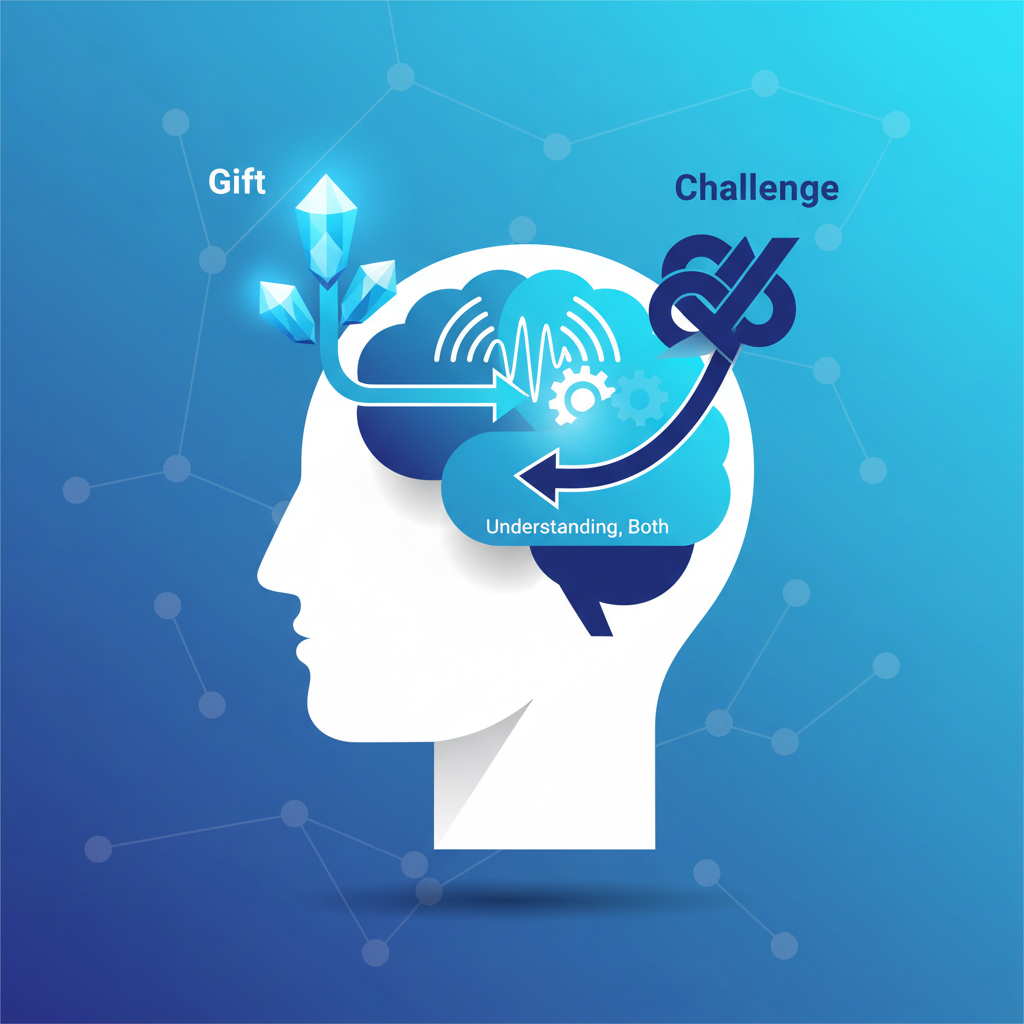
Understanding the Sensitive Brain
The concept of a “sensitive brain” extends far beyond popular stereotypes of being overly emotional or fragile.
During the past decade, research on the biological basis of sensory processing sensitivity (SPS)—a genetically based trait associated with greater sensitivity and responsivity to environmental and social stimuli—has burgeoned.
This neurological trait affects approximately 20-30% of the population, representing a significant portion of humanity with unique brain wiring.
SPS is characterized by lower sensory thresholds, susceptibility to overstimulation, deeper processing of environmental information, heightened emotional and physiological reactivity, and increased awareness of subtle stimuli. Genetic and neuroimaging studies indicate that differences in SPS are moderately heritable (47%) and driven by a more sensitive nervous system.
Key Characteristics of Sensitive Brains
Individuals with highly sensitive brains typically exhibit four primary characteristics, often remembered by the acronym DOES:
- Depth of processing: They process information more thoroughly and think deeply about experiences
- Overstimulation: They become overwhelmed more easily in stimulating environments
- Emotional responsivity: They show stronger emotional reactions to both positive and negative stimuli
- Sensory sensitivity: They notice subtle environmental changes others might miss
This isn’t about weakness or fragility—it’s about having a nervous system that processes information differently. Our LENS neurofeedback specialist, Jon S. Haupers, has observed that understanding these differences is the first step toward embracing your brain’s unique capabilities.
The Science Behind Sensitivity
Recent neuroscience research has revealed fascinating insights about how sensitive brains function at a biological level.
Studies using fMRI technology show that highly sensitive brains demonstrate increased activation in brain regions associated with awareness, empathy, and sensory processing when responding to others’ emotions.
Neurological Foundations
The sensitive brain operates with several key neurological differences:
🧠 Research Insight:
Approximately 30% of the general population scores high on this trait making them more responsive to both negative and positive environmental influences than individuals lower in SPS.
This responsiveness stems from differences in neural processing rather than emotional instability.
The brain areas most affected in sensitive individuals include:
- Insula: Enhanced interoceptive awareness (internal body sensations)
- Mirror neuron systems: Increased empathic processing
- Prefrontal cortex: Deeper cognitive processing
- Limbic system: Heightened emotional responsivity
Understanding these neural foundations helps explain why traditional approaches that work for others might not be effective for sensitive brains. This is where specialized approaches like LENS neurofeedback become particularly valuable.
The Gift Aspects of Sensitivity
Having a sensitive brain comes with numerous advantages that are often overlooked in our fast-paced world.
Individuals higher on SPS are more affected by negative and positive environments than individuals lower on SPS.
This means sensitive brains don’t just experience challenges more intensely—they also experience benefits more profoundly.
Enhanced Empathy and Social Connection
Deep processing of others’ thoughts and feelings, emotional responsiveness and also the tendency to be affected by other people’s emotions seems to be related to both positive and negative trait clusters of SPS.
This heightened empathy allows sensitive individuals to:
- Form deeper, more meaningful relationships
- Excel in helping professions
- Provide exceptional emotional support to others
- Navigate complex social dynamics with insight
Creative and Artistic Abilities
Many clients at our Los Angeles practice discover that their sensitivity fuels remarkable creative abilities. The same neural pathways that make them sensitive to overstimulation also allow them to:
- Notice subtle details others miss
- Process complex artistic and aesthetic information
- Generate innovative solutions to problems
- Experience profound appreciation for beauty
Environmental Awareness and Connection
Research shows that people with sensory processing sensitivity connect strongly to nature across five dimensions. The temperament trait of environmental sensitivity is associated with connectedness to nature and affinity to animals.
This natural connection often leads to:
- Strong environmental consciousness
- Intuitive understanding of natural systems
- Enhanced healing from nature exposure
- Deep spiritual connections
How LENS Neurofeedback Works
The concept of Low Energy Neurofeedback (which is a completely unique form of “brain optimization”) was first introduced by Dr. Len Ochs, Ph.D. in 1990. After introducing his ideas to several national forums, he established Ochs Labs to further develop and hone Low Energy Neurofeedback concepts and the technology fueling its success.
The LENS Process
The low energy neurofeedback system (LENS) is a form of direct neurofeedback that allows the brain to reset itself for optimal performance. Basically, LENS is training in self-regulation, a necessary part of optimal brain performance and function which allows the nervous system to function more adaptively. Using very low dose electromagnetic power, the LENS facilitates tiny feedback stimulation which results in brainwave optimization.
What makes LENS particularly suitable for sensitive brains:
- Passive process:
With the LENS, the client doesn’t need to “do” anything, and there is nothing to learn. The typical session with the LENS lasts 3-4 minutes. - Extremely gentle:
This low energy is much less than we are exposed to every day, from digital watches or cellphones. - Individualized:
Each client’s EEG signals (brain waves) are unique to them and constantly changing. The LENS measures these ever-changing signals of the client and matches the feedback to the client’s own physiological (neurological) fingerprint.
💡 Key Insight:
The brain picks up on this signal, which is small enough to get underneath neuroprotective filters. This signal helps the brain outline and sense its own functioning, and the brain responds (the feedback) by releasing “stuck” and inefficient patterning created by injury or trauma.
Why LENS Works for Sensitive Brains
Sensitive brains often struggle with traditional neurofeedback because:
- They become overstimulated by active feedback requirements
- They may feel overwhelmed by longer session times
- Their heightened awareness can interfere with the learning process
LENS works well for people who either cannot pay attention to a computer screen for longer time periods like those used in “traditional neurofeedback.” The LENS time frame for success is shorter than other forms of Neurofeedback with the number of sessions ranging from 9 to an overall average number of 11 sessions.
📍 NeuroBalance Los Angeles
Located in Mar Vista, serving clients throughout Southern California. Home visits also available.
4029 Alla Road, Los Angeles, CA 90066 • 424.625.5445
## PART B: DETAILED OUTLINE FOR CHUNKS 2-3
Challenges Sensitive Brains Face in Modern Life
While the sensitive brain comes with remarkable gifts, it also faces unique challenges in our fast-paced, overstimulating world.
Recent research shows that sensory processing sensitivity affects approximately 30% of the world’s population
, yet many highly sensitive individuals struggle to find environments and support systems that honor their neurological differences.
Overstimulation in Modern Environments
Modern life presents constant sensory challenges for sensitive brains. From fluorescent lighting and background noise in offices to the overwhelming input of digital devices,
highly sensitive individuals experience being easily overwhelmed by too much information through sound, sight, touch, or smell
. This chronic overstimulation can lead to what researchers call “neural gridlock,” where the brain becomes stuck in maladaptive patterns.
📊 What Research Suggests:
EEG studies show highly sensitive individuals have higher brain activity, particularly in central, parietal, and temporal regions, during resting states
, indicating their brains are processing information even when they’re trying to relax.
Common environmental stressors include open office plans, crowded spaces, harsh lighting, constant connectivity demands, and the pressure to multitask. For sensitive brains, these aren’t minor inconveniences—they’re neurological challenges that can significantly impact daily functioning and well-being.
Emotional Overwhelm and Regulation Difficulties
Sensitive brains don’t just process sensory input more deeply—they also experience emotions with greater intensity.
Research indicates that the personal distress highly sensitive people experience is related to the negative aspects of sensory processing sensitivity, while deep processing of others’ thoughts and feelings affects both positive and negative traits
.
💬 What Clients Share:
“I feel everything so intensely. Other people’s emotions, conflicts at work, even happy events can overwhelm me. I thought there was something wrong with me until I learned about sensitive brains.” – Maria, Los Angeles client
This emotional intensity can manifest as difficulty recovering from stressful events, feeling drained after social interactions, and struggling with emotional regulation when faced with conflict or criticism. Many sensitive individuals develop coping strategies that may temporarily help but don’t address the underlying neurological patterns.
Sleep Disruption and Recovery Challenges
Sleep becomes particularly challenging for sensitive brains because the heightened awareness that serves them during the day doesn’t easily switch off at night.
Research shows HSPs exhibit higher EEG activity even during resting states with eyes open, suggesting increased information processing
.
Common sleep issues include:
- Difficulty “turning off” the mind at bedtime
- Sensitivity to environmental factors like temperature, light, or sound
- Tendency to ruminate on the day’s events or tomorrow’s challenges
- Feeling tired but wired, especially after overstimulating days
- Need for longer recovery periods after stressful events
Social Misunderstanding and Self-Perception Issues
Perhaps one of the greatest challenges sensitive individuals face is societal misunderstanding.
Prior to discovering hypersensitivity, people often perceive overly emotional responses as a character flaw, with comments like “Why can’t you get on an even keel?” Recognizing their high sensitivity can help people stop feeling bad about themselves
.
⚕️ Important Understanding:
High sensitivity is a neurological trait, not a character flaw or disorder. With proper support, including approaches like LENS neurofeedback therapy, sensitive individuals can learn to work with their brain’s natural patterns.
Common social challenges include being labeled as “too sensitive,” facing pressure to “toughen up,” difficulty setting boundaries, and feeling misunderstood in relationships or workplace settings. These experiences can lead to self-doubt, social withdrawal, or attempts to mask one’s natural sensitivity.
What Current Research Shows About Sensitive Brains
The scientific understanding of sensitive brains has advanced dramatically in recent years, with 2024-2025 studies providing unprecedented insights into the neurological basis of sensory processing sensitivity. This research is revolutionizing how we understand and support highly sensitive individuals.
Neurophysiological Evidence of Brain Differences
For the first time, neurophysiological signatures associated with SPS during a task-free resting state have been demonstrated, providing evidence that neural processes differ between HSP and non-HSP
. This groundbreaking research validates what sensitive individuals have long experienced—their brains truly function differently.
📊 2024 EEG Research Findings:
Highly sensitive individuals showed higher beta power (4.38 ± 0.32 vs. 4.21 ± 0.17), higher gamma power (4.21 ± 0.37 vs. 4.00 ± 0.25), and increased global EEG power (4.38 ± 0.29 vs. 4.25 ± 0.17)
compared to non-sensitive individuals.
These findings suggest that sensitive brains are constantly processing more information, even at rest.
The findings could be of importance for the development of biomarkers for clinical diagnostics and intervention efficacy evaluation
, opening new possibilities for personalized treatment approaches like LENS neurofeedback therapy.
LENS Neurofeedback Research and Clinical Outcomes
LENS (Low Energy Neurofeedback System) has shown remarkable effectiveness for sensitive brains.
After an average of only 20 treatments, patient symptom ratings declined from 7.92 to 3.96 on a 0-10 scale, representing a 50% improvement
.
| LENS Research Metrics | Findings |
|---|---|
| Success Rate | Over 85% of people benefit significantly from LENS |
| Symptom Improvement | 50% reduction in symptom severity after 20 sessions |
| Response Speed | Results often begin within the first session |
| Session Duration | Typical sessions last only 3-4 minutes |
| Treatment Course | Average of 11 sessions total |
What makes LENS particularly suitable for sensitive brains is its passive nature.
LENS does not “train” brainwaves like traditional neurofeedback therapy, which targets only specific sites and requires patient participation through visual/audio monitors
. Instead,
LENS effectively disrupts old neural connectivity that causes dysfunctional patterns and resets them, bringing the brain back to its factory setting
.
Understanding Vulnerability vs. Resilience Patterns
Recent research has identified distinct patterns within the sensitive population.
Studies show SPS can be divided into vulnerable sensitivity and confident sensitivity groups, with the vulnerable group scoring lower on aesthetic sensitivity and higher on negative aspects like ease of excitation and low sensory threshold
.
💡 Clinical Insight:
At our Los Angeles practice, we’ve observed that clients who initially present with “vulnerable sensitivity” patterns often shift toward “confident sensitivity” after LENS treatment for anxiety and overwhelm symptoms.
This research suggests that sensitivity itself isn’t the issue—it’s how the sensitive brain manages and processes overwhelming input.
Studies show highly sensitive individuals can report stronger regulatory capacity and greater life satisfaction when they develop effective emotion regulation skills, with emotion regulation serving as a protective factor supporting well-being
.
Neuroplasticity and Long-Term Brain Changes
One of the most encouraging aspects of current research is the evidence for lasting brain changes.
LENS works at a fundamental level to change how the brain functions, rather than simply masking symptoms, with clients enjoying improved brain function for extended periods, often requiring only occasional “tune-up” sessions
.
Neuroimaging studies have documented, for the first time, the effect of neurofeedback treatment on brain functioning in traumatic brain injury, demonstrating that neurofeedback physically changes the brain
. This neuroplasticity research provides hope for sensitive individuals who have felt stuck in overwhelming patterns.
The NeuroBalance Approach to Supporting Sensitive Brains
At NeuroBalance in Los Angeles, we’ve spent over 12 years developing a specialized approach for sensitive brains. Our understanding goes beyond general neurofeedback—we recognize that highly sensitive individuals require personalized protocols that honor their unique neurological wiring while gently supporting brain balance and resilience.
Comprehensive Brain Assessment for Sensitive Individuals
Our assessment process begins with understanding your unique sensitivity profile. During your initial consultation, we evaluate not just your symptoms, but how your brain responds to various types of stimulation.
We determine your level of sensitivity to external stimulus, such as light and noise, which helps gauge how to direct the gentle LENS signal
.
💡 Our Assessment Process:
We evaluate mood patterns, reactivity levels, energy fluctuations, cognitive clarity, organizational abilities, memory function, and sleep quality—all critical factors for understanding how your sensitive brain currently functions and what support it needs.
Key components of our sensitive brain assessment include:
- Detailed sensitivity threshold testing
- Brainwave pattern analysis using advanced EEG technology
- Environmental trigger identification
- Emotional regulation capacity evaluation
- Sleep and recovery pattern assessment
- Current coping strategy review
Personalized LENS Protocols for Sensitive Brains
Not all sensitive brains are the same, and our LENS protocols reflect this understanding.
The process is personalized because the computer software program allows the signal to adapt in real time to what is most appealing to the brain it’s connected to, reading data milliseconds before and making proper adjustments in frequencies to the specific area of the brain in need
.
💬 Client Experience:
“I was nervous about any kind of brain treatment because I’m so sensitive to everything. But LENS was incredibly gentle—I actually felt calmer during the sessions, and the changes have been life-changing.” – Sarah, Venice client
Our personalized approach includes:
- Ultra-low stimulation protocols: Starting with the gentlest possible settings
- Gradual progression: Allowing your brain to adapt at its own pace
- Real-time monitoring: Continuous adjustment based on your brain’s responses
- Symptom-specific targeting: Addressing areas like anxiety, ADHD symptoms, or trauma responses
- Integration support: Helping you process and integrate the changes
Creating a Safe, Supportive Treatment Environment
For sensitive individuals, the treatment environment is as important as the treatment itself. Our Los Angeles office is specifically designed to minimize overstimulation while maximizing comfort and safety. We understand that sensitive brains need time and space to feel secure before they can fully benefit from treatment.
Environmental considerations include:
- Soft, natural lighting that can be adjusted to your comfort
- Sound-dampened treatment rooms with minimal background noise
- Comfortable seating and temperature control
- Flexible scheduling to accommodate your energy patterns
- Gentle transition periods before and after sessions
- Respect for your need to process experiences at your own pace
Integration with Complementary Approaches
While LENS neurofeedback is highly effective on its own, sensitive brains often benefit from a comprehensive approach. We work collaboratively with other practitioners and can integrate LENS with approaches like therapy, mindfulness practices, and lifestyle modifications.
📊 Integration Benefits:
Research shows that
emotion regulation serves as a protective factor supporting well-being among sensitive youth
, and our integrated approach helps develop these crucial skills alongside brain training.
Complementary approaches may include guidance on environmental modifications, stress management techniques, sleep optimization, and relationship communication strategies. Our goal is to help you thrive as a sensitive person, not to eliminate your sensitivity.
Daily Life Strategies for Thriving with a Sensitive Brain
While LENS neurofeedback therapy can significantly improve brain regulation for sensitive individuals, daily life strategies remain essential for long-term success. The goal isn’t to eliminate sensitivity—it’s to work with your brain’s natural patterns while building resilience and creating environments that support your well-being.
Environmental Modifications for Sensitive Brains
Your environment profoundly impacts your nervous system. Small modifications can create significant improvements in daily functioning and reduce the chronic stress that contributes to overwhelm.
| Environment | Modifications for Sensitive Brains |
|---|---|
| Home Lighting | Use warm, dimmable LED bulbs; avoid fluorescent lighting; create cozy lighting zones |
| Sound Environment | Use sound-absorbing materials; maintain quiet spaces; consider white noise or nature sounds |
| Workspace | Face away from high-traffic areas; use noise-canceling headphones; create visual barriers |
| Bedroom | Blackout curtains; comfortable temperature (65-68°F); minimal electronics; soft textures |
| Social Spaces | Choose quieter restaurants; arrive early to events; have exit strategies; create recovery time |
Stress Management Techniques Tailored for High Sensitivity
Traditional stress management advice often falls short for sensitive brains because it doesn’t account for the deeper processing and heightened reactivity that characterize this neurological pattern. Effective strategies must be gentle yet powerful enough to regulate an overactive nervous system.
💡 Gentle Regulation Techniques:
Focus on practices that soothe rather than stimulate your nervous system. High-intensity workouts or fast-paced meditation may actually increase overwhelm for sensitive brains.
Effective stress management strategies include:
- Breathing practices: 4-7-8 breathing or coherent breathing at 5 breaths per minute
- Gentle movement: Yoga, tai chi, or slow walking in nature
- Sensory regulation: Weighted blankets, soft textures, or aromatherapy
- Mindfulness adapted: Focus on present-moment awareness without judgment
- Creative expression: Art, music, or writing as emotional release
- Time in nature: Regular exposure to natural environments for nervous system reset
Building Resilience While Honoring Sensitivity
Resilience for sensitive individuals doesn’t mean “toughening up”—it means developing the capacity to navigate intense experiences while maintaining your well-being. This requires a different approach than traditional resilience-building methods.
💬 Client Insight:
“After LENS therapy, I realized I don’t need to become less sensitive—I need to become better at managing my sensitivity. Now I see it as my superpower, not my weakness.” – David, Santa Monica client
Resilience-building strategies include:
- Energy management: Learning to recognize and respect your energy rhythms
- Boundary setting: Protecting your nervous system from unnecessary overstimulation
- Recovery planning: Building in adequate downtime after stimulating experiences
- Self-compassion: Treating yourself with kindness during overwhelming periods
- Meaning-making: Understanding the gifts that come with your sensitivity
Creating Supportive Daily Routines
Consistent routines provide essential nervous system regulation for sensitive brains. Unlike rigid schedules that can feel restrictive, supportive routines offer gentle structure that helps your brain predict and prepare for daily demands.
Morning routine considerations:
- Gentle wake-up process (avoid jarring alarms)
- Quiet time before engaging with others or technology
- Nourishing breakfast to stabilize blood sugar
- Brief mindfulness or gratitude practice
- Setting intentions for managing energy throughout the day
Evening routine for optimal recovery:
- Technology cutoff 1-2 hours before bed
- Warm bath or shower to soothe the nervous system
- Gentle stretching or restorative yoga
- Journaling to process the day’s experiences
- Creating a calm, dark sleep environment
⚕️ Professional Support:
While these strategies can be highly effective, working with a qualified practitioner can help you develop personalized approaches. Contact us to learn how LENS neurofeedback can support your sensitive brain.
Client Success Stories
The transformative power of LENS neurofeedback becomes most evident through the real experiences of sensitive individuals who have found lasting relief.
The average number of sessions to achieve optimal brain functioning is generally between 15-20. However, many clients experience rapid relief even after just a few sessions and say that LENS is like a miracle. I began treating clients with LENS in 2012 and have since witnessed rapid, meaningful and often dramatic results. And, the changes are enduring.
**Sarah’s Transformation: From Overwhelm to Balance**
Sarah, a 34-year-old graphic designer, came to our practice struggling with what she described as “emotional flooding.” Even positive experiences would leave her drained for days. After 10 sessions of LENS therapy, she reported feeling more emotionally regulated and able to enjoy social gatherings without the subsequent exhaustion.
“For the first time in my adult life, I can attend a friend’s birthday party and actually feel energized afterward instead of needing two days to recover,” Sarah shared. Her enhanced emotional regulation allowed her creative work to flourish, leading to a promotion at her design firm.
**Mark’s Journey: Reclaiming Focus and Calm**
Mark, a 28-year-old highly sensitive entrepreneur, experienced both the gifts and challenges of his sensitive nervous system. While his heightened awareness contributed to his business success, it also made him prone to decision paralysis and anxiety attacks. After 12 sessions of LENS treatment, Mark found he could maintain his intuitive business insights while developing greater emotional resilience.
“My sensitivity used to feel like a liability in the business world,” Mark explained. “Now I see it as my superpower, but with better emotional brakes.”
**Emma’s Recovery: From Sensory Overwhelm to Productive Focus**
Emma, a 42-year-old teacher and mother of two, struggled with sensory overwhelm in both her classroom and home environments. The constant noise and visual stimulation left her feeling irritable and exhausted. Through cognitive rehabilitation with LENS, she developed better sensory filtering abilities.
“I can now teach a full day, come home to my children’s energy, and still have something left for myself,” Emma reported. Her improved sensory processing led to better relationships with both her students and family members.
**Long-term Benefits and Sustained Improvements**
These results echo recent and ongoing research in neuroplasticity and demonstrate new possibilities for growth and change in the brain.
Many clients report that their improvements continue to build even after completing their LENS sessions. Research shows that
sensory processing sensitivity (SPS)—a genetically based trait associated with greater sensitivity and responsivity to environmental and social stimuli
can benefit significantly from neurofeedback interventions.
The enhanced creativity and productivity outcomes we observe align with recent research findings.
Higher SPS and AES were related to more everyday creativity, confirming hypothesis 1a and 1b. This study quantitatively confirms findings from a qualitative study that found that highly sensitive people reported being creative and having many new ideas. Furthermore, in a study of 288 people, SPS and AES were related to creativity at expert and genius levels, both in terms of creative ideas and activities.
When to Seek Help
While sensitivity is a natural trait, there are times when professional support can help you harness its gifts while minimizing its challenges. Understanding when to seek help can make the difference between struggling with your sensitivity and thriving with it.
**Warning Signs That Sensitivity May Need Support**
If your sensitivity is significantly impacting your daily functioning, it may be time to explore therapeutic options.
Symptoms of hypersensitivity include being highly sensitive to physical (via sound, sight, touch, or smell) and or emotional stimuli and the tendency to be easily overwhelmed by too much information.
Key warning signs include:
– Chronic exhaustion from everyday social or environmental stimulation
– Frequent emotional overwhelm that interferes with relationships or work
– Avoidance of normal activities due to sensory concerns
– Physical symptoms like headaches, digestive issues, or sleep problems related to overstimulation
– Difficulty distinguishing between your emotions and others’ emotions
– Persistent anxiety or depression linked to sensitivity challenges
**Differentiating Normal Sensitivity from Clinical Concerns**
Hypersensitivity, also known as being a “highly sensitive person” (HSP), is not a disorder. It is an attribute common in people with ADHD.
However, when sensitivity becomes debilitating rather than merely challenging, professional support can help.
Research indicates that
the presence of high sensitivity occurs within a minority of the general population. Population percentages within a wide range of cultures have been assessed via meta-analysis and are as follows: 14-35% low sensitivity, 35-54% medium sensitivity, and 24-37% high sensitivity.
Understanding where you fall on this spectrum can help guide treatment decisions.
**How LENS Neurofeedback Complements Other Treatments**
LENS neurofeedback works exceptionally well as both a standalone treatment and as part of an integrated approach.
What makes LENS neurofeedback therapy so different is that it is passive. LENS does not “train” brainwaves like all other slower traditional neurofeedback therapy. Which target only specific sites and requires the patient to participate in the process of learning to control their brainwaves through visual/audio monitors.
For sensitive individuals, this passive approach is particularly beneficial because it doesn’t add additional sensory demands. LENS therapy for anxiety can work alongside counseling, mindfulness practices, or lifestyle modifications to create a comprehensive treatment approach.
**Finding Qualified LENS Practitioners**
When seeking LENS treatment, it’s important to find practitioners with specific training in this unique form of neurofeedback.
LENS neurofeedback was first developed in 1990 by Dr. Len Ochs, PhD, a clinical psychologist, as a way to improve treatment trends in brainwave sciences which reduced the number of total sessions needed to improve health. What he finally came up with is now called LENS (Low Energy Neurofeedback System). LENS remains the original direct neurofeedback with a 33-year history of breaking apart neural gridlock resulting from emotional trauma and stress.
At NeuroBalance, Jon S. Haupers has been trained directly by Dr. Len Ochs and has over 12 years of experience working specifically with sensitive individuals. Our getting started process includes a comprehensive assessment to determine if LENS is appropriate for your unique needs.
**Investment and Insurance Considerations**
While LENS neurofeedback is typically not covered by insurance, many clients find the investment worthwhile given the lasting nature of the improvements.
LENS is a specific type of Neurofeedback that works much faster than traditional Neurofeedback, with the number of sessions ranging from as few as 1 to an overall average number of sessions of 9-15 for most issues. The sessions are brief (usually 3-5 minutes), gentle (usually the client feels nothing during the session), and the changes are lasting with some exceptions: with symptoms of progressive conditions such as Parkinson’s and MS, the treatment needs to be ongoing to sustain the improvement.
Frequently Asked Questions
Ready to Optimize Your Sensitive Brain?
Discover how LENS neurofeedback can help you thrive with your sensitivity. Schedule a consultation to explore whether this gentle, effective approach is right for your unique brain.
📞 424.625.5445 | ✉️ [email protected]
📍 4029 Alla Road, Los Angeles, CA 90066
Your Sensitive Brain Journey
The question isn’t whether your sensitive brain is a gift or a challenge—it’s both, and understanding this duality is the key to thriving. With proper support and the right tools, you can harness the remarkable gifts of your sensitive nervous system while developing the resilience to navigate life’s overwhelming moments with greater ease.
LENS neurofeedback offers a unique pathway for sensitive individuals seeking to optimize their brain function without losing their essential traits. By working with your brain’s natural ability to self-regulate, this gentle approach can help you maintain your empathy, creativity, and intuitive gifts while building better emotional boundaries and sensory filtering capabilities.
Whether you’re exploring options for anxiety support, looking to understand ADHD and brain function, or interested in peak performance optimization, understanding your sensitive brain is the foundation for lasting positive change.
🌱 Take Your Next Step:
Learn more about getting started with NeuroBalance, explore our client testimonials, or browse our FAQ for more information about how LENS neurofeedback can support your sensitive brain.
This content is for educational purposes only and is not intended as medical advice. Always consult with qualified healthcare professionals regarding your health concerns and treatment options.