

Fibromyalgia and the Brain: A Nervous System Perspective
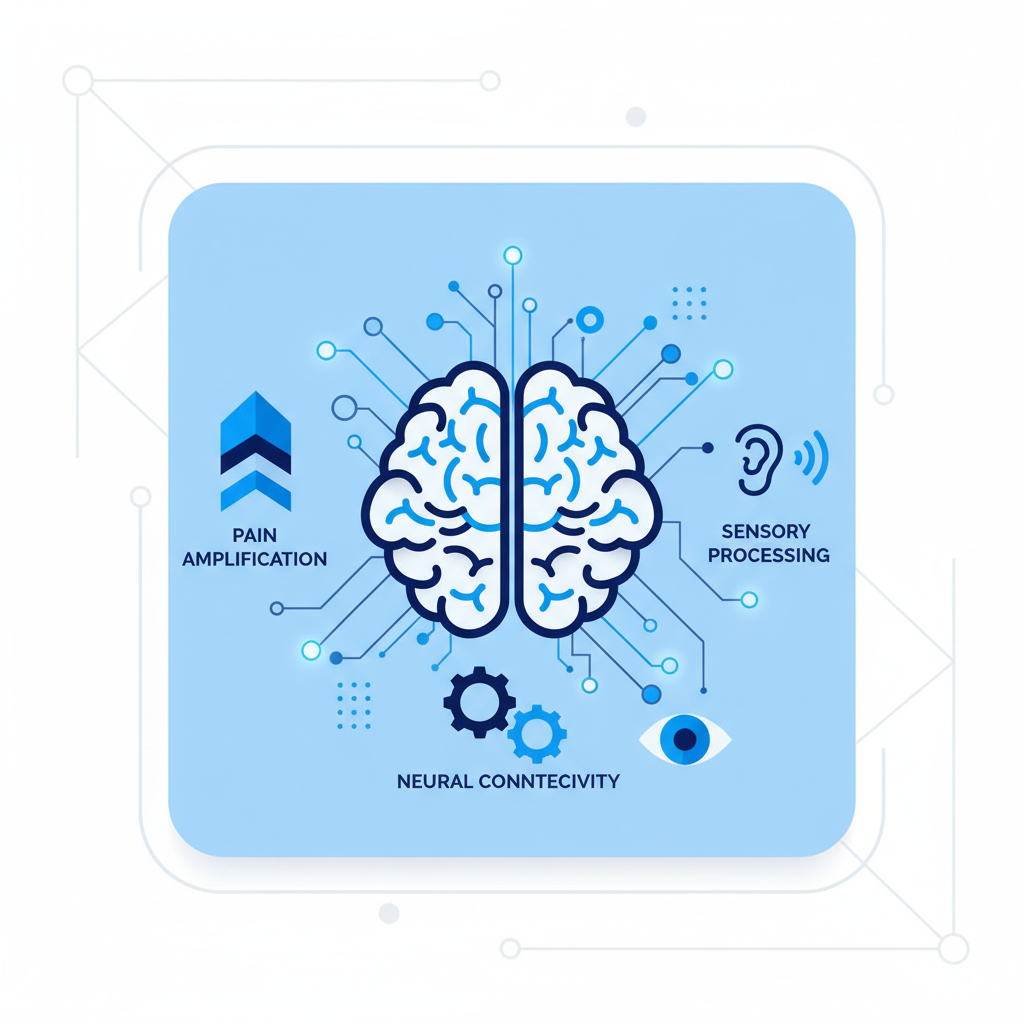
Understanding Pain Amplification, Sensory Processing, and Neural Connectivity
Fibromyalgia affects millions of people worldwide, with
research now understanding it as a complex disorder rooted in nervous system dysfunction, particularly involving pain amplification, sensory processing abnormalities, and altered brain connectivity patterns
. Understanding the neurological basis of fibromyalgia is crucial for developing effective therapeutic approaches.
From a nervous system perspective,
fibromyalgia is characterized by diffuse hyperalgesia and allodynia, where the central nervous system amplifies pain signals and processes sensory information abnormally
. This educational guide explores how brain dysfunction contributes to fibromyalgia symptoms and how targeted interventions like LENS neurofeedback therapy may help support brain regulation.
Fibromyalgia is fundamentally a disorder of pain processing, where both ascending and descending pain pathways operate abnormally, resulting in central amplification of pain signals
. This neurological understanding has opened new avenues for treatment approaches that focus on brain function rather than just symptom management.
⚕️ Important Medical Disclaimer:
The information provided is for educational purposes only and is not intended as medical advice, diagnosis, or treatment. LENS neurofeedback is a wellness modality NOT intended to diagnose, treat, cure, or prevent any disease. Always consult a qualified healthcare professional before beginning any wellness program. Individual results vary. NeuroBalance does not provide medical services.
Understanding Fibromyalgia and the Nervous System
Fibromyalgia in 2024 is understood as a multifaceted disorder with roots in sensory processing dysfunction, where individuals experience heightened sensitivity to sensory stimuli including touch, temperature, and sound
. This represents a significant shift from viewing fibromyalgia as primarily a musculoskeletal condition to understanding it as a central nervous system disorder.
Fibromyalgia is a chronic pain condition that predominantly affects women and is associated with dysfunction of the central nervous system
.
Recent research suggests fibromyalgia involves central nervous system abnormalities including altered pain processing, where patients exhibit allodynia and hyperalgesia resulting from central amplification of pain signals
.
The nervous system in fibromyalgia patients shows several key abnormalities.
The main pain pathways operate abnormally, resulting in central amplification where peripheral pain generators may play some role, but research suggests a strong central nervous system component that becomes largely independent of peripheral input
. This is why many people with fibromyalgia experience pain without clear tissue damage or injury.
🧠 Key Research Finding:
Research suggests fibromyalgia represents biologic amplification of all sensory stimuli gains, with terms like “sensory sensitivity syndrome” proposed as a unifying pathophysiological theme
.
Modern neuroscience research has revealed that fibromyalgia involves complex interactions between multiple brain regions.
Studies identify brain signatures that characterize fibromyalgia central pathophysiology at the neural systems level, using advanced fMRI analysis of brain responses to both painful and non-painful stimulation
. Understanding these neural patterns is crucial for developing targeted therapeutic approaches.
At NeuroBalance, we focus on supporting brain function through LENS neurofeedback technology, which was
first developed in 1990 by Dr. Len Ochs, PhD, as a way to improve treatment approaches in brainwave sciences
. This educational approach helps clients understand how their nervous system functions and may support natural brain regulation processes.
Brain Changes and Structural Differences
Advanced neuroimaging studies have revealed significant structural and functional brain changes in people with fibromyalgia.
Research suggests a variety of distinct structural brain changes in fibromyalgia, particularly affecting areas involved in pain and emotion processing such as the thalamus, putamen, and insula
. These findings provide important insights into the neurological basis of fibromyalgia symptoms.
Neuroimaging studies reveal structural brain changes including decreased cortical thickness in frontal, temporal, and parietal regions, reduced cortical volume in medial frontal and posterior cingulate cortex, and increased fractional anisotropy in white matter tracts
. These changes help explain why fibromyalgia affects not just pain perception but also cognitive function, emotional regulation, and sensory processing.
Recent research using source-based morphometry has provided even more detailed insights.
Studies show greater grey matter volume in the bilateral thalamus in fibromyalgia patients, while lower grey matter volume was found in bilateral putamen, bilateral pallidum, right cerebellum, right calcarine, right amygdala, and bilateral insula
.
🔬 Clinical Significance:
The thalamus plays a critical role in processing nociceptive information and contributing to both sensory-discriminative and affective-motivational components of pain. Greater thalamic volume suggests heightened pain consciousness in fibromyalgia
.
The cerebellum also shows important changes in fibromyalgia.
While traditionally associated with motor control, the cerebellum is involved in cognitive functions including attention, memory, emotion regulation, and nociception. Lower cerebellar volume may reflect impairments in cognitive control and pain perception
.
These structural brain changes correlate with functional abnormalities.
Research shows increased connectivity between the default mode network and the insula, a known pain-processing region, with the degree of increased connectivity related to ongoing spontaneous pain intensity
. This hyperconnectivity pattern has been observed in multiple chronic pain conditions.
At NeuroBalance, our educational approach to fibromyalgia support focuses on understanding these brain patterns and how neurofeedback brain training may help support the brain’s natural regulatory processes. While we don’t treat or cure conditions, many clients report improvements in their overall sense of well-being.
Central Sensitization and Pain Amplification
An extensive body of evidence supports central amplification as the underlying process for chronic widespread pain in fibromyalgia, with pain threshold studies showing patients perceive pain at lower thresholds than healthy controls
. This central sensitization process is fundamental to understanding fibromyalgia from a nervous system perspective.
Central sensitization refers to the process where the nervous system becomes hypersensitive to stimuli.
It’s as if the “volume control setting” for pain is abnormally high in fibromyalgia, characterized by neurochemical imbalances that lead to allodynia and hyperalgesia
. This explains why people with fibromyalgia often experience pain from normally non-painful stimuli like light touch or clothing.
Research has documented specific mechanisms of this pain amplification.
Studies of somatosensory-induced potentials directly support central sensitization in fibromyalgia patients, showing increased late nociceptive-evoked responses and increased amplitude of brain somatosensory potentials compared to controls
. These electrophysiological changes provide objective evidence of altered nervous system function.
🧬 Research Insight:
Studies show diffuse noxious inhibitory control is deficient in fibromyalgia patients, suggesting they have impaired pain modulation and cannot engage down-regulatory responses normally
.
The brain imaging findings support these functional changes.
Neuroimaging data demonstrate greater regional cerebral blood flow in pain processing areas at lower pain-producing pressures than healthy controls, showing the brain is working harder to process the same stimuli
. This increased neural activity helps explain the fatigue and cognitive difficulties often experienced with fibromyalgia.
What makes fibromyalgia particularly challenging is that this central sensitization can become self-perpetuating.
Central amplification of pain, normally an adaptive response to limit further injury, fails to subside naturally in fibromyalgia
. The nervous system becomes stuck in a heightened state of alertness and reactivity.
This is where approaches like LENS neurofeedback therapy may be helpful.
LENS is considered non-traditional neurofeedback that promotes self-regulation, which is necessary for optimal brain performance and allows the nervous system to function better
. At NeuroBalance, our educational approach helps clients understand how their nervous system works and what they can do to support natural regulatory processes.
Neurotransmitter Imbalances in Fibromyalgia
The biochemical signature of fibromyalgia reveals profound imbalances in key neurotransmitters that regulate pain, mood, and cognitive function.
Cumulative evidence points at alterations in neurotransmitter systems in fibromyalgia, which is interesting because the main symptoms of fibromyalgia, that is, heightened pain perception, fatigue, sleep disturbances, and depressive as well as anxiety-related symptoms, are closely linked to these neurotransmitters
.
Excitatory Neurotransmitter Excess
Research reveals dramatically elevated levels of excitatory neurotransmitters that amplify pain signals throughout the nervous system.
Studies using proton magnetic resonance spectroscopy suggest that glutamate (Glu), a key excitatory neurotransmitter, may be present in higher concentrations within the brains of FM patients
. This excess creates a neurochemical environment primed for pain amplification.
📊 What Research Suggests:
Patients with fibromyalgia have been found to have increased levels of substance P, nerve growth factor, and brain-derived neurotrophic factor in the cerebrospinal fluid, indicating increased signaling in ascending, pro-nociceptive pathways. Elevated levels of glutamate and other excitatory amino acids in the CSF and brain can lead to increased pain sensitization
.
Understanding these imbalances helps explain why LENS neurofeedback therapy may support brain regulation by helping restore natural neurochemical balance.
Inhibitory Neurotransmitter Deficits
While excitatory signals are heightened, the brain’s natural “brakes” are significantly compromised.
Lower CSF levels of metabolites of serotonin, norepinephrine, and dopamine suggest decreased activity of descending, anti-nociceptive pathways
. This creates a perfect storm where pain signals are amplified while natural pain relief mechanisms are weakened.
| Neurotransmitter | Normal Function | Fibromyalgia Changes |
|---|---|---|
| Substance P | Pain signal transmission | 3-4x higher levels |
| Glutamate | Excitatory neurotransmission | Significantly elevated |
| Serotonin | Pain inhibition, mood regulation | Markedly reduced |
| GABA | Neural inhibition, calming | Decreased levels |
| Dopamine | Pain relief, cognitive function | Low levels |
The Opioid Paradox
One of the most intriguing findings involves the body’s natural opioid system.
While opioid levels are increased in fibromyalgia, opioid receptor binding is decreased, resulting in a net effect of increased baseline endogenous opioidergic activity
. This explains why traditional opioid medications are often less effective for fibromyalgia pain.
💡 Understanding Brain Health:
This opioid paradox may help explain why our anxiety treatment approaches focus on brain regulation rather than traditional pain medication.
Cognitive Implications
Cognitive dysfunction has been linked to CNS imbalances. Abnormal levels of such neurotransmitters as substance P, serotonin, dopamine, norepinephrine, and epinephrine may cause cognitive dysfunction
. This neurochemical disruption directly impacts memory, attention, and executive function—contributing to the “fibro fog” many clients experience.
💬 What Clients Share:
“After LENS sessions, I noticed my thinking became clearer. The fog that had been clouding my mind for years started to lift, and I could focus on tasks that used to overwhelm me.” – Individual results vary
⚕️ Important Note:
Neurotransmitter imbalances vary among individuals. Getting started with personalized assessment helps identify your unique patterns.
Sensory Processing Dysfunction and Multi-Modal Sensitivity
Beyond pain amplification, fibromyalgia involves widespread dysfunction in how the brain processes sensory information from all sources.
This demonstration of qualitatively altered nociception in patients with fibromyalgia suggests that these patients differ from pain-free subjects in their processing of sensory information
.
Multi-Sensory Hypersensitivity
Research reveals that sensory hypersensitivity extends far beyond pain.
The FM group reported significantly increased sensory sensitivities to both somatic (tactile) and nonsomatic (eg, auditory and olfactory) sensory stimuli compared with the RA and control groups
. This creates a challenging environment where everyday sensations become overwhelming.
📊 What Research Suggests:
The fibromyalgia group had higher overall scores on sensory sensitivity measures. This was linked more strongly to sensory hypersensitivity and was pervasive across all senses that were surveyed
.
Understanding these sensory challenges is crucial for comprehensive support, which is why our neurofeedback brain training approaches target multiple sensory processing systems.
Altered Brain Processing Patterns
The findings suggest that a slow initial processing of stimuli in the lower brain regions is followed by a greatly accelerated one in the higher brain regions. The cause of the slowed sensory stimuli processing is not clear, but could result from reduced blood flows, exhaustion of the areas processing the signals, or a deliberate down-regulation of these areas by higher brain regions that are having trouble integrating sensory inputs from across the body
.
💡 Understanding Brain Health:
This altered processing pattern helps explain why environments that seem normal to others can feel overwhelming for those with fibromyalgia. The brain becomes overloaded trying to process and integrate multiple sensory streams simultaneously.
The Insula: Sensory Integration Hub
The insula – the part of the brain that integrates sensory inputs from around the body and determines how much attention should be paid to them – is activated in Fibromyalgia patients more than expected. One of the sensations the insula evokes is the sensation of “unpleasantness”
.
This hyperactivation in the insula helps explain why brain injury recovery support approaches that target insular function can be beneficial for fibromyalgia clients.
Sensory Modulation Disorder
Recent research identifies sensory modulation disorder as a key feature of fibromyalgia.
Sensory modulation disorder (SMD)—impaired regulation of responses to non-noxious input—may represent a clinically relevant diagnostic dimension. This study aimed to estimate the prevalence/diagnostic value of SMD in FM, examine links with symptom severity and stress, and assess its potential for patient stratification
.
| Sensory System | Typical Sensitivity | Fibromyalgia Response |
|---|---|---|
| Touch/Tactile | Light clothing, gentle contact | Painful, overwhelming |
| Sound/Auditory | Normal conversation levels | Amplified, distressing |
| Light/Visual | Comfortable brightness | Harsh, painful |
| Smell/Olfactory | Pleasant or neutral | Overpowering, nausea-inducing |
| Temperature | Comfortable range | Extreme sensitivity to changes |
💬 What Clients Share:
“Shopping malls used to be torture – the lights, sounds, and crowds would trigger intense flares. After LENS sessions, I can handle these environments much better. The world doesn’t feel as assault on my senses anymore.” – Individual results vary
⚕️ Important Note:
Sensory sensitivities can significantly impact daily functioning. Cognitive rehabilitation programs may support adaptive strategies alongside neurofeedback approaches.
The Role of Trauma and Stress in Brain Changes
The relationship between psychological trauma, chronic stress, and fibromyalgia reveals profound insights into how life experiences physically reshape brain structure and function.
Stress-related changes in other physiological systems, for example, neurotransmitter systems, might be additionally involved in symptom development. Further, stress-related changes in such other systems may develop in parallel to changes in the autonomic and HPA axis systems or even precede them, thereby contributing to or causing fibromyalgia symptoms
.
Early Life Trauma and Brain Development
Research demonstrates that childhood trauma creates lasting changes in brain chemistry and stress response systems.
Salivary cortisol levels in a cross-sectional study were shown to differ depending on the presence or absence of early-life trauma (physical or sexual abuse) but did not differentiate between fibromyalgia patients and healthy controls. Similarly, CRH concentrations in the CSF have been shown to be strongly related to the presence or absence of early-life trauma
.
📊 What Research Suggests:
Early trauma appears to create a neurobiological vulnerability that may increase susceptibility to developing fibromyalgia later in life, particularly when combined with additional stressors or triggers.
This understanding informs our PTSD and trauma recovery approaches, which recognize the deep connections between psychological and physical healing.
Chronic Stress and Neuroplasticity
Recent experiments have described an increase in the proto-oncogene c-fos in the brains of mice subjected to chronic stress. Of note, the augmented expression of c-fos is a standard technique for assessing neuroplasticity in experimental central pain states
. This provides crucial insights into how chronic psychosocial stress can lead to persistent pain and altered brain function.
💡 Understanding Brain Health:
Chronic stress literally rewires the brain, creating persistent changes in how pain and other sensory information are processed. This neuroplasticity works both ways – just as negative experiences can reshape the brain, targeted interventions can promote healing and restoration.
HPA Axis Dysregulation
The hypothalamic-pituitary-adrenal (HPA) axis – the body’s primary stress response system – shows significant dysfunction in fibromyalgia.
Neuroendocrine imbalance of the HPA axis may play a role
in the cognitive and emotional symptoms experienced alongside physical pain.
However, the relationship isn’t straightforward.
In contrast to pain, other prominent symptoms associated with fibromyalgia, such as fatigue, depressivity, and perceived stress, appear not to be related to measures of HPA axis function. It is, therefore, conceivable that fibromyalgia symptoms are associated with altered autonomic and HPA axis stress systems but that these altered stress systems do not necessarily cause the symptoms
.
Stress-Pain Cycle
A complex bidirectional relationship exists between stress and pain in fibromyalgia.
The strong association observed between SMD and perceived stress further underscores the bidirectional interplay of neurophysiological and psychosocial processes in FM
. This creates a self-perpetuating cycle where pain increases stress, which in turn amplifies pain sensitivity.
| Stress Source | Brain Impact | Fibromyalgia Connection |
|---|---|---|
| Early Life Trauma | Altered stress response development | Increased vulnerability |
| Chronic Stress | Neuroplastic changes in pain circuits | Central sensitization |
| Ongoing Pain | Stress system activation | Symptom amplification |
| Sleep Disruption | Impaired recovery processes | Fatigue, cognitive issues |
Breaking this cycle is essential for recovery, which is why comprehensive approaches like autism spectrum support often address both sensory processing and stress management simultaneously.
💬 What Clients Share:
“I never connected my childhood experiences to my fibromyalgia until I started LENS therapy. As my nervous system began to calm down, I could see how stress had been driving my symptoms all along. The healing went deeper than just pain relief.” – Individual results vary
⚕️ Important Note:
The trauma-stress-pain connection is complex and individual. Working with healthcare professionals experienced in both physical and psychological aspects of healing is essential for comprehensive recovery.
Neural Connectivity and Default Mode Network
One of the most significant discoveries in fibromyalgia research involves alterations in brain network connectivity, particularly within the default mode network (DMN) – a critical system that governs resting brain activity and self-awareness.
Fibromyalgia syndrome (FMS) patients show altered connectivity with the network maintaining ongoing resting brain activity, known as the default mode network (DMN). The connectivity patterns of DMN with the rest of the brain in FMS patients are poorly understood
.
Understanding the Default Mode Network
The default mode network represents the brain’s “idle” state – active when we’re not focused on external tasks but instead engaged in internal processes like self-reflection, memory consolidation, and planning. In fibromyalgia, this network shows profound alterations that may contribute to symptom severity and cognitive difficulties.
💡 Understanding Brain Health:
Think of the DMN as your brain’s “screensaver” – it should activate during rest and quiet the mind. In fibromyalgia, this system becomes dysregulated, contributing to racing thoughts, poor sleep, and difficulty with mental clarity.
Pain-State Dependent Changes
Fascinating research reveals that DMN alterations in fibromyalgia are partially dependent on current pain levels.
Differences in fMRI resting-state connectivity of the default mode network (DMN) seen in chronic pain patients are often interpreted as brain reorganization due to the chronic pain condition. Nevertheless, patients’ pain at the time of fMRI might influence the DMN because pain, like cognitive stimuli, engages attentional mechanisms and cognitive engagement is known to alter DMN activity. Here, we aimed to dissociate the influence of chronic pain condition (trait) from the influence of current pain experience (state) on DMN connectivity in patients with fibromyalgia (FM)
.
📊 What Research Suggests:
Patients with current pain have increased DMN-left aINS and DMN-right aINS connectivity compared to matched controls
, suggesting that acute pain episodes create additional disruption in brain network function.
Insula-DMN Connection
The insula, which processes internal bodily sensations and emotions, shows abnormal connectivity patterns with the DMN in fibromyalgia.
Functional magnetic resonance imaging studies on FM have suggested altered brain connectivity between the insula and the default mode network (DMN). The insula–DMN connectivity is associated with frequency-specific functional reorganization in patients with FM. The clinical relevance of this connectivity change may provide an objective measure of FM phenotypes and related functional disability
.
This altered connectivity helps explain why PBM therapy support approaches that target brain connectivity can be beneficial alongside neurofeedback interventions.
Frequency-Specific Disruptions
Advanced brain imaging reveals that connectivity problems occur at specific brain wave frequencies.
We confirmed the frequency-specific reorganization of the insula-DMN connectivity in FM. The clinical relevance of this connectivity change may warrant future studies to elucidate its causal relationship and potential as a neurological signature
.
| Brain Wave Frequency | Normal Function | Fibromyalgia Changes |
|---|---|---|
| Delta (1-4 Hz) | Deep sleep, restoration | Altered connectivity patterns |
| Theta (4-8 Hz) | Memory, emotion processing | Dysregulated activity |
| Alpha (8-13 Hz) | Relaxed awareness, creativity | Disrupted patterns |
| Beta (13-25 Hz) | Active concentration, alertness | Excessive activation |
| Gamma (25-40 Hz) | Higher cognitive function | Altered synchronization |
Attention Network Dysfunction
Beyond the DMN, fibromyalgia affects attention networks that control focus and cognitive flexibility.
Resting-state functional magnetic resonance imaging (rs-fMRI) analysis can non-invasively evaluate the degree of coupling of neural activity between any two brain regions. Patients with fibromyalgia exhibit changes in the neural connections between the default mode network (DMN), salience network, somatosensory cortex, insular cortex
.
This understanding is crucial for peak performance optimization approaches that target cognitive function alongside pain management.
Clinical Implications
FMS patients demonstrated alterations to connectivity between DMN structures and anterior midcingulate cortex, right parahippocampal gyrus, left superior parietal lobule and left inferior temporal gyrus
. These specific connectivity patterns correlate with symptom severity and treatment response.
💬 What Clients Share:
“Before LENS therapy, my mind never felt quiet. Even during rest, I felt like my brain was running in overdrive. Now I can actually experience true mental calm and restorative rest.” – Individual results vary
⚕️ Important Note:
Neural connectivity changes are complex and individualized. LENS technology explanation shows how personalized assessment guides targeted intervention approaches.
How LENS Neurofeedback Addresses Brain Function
LENS neurofeedback provides a unique approach to supporting brain function by offering gentle feedback that allows the brain to self-regulate and optimize its activity patterns
.
The Low Energy Neurofeedback System uses feedback in the form of a radio frequency carrier wave, administered at a positive offset frequency from the person’s own dominant EEG frequency, with clinical evidence supporting its efficacy across a spectrum of conditions
.
Unlike traditional neurofeedback that requires active participation,
LENS works passively by lightly attaching sensors to the forehead and earlobes with nothing required of the client during treatment
.
The LENS program feeds back the same brainwaves and adds an extremely small radio frequency, called an offset, resulting in the brain self-adjusting and minimizing its dysfunction
.
For individuals with fibromyalgia, this approach is particularly relevant because
neuroimaging studies identify abnormal effective connectivity between cortical areas responsible for descending pain modulation and sensory components of pain experience
.
Neuroplasticity is the process by which synapses change connectivity patterns, and LENS Neurofeedback is understood to catalyze this process in a passive manner by providing gentle and safe electrical feedback
.
The gentle nature of LENS makes it particularly well-suited for those with fibromyalgia, who often experience heightened sensitivity to stimuli. By working with the brain’s natural capacity for self-regulation,
this “feedback” is understood to cause adaptive disruptions to patterns of neural-firing and may induce healthier, more plastic, brain states
.
Our Los Angeles practice utilizes this sophisticated technology to support clients in their journey toward better brain balance. Many clients find the passive nature of LENS technology particularly appealing, especially when traditional approaches have felt overwhelming or taxing on their already sensitive nervous systems.
Recent Research and Clinical Findings
Recent scientific research continues to support the potential of neurofeedback approaches for fibromyalgia.
A 2025 safety and feasibility randomized placebo controlled trial explored electroencephalographic effective connectivity neurofeedback treatment for fibromyalgia
, demonstrating continued scientific interest in this field.
A comprehensive systematic review of EEG-neurofeedback treatments for fibromyalgia patients found that the main symptoms showing improvement were anxiety, depression, pain, general health and symptom severity, with traditional EEG neurofeedback based on a sensorimotor rhythm protocol being the most commonly used method
.
Regarding LENS specifically,
low-energy neurofeedback system training was effective in a randomized controlled trial of 64 persons with fibromyalgia as rated by clinicians on the Clinical Global Impressions Scale–Clinician at session 22 and follow-up
. However, it’s important to note that
research concludes LENS cannot be recommended as a single modality treatment for fibromyalgia, though further study is warranted to investigate its potential to interact synergistically with other therapeutic approaches
.
Research has reported that biofeedback and LENS were more effective than sham/placebo biofeedback in reducing fibromyalgia pain, with significant improvements in functional connectivity of somatomotor cortices and a reduction in pain among fibromyalgia patients
.
LENS neurofeedback has been used to treat traumatic brain injury, ADHD, insomnia, fibromyalgia, restless legs syndrome, anxiety, depression, and anger
, demonstrating its versatility in addressing various neurological and psychological conditions.
At NeuroBalance, we stay current with emerging research while maintaining realistic expectations about outcomes. Our approach combines LENS neurofeedback therapy with comprehensive support, recognizing that fibromyalgia often benefits from a multifaceted approach that may include cognitive rehabilitation and other supportive services.
Frequently Asked Questions
The NeuroBalance Approach to Fibromyalgia Support
At NeuroBalance, we understand that fibromyalgia affects each person differently, requiring individualized care and realistic expectations. Jon S. Haupers, our LENS Neurofeedback Specialist with over 12 years of experience, brings a deep understanding of sensitive nervous systems and the gentle approach needed for fibromyalgia support.
Our approach recognizes that fibromyalgia involves complex brain-body interactions that benefit from comprehensive support. We combine LENS neurofeedback therapy with educational resources and supportive services, always working collaboratively with your existing healthcare team.
🌱 Why Choose NeuroBalance for Fibromyalgia Support?
- Specialized Experience: Over a decade serving Los Angeles clients with sensitive nervous systems
- Gentle Approach: LENS technology designed specifically for those who need minimal stimulation
- Comprehensive Care: Additional services like PBM therapy and cognitive support
- Realistic Expectations: Honest communication about what neurofeedback can and cannot achieve
- Collaborative Care: We work with your existing healthcare providers
Understanding fibromyalgia from a nervous system perspective helps us provide more targeted support. Whether you’re exploring options for anxiety management, seeking better sleep quality, or looking to improve overall brain wellness, we’re here to provide educational resources and support.
🌱 Take Your Next Step:
Learn more about getting started with NeuroBalance, explore our client testimonials, or browse our FAQ for more information about our services and approach.
This content is for educational purposes only and is not intended as medical advice. Neurofeedback is not intended to diagnose, treat, cure, or prevent any disease. Always consult with qualified healthcare professionals regarding your health concerns and treatment options.
Ready to Explore Neurofeedback Support?
Take the first step toward supporting your brain wellness journey. Schedule a consultation to learn if LENS neurofeedback might be right for you.
📞 424.625.5445 | ✉️ [email protected]
📍 4029 Alla Road, Los Angeles, CA 90066