

Why Some Brains Recover Faster Than Others
Understanding Brain Wellness, Neuroplasticity, and Individual Recovery Factors
Have you ever wondered why some people bounce back from brain injuries, trauma, or mental health challenges faster than others? Why does one person with anxiety find relief in weeks while another struggles for months? The answer lies in the fascinating complexity of individual brain differences, genetics, neuroplasticity, and baseline brain health.
Neuroplasticity, the ability of the nervous system to adapt structurally and functionally in response to environmental interactions and injuries, is a cornerstone of recovery in the central and peripheral nervous systems.
However, this recovery process varies dramatically between individuals due to multiple factors we’re only beginning to understand.
At NeuroBalance in Los Angeles, we’ve witnessed these individual differences firsthand through our LENS neurofeedback therapy practice. Some clients experience rapid improvements within just a few sessions, while others require a more gradual approach to achieve lasting changes in their brain function.
⚕️ Important Medical Disclaimer:
The information provided is for educational purposes only and is not intended as medical advice, diagnosis, or treatment. LENS neurofeedback is a wellness modality NOT intended to diagnose, treat, cure, or prevent any disease. Always consult a qualified healthcare professional before beginning any wellness program. Individual results vary. NeuroBalance does not provide medical services.
Understanding Individual Brain Recovery
The brain’s ability to recover and adapt is not a one-size-fits-all process.
Variations in neuroanatomy, such as differences in cortical thickness, gray matter volume, and synaptic density, significantly influence individual neuroplastic responses. Structural differences in the hippocampus and prefrontal cortex have been associated with varying capacities for learning and memory, impacting how individuals adapt to new experiences or recover from neurological injuries.
Think of brain recovery like physical fitness recovery after an injury. Some athletes naturally heal faster due to genetics, age, fitness level, and other factors. Similarly, brain recovery involves multiple variables that interact in complex ways:
Key Recovery Variables
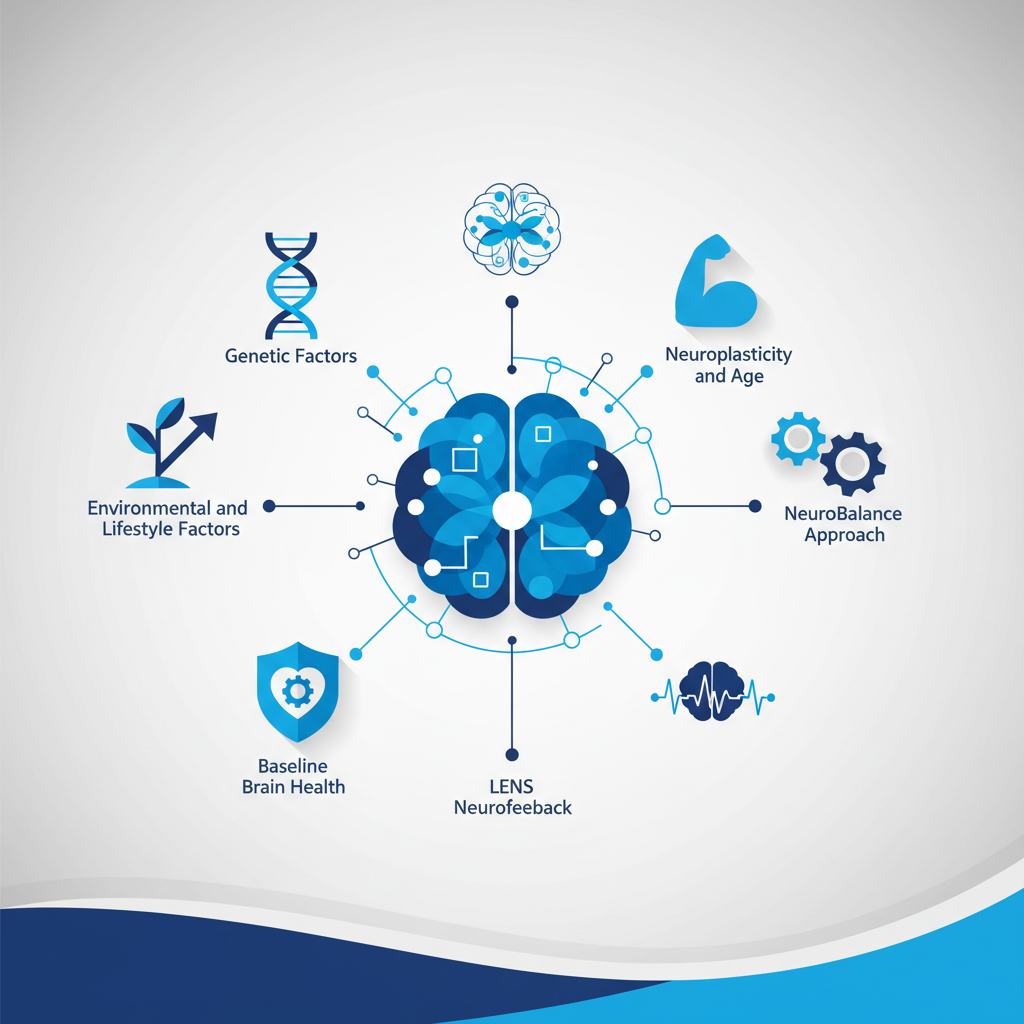
Research suggests that genetic makeup, age, baseline brain health, environmental factors, and individual neuroplasticity capacity all contribute to recovery speed and success rates in neurofeedback therapy.
At NeuroBalance, our experience with LENS neurofeedback technology has shown that understanding these individual differences helps us provide more personalized approaches to brain wellness support.
Genetic Factors in Recovery Speed
Recent breakthrough research has revealed how genetics play a crucial role in determining recovery outcomes.
For stroke survivors, factors such as age, baseline health, and stroke severity have been highlighted as important when predicting recovery outcomes, but genetics has received much less attention. Research identified ApoE ε4 carrier status and brain-derived neurotrophic factor (BDNF) polymorphism, which have both been tied to reduced neural repair in past research.
The rs6265 gene variant was associated with poorer cognition. This gene variant is related to brain-derived neurotrophic factor, or BDNF, which is the most common growth factor in the brain and is strongly associated with learning. About 20-30% of people are estimated to have this genetic variant, which slows the release of BDNF.
### The BDNF Connection
Brain-Derived Neurotrophic Factor (BDNF) acts like fertilizer for the brain, promoting the growth and survival of neurons.
“Your brain gushes out BDNF when you’re learning new things,” according to UCLA research. “Hopefully your brain is gushing out BDNF at this very moment. People who have this gene variant had poorer cognitive status at one year.”
This genetic variation helps explain why some clients at our Los Angeles neurofeedback center may experience different timelines for improvement in conditions like:
– ADHD and attention challenges
– Anxiety and stress responses
– Traumatic brain injury recovery
### Stress Response Genetics
Environmental factors, such as stressors, also played a role in genetic expression among stroke patients. Patients with the gene variants rs4291 and rs324420 were at higher risk for developing more severe depression and PTSD symptoms after one-year post-stroke.
This research helps explain individual differences we observe in our PTSD treatment and depression support programs.
Neuroplasticity and Age Differences
Age significantly impacts the brain’s ability to change and adapt.
When children are young, their brains are highly adaptable, making it easier for them to be able to recover from brain-related injuries at a far more efficient rate in comparison to adults. This concept of plasticity being at its peak goes on to support the formation of even more different neural connections. As an individual ages, their overall capacity and ability to continuously adapt and maintain plasticity decline.
### The Neuroplasticity Spectrum
Neuroplasticity has been defined to be the changes in brain structure and function throughout the span of a life. From injury to aging, the brain does a great deal to recover and improve the well-being of an individual.
However, this doesn’t mean older brains can’t change.
Neuroplasticity, the brain’s ability to adapt and reorganize, is key to recovering from stroke, traumatic brain injury (TBI), and neurodegenerative diseases. Once thought to occur only in early life, it is now known to persist throughout adulthood, enabling new therapeutic approaches. Neuroplasticity supports functional recovery by rerouting neural pathways and forming new connections.
### Age-Specific Recovery Patterns
At NeuroBalance, we’ve observed distinct patterns across age groups:
**Children and Teens:** Often show rapid responses to autism spectrum support and learning support programs due to high neuroplasticity.
**Adults:** May require more sessions but can achieve significant lasting improvements with consistent neurofeedback brain training.
**Seniors:** Can still experience meaningful changes, particularly in cognitive rehabilitation and memory support.
Baseline Brain Health Matters
There is a general consensus that the trajectories of brain aging differ substantially among individuals due to differences in genetic factors, lifestyles, environmental factors, and chronic diseases of the patient. The brain age gap (BAG), the difference between the estimated brain age and chronological age of a subject, may provide a promising indicator of aging-related brain function.
### Brain Age vs. Chronological Age
Research shows that some people have “younger” brains than their chronological age would suggest, while others show accelerated aging.
The difference between chronological age and the apparent age of the brain estimated from brain imaging data—the brain age gap (BAG)—is widely considered a general indicator of brain health. Converging evidence supports that BAG is sensitive to an array of genetic and nongenetic traits and diseases.
### Factors Affecting Baseline Brain Health
Several factors contribute to better baseline brain health and faster recovery:
1. **Physical Health Status:** Cardiovascular health, inflammation levels, and metabolic function
2. **Mental Health History:** Previous trauma, chronic stress, or untreated mental health conditions
3. **Lifestyle Factors:** Sleep quality, nutrition, exercise, and social connections
4. **Cognitive Reserve:** Education level, mental stimulation, and lifelong learning
Our comprehensive initial assessment at NeuroBalance helps identify these baseline factors to create personalized treatment approaches.
📍 NeuroBalance Los Angeles
Located in Mar Vista, serving clients throughout Southern California. Home visits also available.
4029 Alla Road, Los Angeles, CA 90066 • 424.625.5445
How LENS Neurofeedback Works
LENS neurofeedback was first developed in 1990 by Dr. Len Ochs, PhD, a clinical psychologist, as a way to improve treatment trends in brainwave sciences which reduced the number of total sessions needed to improve health. What he finally came up with is now called LENS (Low Energy Neurofeedback System). LENS remains the original direct neurofeedback with a 33-year history of breaking apart neural gridlock resulting from emotional trauma and stress.
### The Science Behind LENS
The Low Energy Neurofeedback System (LENS) is an EEG based, direct neurofeedback system that stimulates the brain to reset itself and achieve optimal performance. Neuroscientists believe that the brain’s defenses against stressors and trauma can create a “neural gridlock.” LENS works around these blockages. Addressing the brain in its own electromagnetic language, LENS allows the brain to “reboot,” restoring optimal functioning.
### Why LENS Works Differently for Each Person
Every individual has a distinct pattern of brain waves (EEG signals) that continuously shift over time. The patented LENS technology uses these unique EEG “fingerprints” to deliver feedback tailored in real time to each person’s specific physiological and neurological makeup.
This personalized approach helps explain why recovery speeds vary:
– **Unique Brain Patterns:** Each person’s EEG signature is different
– **Real-Time Adaptation:** The system adjusts to individual responses
– **Passive Process:**
LENS neurofeedback therapy is passive. LENS does not “train” brainwaves like all other slower traditional neurofeedback therapy.
### Treatment Efficiency
Unlike other types of neurofeedback, which may take 40 to 80 sessions and longer sessions to produce noticeable effects, LENS achieves results more efficiently. Symptoms often diminish or resolve rapidly, with many clients reporting significant improvements within just a few sessions. More than 85% of individuals have experienced substantial benefits from the LENS treatment. The resulting changes are typically long-lasting, eliminating the need for continuous or ongoing sessions.
Research Insights on Recovery
Extensive research validates the effectiveness of LENS neurofeedback across various conditions.
Studies showed significant improvements (p < .0001) from beginning to end of treatment. After an average of only 20 treatments the mean average of patient symptom ratings (0-10) declined from 7.92 to 3.96, a 50% improvement.
### Clinical Outcomes Research
LENS treatment appears to be very efficient and effective in rapidly reducing a wide range of symptoms. It particularly produces rapid improvements in the first five to six sessions.
This aligns with our clinical observations at NeuroBalance.
Low-energy neurofeedback system (LENS) delivers a weak electromagnetic signal to change the patient's brain waves while they are motionless with their eyes closed. This type of neurofeedback has been used to treat traumatic brain injury, ADHD, insomnia, fibromyalgia, restless legs syndrome, anxiety, depression, and anger.
### Safety and Efficacy
Research has demonstrated high levels of safety and efficacy in neurofeedback trials. Both traditional neurofeedback and LENS have demonstrated efficacy and safety in the treatment of many neurological and psychologically-based conditions.
Environmental and Lifestyle Factors
Beyond genetics, your environment and lifestyle choices create the foundation for brain recovery speed.
Research shows that beneficial lifestyle practices like regular exercise, cognitive training, and Mediterranean diet may enhance neuroprotection by boosting synaptic plasticity and neurogenesis, while adverse factors such as sleep deprivation and sedentary behavior may exacerbate brain aging through neuroinflammation
. These environmental influences can actually override genetic predispositions, demonstrating the remarkable power of lifestyle medicine.
Sleep Quality and Brain Recovery
Quality sleep serves as your brain’s nightly maintenance system. During deep sleep, your brain clears metabolic waste, consolidates memories, and repairs neural connections. Poor sleep quality can accelerate brain aging and reduce neuroplasticity – the exact opposite of what you need for effective therapy outcomes.
📊 What Research Suggests:
Studies indicate that sleep deprivation promotes neuroinflammation and oxidative stress, which may exacerbate brain aging
. Conversely, consistent quality sleep supports the brain’s natural repair mechanisms and enhances LENS neurofeedback therapy effectiveness.
Physical Exercise and Neuroplasticity
Regular physical exercise in the form of aerobic activities enhances neuroplasticity by promoting the production of brain-derived neurotrophic factor (BDNF), which counteracts the effects of aging
. This is particularly important for clients seeking anxiety treatment or depression support, as exercise naturally supports the same pathways that neurofeedback helps optimize.
Chronic Stress and Brain Age Gap
Chronic psychological stress is a major contributor to accelerated brain aging and vulnerability to late-life neuropsychiatric disorders
. This creates a particularly challenging environment for brain recovery.
Brain age gap studies have revealed contributions of socioeconomic disparities, environmental exposures, and cardiometabolic factors to accelerated brain aging
.
⚕️ Important Note:
While we can’t control all environmental factors, recognizing stress patterns and developing healthy coping strategies significantly impacts therapy outcomes. Individual responses vary, and we work with each client to optimize their unique recovery environment.
Nutrition and Brain Health
Research has shown that access to green spaces supports emotional regulation and memory function, promoting positive neuroplastic adaptation
. Similarly, nutrition profoundly impacts brain health. Anti-inflammatory diets rich in omega-3 fatty acids, antioxidants, and complex carbohydrates create an optimal environment for neural healing.
The NeuroBalance Approach
At NeuroBalance, we recognize that your brain’s unique recovery potential is shaped by multiple factors. Our LENS technology works with your individual neuroplasticity patterns rather than against them, creating personalized protocols that honor your brain’s specific recovery timeline and genetic predispositions.
Personalized Assessment Protocol
Our comprehensive assessment process examines multiple factors that influence recovery speed. We evaluate brainwave patterns, stress response systems, sleep quality, and lifestyle factors to create a complete picture of your neuroplastic potential. This allows us to predict likely recovery timelines and optimize treatment protocols from day one.
| Assessment Factor | Impact on Recovery | LENS Adaptation |
|---|---|---|
| Baseline Brainwave Activity | Determines initial dysregulation severity | Customized frequency protocols |
| Stress Response Patterns | Affects neuroplasticity capacity | Gentle, progressive intensity |
| Age and Brain Age Gap | Influences recovery timeline | Session frequency optimization |
| Sleep Quality | Critical for neural consolidation | Timing and intensity adjustments |
Adaptive Treatment Protocols
Unlike standardized approaches, our protocols adapt continuously to your brain’s responses. If you’re genetically predisposed to slower neuroplasticity, we adjust session frequency and intensity accordingly. Fast responders might progress quickly through protocols, while others benefit from gentler, more sustained approaches.
💡 Understanding Our Process:
LENS technology reads your brain’s real-time feedback and adjusts automatically. This means faster brains receive precisely what they need for efficient change, while more sensitive systems get gentler support. It’s like having a therapy that speaks your brain’s unique language.
Whole-Person Optimization
Effective brain training extends beyond the therapy session. We provide guidance on sleep optimization, stress management, nutrition, and exercise – all factors that accelerate natural recovery. Our brain training approach integrates seamlessly with lifestyle modifications that support neuroplasticity.
Optimizing Your Recovery Potential
While you cannot change your genetics, you have significant control over factors that influence recovery speed. Understanding how to optimize these variables can dramatically improve your therapy outcomes and overall brain health trajectory.
Supporting Neuroplasticity Naturally
Brain-derived neurotrophic factor (BDNF) plays a vital role in neurogenesis and dendritic growth, and is crucial for neurogenesis in the hippocampus, promoting neural progenitor cell differentiation and synaptic plasticity
. You can naturally support BDNF production through specific lifestyle practices that complement your LENS therapy.
📊 What Research Suggests:
Exercise improves neurogenesis, brain plasticity, and cognitive function, being protective for neurodegeneration
. Regular aerobic exercise, meditation, quality sleep, and social connection all naturally boost BDNF levels and enhance recovery speed.
Managing Your Brain Age Gap
Brain age gap (BAG) is a neuroimaging-derived marker of accelerated brain aging
, and
each one-year increase in BAG raises cognitive decline risk
. However,
lifestyle changes such as quitting smoking, moderate alcohol use, and regular exercise significantly reduce brain aging, especially in high-risk individuals
.
This means that even if your brain shows signs of accelerated aging, targeted lifestyle interventions can help reverse this trajectory while neurofeedback therapy supports optimal neural function.
Specific Optimization Strategies
| Optimization Factor | Target | Recovery Impact |
|---|---|---|
| Sleep Quality | 7-9 hours, consistent schedule | Enhances neural consolidation |
| Aerobic Exercise | 150 minutes weekly | Boosts BDNF production |
| Stress Management | Daily meditation/mindfulness | Reduces cortisol, supports plasticity |
| Social Connection | Regular meaningful interactions | Cognitive stimulation, emotional support |
| Nutrition | Anti-inflammatory diet | Provides neural building blocks |
Age-Specific Considerations
Recovery optimization strategies vary by life stage.
Genetic, epigenetic, and environmental factors contribute to human aging, and humans age at different rates
. Younger brains typically show faster responses to neurofeedback, while older brains may require more sustained intervention but can still achieve significant improvements.
Our peak performance protocols are specifically adapted for different age groups and recovery goals, whether you’re seeking ADHD support, TBI recovery, or cognitive enhancement.
Success Stories and Outcomes
Real-world outcomes demonstrate how individual factors influence recovery speed and success. Our client testimonials reveal patterns that align with current research on neuroplasticity and brain recovery. More than 90% of our Los Angeles clients feel noticeable improvements, but their timelines vary significantly based on the factors we’ve discussed.
Fast Responders: Optimal Conditions
Clients who experience rapid improvements typically share certain characteristics: younger age, good baseline health, healthy sleep patterns, regular exercise, and strong social support. These individuals often notice changes within 3-5 sessions and achieve substantial improvements by session 10-15.
💬 What Clients Share:
“After just 8 sessions, my anxiety and focus issues dramatically improved. I wish I’d found LENS years ago!” – Fast responder with optimal lifestyle factors (individual results vary)
Steady Progressors: Building Resilience
Many clients experience steady, consistent progress over 15-25 sessions. These individuals may have some challenging factors – perhaps genetic variations affecting BDNF production, chronic stress, or complex trauma histories. Their recovery follows a different but equally successful trajectory.
What’s remarkable is that these clients often develop greater long-term resilience.
Psychological resilience emerges as a crucial factor in an individual’s ability to adapt to and recover from stress, and has been linked to successful aging with an impact that rivals the importance of physical health
. The gradual neural reorganization builds robust, lasting changes.
Complex Cases: Persistent Success
Clients with multiple challenging factors – advanced age, significant brain injuries, complex medical histories, or severe baseline dysregulation – require longer treatment courses but can still achieve meaningful improvements. These cases often involve cognitive rehabilitation combined with LENS therapy.
💬 What Clients Share:
“It took 30+ sessions, but my post-stroke cognitive function improved beyond what doctors thought possible. The patience and persistence paid off enormously.” – Complex case success (individual results vary)
Outcome Patterns by Condition
Different conditions show characteristic recovery patterns. Anxiety disorders often respond quickly, while PTSD and complex trauma may require more sustained treatment. Concussion support varies dramatically based on injury severity and time since injury.
⚕️ Important Note:
Individual results vary significantly. These patterns represent tendencies, not guarantees. Every brain is unique, and we tailor treatment to your specific situation and goals. Consult with our team to understand your likely recovery trajectory.
The Future of Personalized Brain Therapy
The future of brain recovery lies in personalized medicine that considers each individual’s unique neurobiological profile.
Precision medicine, tailored to an individual’s genetic and epigenetic profile, offers promising strategies to optimize recovery
. This shift toward individualized treatment represents a fundamental change in how we approach brain wellness and recovery.
### Genetic-Guided Treatment Selection
Research has identified several key genetic markers that influence treatment response.
Polymorphisms in the human genes coding for brain-derived neurotrophic factor (BDNF) and apolipoprotein E (ApoE) have been studied in the context of plasticity and/or stroke recovery
, and
genetic factors, such as BDNF gene polymorphisms and DNA methylation, influence recovery outcomes
.
The BDNF gene variants, affecting approximately 20-30% of the population, can dramatically alter how quickly someone responds to brain training interventions. Those with certain variants may need longer treatment durations or different protocols to achieve optimal results. At NeuroBalance, we’re pioneering approaches that factor in these genetic differences to optimize LENS neurofeedback therapy protocols.
### The Role of Biomarkers in Treatment Planning
Advanced neuroimaging and biomarker analysis are becoming essential tools for predicting and monitoring treatment response.
Despite vast molecular profiling and omics studies of brain structures and functions, only certain molecular alterations may serve as biomarkers of plasticity changes in the brain. The newly discovered world of non-coding RNAs (ncRNAs) is constantly expanding into all areas of biomolecular interaction
.
These biomarkers help practitioners understand not just whether someone will respond to treatment, but how their brain is changing throughout the recovery process. This allows for real-time adjustments to therapy protocols, ensuring each individual receives the most effective approach for their unique neurobiology.
### Technology Integration and AI-Assisted Treatment
The integration of artificial intelligence with neurofeedback technology promises even more personalized treatment approaches.
The plasticity of an MLP is largely determined by the algorithms and parameters used during training, whereas the plasticity of the human brain is influenced by a wide range of factors, including genetics, experience, and environmental factors. While both the plasticity of an MLP and the human brain share some similarities, they are also significantly different in terms of their underlying mechanisms, complexity, and scope of influence
.
AI algorithms can analyze vast amounts of brain data to identify patterns that human practitioners might miss, potentially predicting optimal treatment protocols before therapy even begins. This technology could revolutionize how we approach conditions like anxiety treatment and ADHD management.
When to Seek Professional Brain Training Support
Understanding when to seek professional neurofeedback support can be crucial for optimizing your brain’s recovery potential.
A possible reason for insufficient group effects of NF trainings vs. placebo could be related to the high rate of participants who fail to self-regulate brain activity by NF (“non-learners”). Another reason could be the application of standardized NF protocols not adjusted to individual differences in pathophysiology
.
### Signs Your Brain May Benefit from Professional Support
Several indicators suggest that professional brain training could be beneficial:
**Persistent Symptoms After Other Interventions:** If you’ve tried traditional approaches for issues like anxiety, ADHD, or depression with limited success, your brain may benefit from direct neurological intervention through LENS neurofeedback technology.
**Multiple Symptoms Across Systems:** When someone experiences overlapping symptoms affecting attention, mood, sleep, and physical health simultaneously, it often indicates underlying brain dysregulation that responds well to neurofeedback.
**Recovery Plateaus:** If progress has stalled in other therapies or rehabilitation programs, this may indicate that the brain needs different types of stimulation to continue healing and adapting.
**Medication Sensitivity or Preference for Drug-Free Options:** Some individuals experience significant side effects from medications or prefer non-pharmaceutical approaches. Neurofeedback offers an effective alternative that works with the brain’s natural healing mechanisms.
### The NeuroBalance Assessment Process
Our comprehensive assessment considers multiple factors that influence recovery potential.
The best available evidence exists for neurophysiological baseline parameters. Among them, the target parameters of the respective training seem to be of particular importance
.
During your initial consultation, we evaluate:
– Current brain wave patterns and regulation
– Medical and family history
– Previous treatment responses
– Lifestyle and environmental factors
– Individual goals and preferences
This assessment helps us understand your unique neurobiological profile and predict how your brain is likely to respond to different intervention approaches. Learn more about getting started with our assessment process.
### Timing Considerations for Optimal Outcomes
The timing of neurofeedback intervention can significantly impact outcomes.
Although typically associated with early developmental stages, there is a growing body of evidence demonstrating that CPs can be reopened later in life due to a variety of factors that are still being uncovered. These include damage to peripheral sensory organs and changes in the sensory environment
.
Early intervention often produces faster results, but it’s never too late to benefit from brain training. The brain maintains plasticity throughout life, though the mechanisms and timelines may differ. Whether you’re dealing with traumatic brain injury recovery or seeking cognitive enhancement, the key is finding the right approach for your current brain state and goals.
Frequently Asked Questions
Ready to Optimize Your Brain’s Recovery Potential?
Understanding why some brains recover faster is just the beginning. Take the first step toward supporting your unique brain wellness journey with personalized LENS neurofeedback therapy.
📍 4029 Alla Road, Los Angeles, CA 90066 | ✉️ [email protected]
Serving Los Angeles, Beverly Hills, Santa Monica, Marina del Rey & surrounding areas
Your Brain’s Unique Recovery Journey
Understanding why some brains recover faster than others empowers you to make informed decisions about your brain wellness journey. The interplay of genetics, age, baseline regulation, environmental factors, and neuroplasticity creates a unique recovery profile for every individual. Rather than comparing your progress to others, focus on optimizing the factors within your control and working with practitioners who understand these individual differences.
The future of brain therapy lies in personalized approaches that honor your brain’s unique characteristics and optimize your specific recovery potential. Whether you’re exploring options for anxiety support, seeking to understand ADHD and brain function, or interested in peak performance optimization, the key is finding an approach that works with your brain’s natural healing mechanisms.
🌱 Your Next Step Toward Brain Wellness:
Every brain has the capacity for positive change, regardless of your starting point or past experiences. Learn more about getting started with personalized brain assessment, explore our client success stories, or browse our comprehensive FAQ for more information about neurofeedback therapy.
This content is for educational purposes only and is not intended as medical advice. Individual results may vary. Brain training approaches should complement, not replace, professional medical care. Always consult with qualified healthcare professionals regarding your specific health concerns and treatment options.