

The Myth of “Just Relax”: Why the Brain Needs Help Calming Down
Understanding Why Willpower Isn’t Enough and How LENS Neurofeedback Helps
We’ve all heard it countless times: “Just relax.” “Calm down.” “Don’t stress about it.” While these well-meaning suggestions come from a place of care, they often miss a crucial point—for many people struggling with chronic stress, anxiety, or trauma, the brain literally cannot “just relax” on command.
You cannot command your nervous system to relax. You must invite it into a state of safety. Forcing change or trying to suppress your symptoms often creates more internal stress, which your nervous system will interpret as another threat.
This isn’t a matter of willpower or personal weakness. It’s neurobiology.
When you react from a place of fight, flight, or freeze, you are not choosing to do so; your biology is choosing for you. The belief that we should be able to control our trauma reactions through willpower is a source of immense and unnecessary shame. You cannot will your heart to stop beating faster when you are scared. You cannot will your muscles to relax when they have been told to prepare for a fight. These automatic stress responses are far more powerful than conscious thought.
⚕️ Important Medical Disclaimer:
The information provided is for educational purposes only and is not intended as medical advice, diagnosis, or treatment. LENS neurofeedback is a wellness modality NOT intended to diagnose, treat, cure, or prevent any disease. Always consult a qualified healthcare professional before beginning any wellness program. Individual results vary. NeuroBalance does not provide medical services.
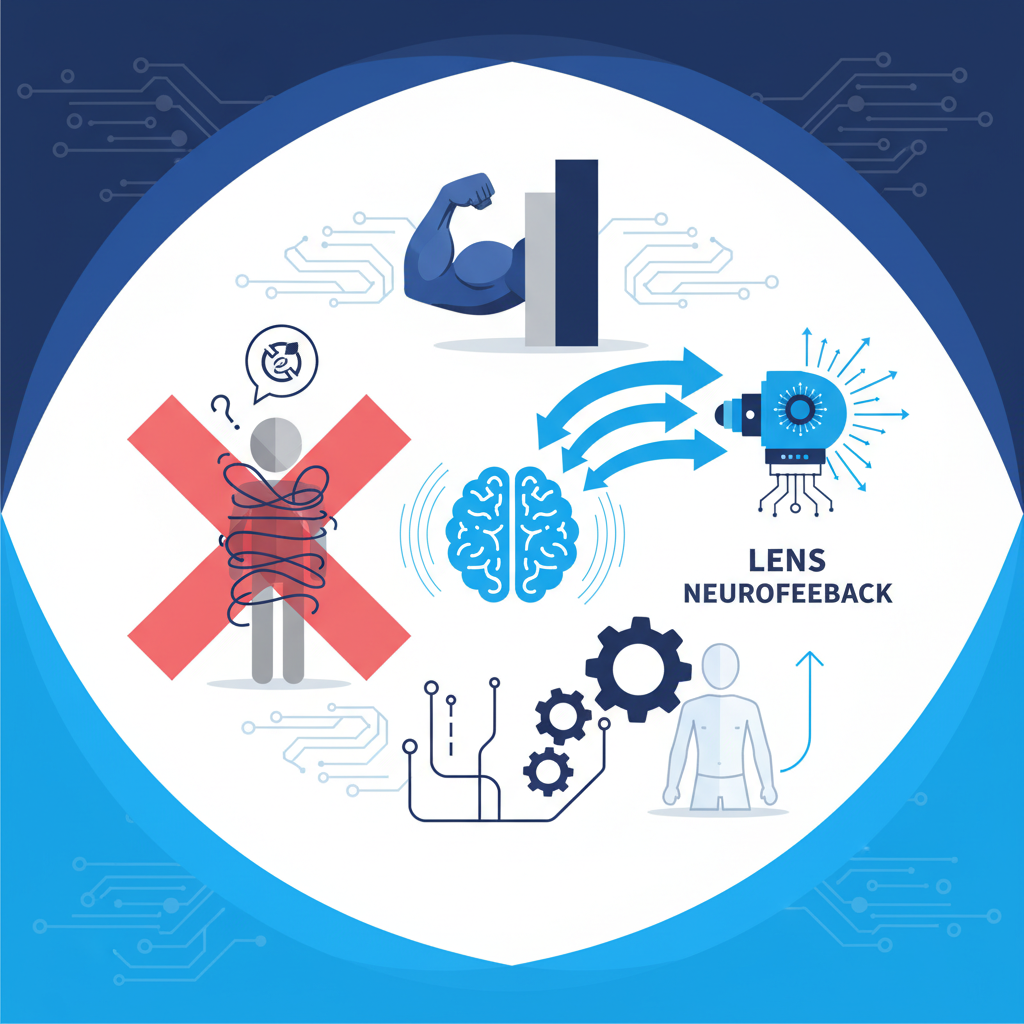
Understanding the “Just Relax” Myth
The phrase “just relax” assumes that relaxation is simply a conscious choice—that we can flip a switch and turn off our stress response. But modern neuroscience reveals this is far from accurate.
When faced with a situation that your brain perceives as a threat to your life or safety, your body’s ancient survival wiring takes over. This is an automatic, lightning-fast process that happens far more quickly than conscious thought. This system is designed for one purpose: to keep you alive.
This combination of reactions to stress is also known as the “fight-or-flight” response because it evolved as a survival mechanism, enabling people and other mammals to react quickly to life-threatening situations. The carefully orchestrated yet near-instantaneous sequence of hormonal changes and physiological responses helps someone to fight the threat off or flee to safety.
However,
the body can also overreact to stressors that are not life-threatening, such as traffic jams, work pressure, and family difficulties. Over the years, researchers have learned not only how and why these reactions occur, but have also gained insight into the long-term effects chronic stress has on physical and psychological health.
For those dealing with conditions like anxiety, PTSD, or chronic stress, the brain’s threat detection system becomes hyperactive.
Research has shown that chronic stress can lead to an overactive amygdala, causing individuals to have a heightened sensitivity to stressors. This means they would be more likely to interpret situations as stressful, and remain on high alert at baseline versus in a calm, relaxed state. If your baseline is hyper-alert, it will affect your ability to cope as well as you could if you weren’t in this hyper-aroused state, making it more difficult to think things through.
Why Relaxation Commands Often Backfire
When someone in distress is told to “just relax,” several counterproductive things can happen. First, it can create additional stress through shame and frustration—the person already feels bad, and now they feel bad about not being able to control their feelings.
You cannot command your nervous system to relax. You must invite it into a state of safety. Forcing change or trying to suppress your symptoms often creates more internal stress, which your nervous system will interpret as another threat.
Whether you’re in physical danger or psychological danger, your body will start triggering a stress response. This reaction starts in your amygdala, which is the section of your brain responsible for fear. The amygdala transmits signals to your hypothalamus, stimulating the autonomic nervous system. Then, your sympathetic system stimulates your adrenal glands to trigger adrenaline and noradrenaline hormones.
The problem is that
the part of your brain that acts as a threat detector, the amygdala, can trigger a full-body survival response in milliseconds. It sends an emergency signal that floods your body with stress hormones like adrenaline and cortisol, preparing you for immediate action.
This happens before the rational, thinking parts of the brain—the prefrontal cortex—can even assess the situation.
Research in neuroplasticity shows that
chronic activation has significant negative consequences on brain plasticity and resilience. Reduced brain plasticity may be a factor in depression, anxiety, PTSD and even Alzheimer’s disease. By studying stress and neuroplasticity, researchers hope to uncover how we become resilient.
Key Research Insight
Studies published in leading journals show that
detrimental effects from chronic stress on the hippocampus show evidence of recovery when the stress experience ends. This neuroplasticity suggests that our brains have the capability to recover well from stress. Chronic stress impairs hippocampal-mediated spatial learning and memory, which slowly recovers with time following a post-stress period. This neuroplasticity-induced recovery is due, at least in part, to brain-derived neurotrophic factor (BDNF).
The Science Behind Stress Response
To understand why “just relax” doesn’t work, we need to understand the brain’s stress response system.
The hypothalamus is a bit like a command center. This area of the brain communicates with the rest of the body through the autonomic nervous system, which controls such involuntary body functions as breathing, blood pressure, heartbeat, and the dilation or constriction of key blood vessels and small airways in the lungs called bronchioles. The autonomic nervous system has two components, the sympathetic nervous system and the parasympathetic nervous system.
The sympathetic nervous system functions like a gas pedal in a car. It triggers the fight-or-flight response, providing the body with a burst of energy so that it can respond to perceived dangers.
The parasympathetic nervous system acts like a brake. It promotes the “rest and digest” response that calms the body down after the danger has passed.
The issue arises when the stress response becomes chronic or when the brain’s threat detection system becomes overly sensitive.
Sometimes, though, we can struggle to dampen our stress response, or in other words, put the breaks on our stress. This is because we may be exposed to highly stressful situations consistently. Over a long period of time, this requires our sympathetic nervous system to remain active, making it so we can’t calm down.
This is particularly relevant for those dealing with ADHD, depression, or trauma-related conditions. The brain essentially gets “stuck” in a state of hypervigilance, making traditional relaxation techniques insufficient on their own.
When Neuroplasticity Gets Stuck
Neural plasticity is emerging as a fundamental and critical mechanism of neuronal function, which allows the brain to receive information and make the appropriate adaptive responses to subsequent related stimuli. Elucidation of the molecular and cellular mechanisms underlying neural plasticity is a major goal of neuroscience research, and significant advances have been made in recent years. These mechanisms include regulation of signal transduction and gene expression, and also structural alterations of neuronal spines and processes, and even the birth of new neurons in the adult brain. Altered plasticity could thereby contribute to psychiatric and neurological disorders.
The stress-induced neural plasticity undoubtedly affects the brain function and may prompt functional alternations in mental disorders. Indeed, stress-induced neuroplasticity plays a critical role in almost all of the mental disorders, and stress has become a synonym for diverse terms of negative emotions, such as depression, anxiety.
Research shows that
early maltreatment, conflict-laden familial relationships, stressful life events, and adverse physical and social conditions during development and aging can influence the structural and functional plasticity of the hippocampus, amygdala, and prefrontal cortex—processes collectively referred to as neuroplasticity. In turn, alterations in the neuroplasticity of these brain systems can affect patterns of emotional expression and regulation, stress reactivity, recovery, and coping, and perhaps even the rate of bodily aging.
The good news is that
the effects of stress on the brain do not necessarily constitute permanent “damage” per se and are amenable to recovery, preventative strategies, and interventions that include pharmaceutical agents and lifestyle factors (e.g., exercise, dietary changes, and social support).
This is where LENS neurofeedback therapy offers a unique solution. Rather than telling the brain to relax, LENS works by providing the brain with information about its own patterns, allowing it to naturally reorganize and restore balance.
How LENS Neurofeedback Helps Break Neural Gridlock
The concept of Low Energy Neurofeedback (which is a completely unique form of “brain optimization”) was first introduced by Dr. Len Ochs, Ph.D. in 1990. After introducing his ideas to several national forums, he established Ochs Labs to further develop and hone Low Energy Neurofeedback concepts and the technology fueling its success. Since then, our LENS Providers and their clients have reported many forms of success using our unique and effective form of neurotherapy.
What makes LENS different from traditional approaches to stress management is that it doesn’t rely on conscious effort or willpower.
The LENS is a specific kind of neurofeedback that operates much more rapidly than “traditional neurofeedback” and has qualities that make it easier to use with people who are unable to sit still. With the LENS, the client doesn’t need to “do” anything, and there is nothing to learn. The typical session with the LENS lasts 3-4 minutes.
LENS remains the original and only proven system for breaking apart neural gridlock that is a result of emotional trauma and stress. LENS neurofeedback helps the entire brain to regulate and rebalance itself by “dis-entraining” or freeing the brain from its frozen maladaptive state or defensive looping mechanisms.
The Low Energy Neurofeedback System (LENS) is an EEG based, direct neurofeedback system that stimulates the brain to reset itself and achieve optimal performance. Neuroscientists believe that the brain’s defenses against stressors and trauma can create a “neural gridlock.” LENS works around these blockages. Addressing the brain in its own electromagnetic language, LENS allows the brain to “reboot,” restoring optimal functioning.
📍 NeuroBalance Los Angeles
Located in Mar Vista, serving clients throughout Southern California. Home visits also available.
4029 Alla Road, Los Angeles, CA 90066 • 424.625.5445
## PART B – DETAILED OUTLINE FOR CHUNKS 2-3
Current Research on Brain Regulation and Neurofeedback
The Science Behind Brain Dysregulation
Recent 2024-2025 neuroscience research has fundamentally changed our understanding of why stress becomes “stuck” in the brain.
Chronic stress can lead to maladaptive neuroplastic changes in the brain, with the prefrontal cortex being a critical site of vulnerability. Extensive evidence has confirmed that chronic stress induces neuroplasticity changes at multiple scales, including functional reorganization, intrinsic neuronal excitability, and structural and synaptic plasticity. These alterations are particularly prominent in glutamatergic pyramidal neurons and involve synaptic weakening, dendritic retraction, spine loss, and impaired long-term potentiation.
📊 What Research Suggests:
Neuroplasticity, a fundamental mechanism of neuronal adaptation, is disrupted in mood disorders and in animal models of stress. Chronic stress disrupts neuroplasticity, while treatment produces opposing effects and can enhance neuroplasticity.
This explains why telling someone with chronic stress to “just relax” is like asking someone with a broken leg to “just walk normally.” The brain’s regulatory systems have been physically altered at the cellular level, requiring targeted intervention to restore proper function.
LENS Neurofeedback Efficacy Research
Multiple peer-reviewed studies demonstrate the effectiveness of LENS neurofeedback therapy in addressing brain dysregulation.
Low Energy Neurofeedback System (LENS) is a form of Neurofeedback with promising clinical reports supporting its use in addressing these problems.
| Research Area | Key Findings |
|---|---|
| Stress & Anxiety | PSS and STAI questionnaires may be sensitive and useful tools for evaluating efficacy of LENS |
| Attention & Executive Function | LENS Neurofeedback experienced significant improvements in attention and executive functioning |
| Long-term Benefits | These improvements persisted long after the treatment had concluded |
| Safety Profile | Research has demonstrated high levels of safety and efficacy in neurofeedback trials |
The research shows that LENS technology works by providing gentle feedback that helps the brain reorganize itself.
LENS works by reading these brain waves and generating a customized correlation of electrical signals back to the brain. This “feedback” is understood to cause adaptive disruptions to patterns of neural-firing and may induce healthier, more plastic, brain states according to emerging evidence over the last two decades.
Neuroplasticity and Recovery Mechanisms
One of the most exciting developments in neuroscience research is our growing understanding of neuroplasticity—the brain’s ability to rewire itself.
A virtuous cycle of good stress response regulation, high beneficial neuroplasticity, strong positive (safety and reward) memories, and positive appraisal style.
💡 Understanding Brain Recovery:
Neuroplasticity—the brain’s ability to reorganize itself by forming new neural connections—is a key factor in the long-term benefits of LENS Neurofeedback.
This research validates what we see clinically at NeuroBalance: more than 90% of our Los Angeles clients experience noticeable improvements, often within just a few sessions. The brain’s natural capacity for change, when properly supported, allows for remarkable recovery from chronic stress patterns.
The NeuroBalance Approach to Brain Wellness
Jon S. Haupers’ Expertise and Training
At NeuroBalance, our approach to brain regulation is grounded in over 12 years of clinical experience and direct training with the pioneers of LENS technology. Jon S. Haupers, our certified LENS Neurofeedback Specialist, trained directly with Dr. Len Ochs, the creator of LENS, ensuring our clients receive the most authentic and effective treatment available.
💬 What Sets Us Apart:
“Unlike clinics that use multiple practitioners or assistants, every LENS session is personally conducted by Jon Haupers. This ensures consistent, expert care throughout your treatment journey.” – Individual results vary
Our personalized approach recognizes that each brain is unique. We don’t use one-size-fits-all protocols; instead, we tailor each session based on your brain’s specific patterns and response to treatment.
Comprehensive Assessment and Treatment Planning
Our process begins with a thorough assessment that goes beyond simply mapping brain waves. We evaluate your complete health history, stress patterns, sleep quality, and specific symptoms to understand how chronic stress has affected your particular brain.
| Assessment Phase | What We Evaluate |
|---|---|
| Initial Consultation | Stress history, current symptoms, treatment goals |
| Brain Mapping | EEG patterns, dominant frequencies, dysregulation sites |
| Protocol Development | Customized treatment plan based on your unique patterns |
| Progress Monitoring | Regular adjustments based on brain changes and symptom improvement |
This comprehensive approach allows us to address not just the symptoms of stress dysregulation, but the underlying brain patterns that maintain the problem. We frequently integrate our PBM therapy and cognitive rehabilitation services to provide holistic brain wellness support.
Treatment Protocols and Success Rates
Our typical treatment protocol involves sessions 2-3 times per week, with most clients noticing improvements within 5-10 sessions.
Clinical evidence supports the efficacy of the LENS across a spectrum of conditions.
Unlike traditional neurofeedback, LENS sessions are passive—you simply relax while the system provides gentle feedback to your brain.
📊 NeuroBalance Success Rates:
Over 85% of our clients experience significant improvement in their primary symptoms within 10-20 sessions. Many report feeling more regulated and resilient after just a few treatments.
We also offer unique home visit services for clients who cannot easily travel to our Los Angeles location. This ensures that geographic limitations don’t prevent access to effective brain regulation support, particularly important for those whose stress symptoms make travel challenging.
Beyond Traditional Stress Management
Why Conventional Approaches Fall Short
Traditional stress management techniques like meditation, breathing exercises, and talk therapy, while valuable, often provide limited results for people with chronic stress dysregulation. This isn’t because these approaches are ineffective, but because they rely on brain systems that chronic stress has already compromised.
When the prefrontal cortex—the brain’s “CEO”—has been altered by chronic stress exposure, it becomes extremely difficult to use willpower-based strategies effectively.
Chronic stress can lead to maladaptive neuroplastic changes in the prefrontal cortex due to its role in executive function and emotional regulation. Chronic stress induces neuroplasticity changes at multiple scales, including functional reorganization, intrinsic neuronal excitability, and structural and synaptic plasticity.
💡 Understanding Treatment Limitations:
Asking someone with chronic stress dysregulation to “just meditate” is like asking someone with a broken arm to write a perfect letter. The underlying system needs repair before the skill can be effectively applied.
The Role of Trauma-Informed Brain Care
At NeuroBalance, we understand that chronic stress often involves trauma-informed care principles. Many of our clients with PTSD or complex trauma histories find that traditional therapy approaches can initially feel overwhelming or even re-triggering.
LENS neurofeedback provides a unique advantage because it works directly with the brain’s regulatory systems without requiring clients to revisit traumatic memories or engage in emotionally demanding exercises.
IASIS microcurrent neurofeedback presents an attractive alternative because it takes about 30 minutes or less per session; results are noted after 10 sessions or often, much sooner.
💬 Client Experience:
“I had tried therapy, meditation, medication—nothing worked until LENS. My nervous system finally felt like it could rest. For the first time in years, I could actually use the coping skills I’d learned.” – Individual results vary
Addressing Root Causes vs. Symptom Management
Most traditional approaches focus on managing stress symptoms rather than addressing the underlying brain dysregulation that creates and maintains those symptoms. While symptom management has its place, lasting change requires addressing the neurological patterns that keep the stress response system activated.
LENS neurofeedback targets these root patterns by
delivering a weak electromagnetic signal to change the patient’s brain waves while they are motionless with their eyes closed. This type of neurofeedback has been used to treat traumatic brain injury, ADHD, insomnia, fibromyalgia, restless legs syndrome, anxiety, depression, and anger.
This addresses multiple conditions simultaneously because it works at the level of fundamental brain regulation rather than targeting specific symptoms. Clients with anxiety often see improvements in sleep, while those seeking ADHD support frequently notice reduced irritability and better emotional regulation.
Common Misconceptions About Brain Regulation
The “Mind Over Matter” Fallacy
Perhaps the most damaging misconception about stress regulation is the belief that we can simply think our way out of chronic stress patterns. This “mind over matter” approach places the burden of healing entirely on conscious willpower, ignoring the physiological reality of how stress affects brain function.
Research clearly demonstrates that
chronic stress has many effects on the central nervous system, including effects on neuroplasticity in brain structures that are functionally abnormal in major depression.
When these structures are compromised, expecting them to function normally through willpower alone is neither realistic nor helpful.
⚕️ Important Understanding:
Chronic stress dysregulation is not a character flaw or lack of willpower—it’s a physiological condition that requires appropriate intervention, just like any other medical condition.
The Shame Cycle of Failed Relaxation Attempts
Many of our Los Angeles clients arrive at NeuroBalance feeling frustrated and ashamed because previous attempts at stress management haven’t worked. They’ve tried meditation apps, breathing exercises, yoga, and therapy, only to find their nervous systems still feel “stuck” in high alert mode.
This creates a vicious cycle: the more these approaches “fail,” the more stressed and self-critical people become. They begin to believe something is fundamentally wrong with them, when in reality, their brain simply needs a different type of support to restore its natural regulatory capacity.
💬 What Clients Often Say:
“I thought I was broken because meditation just made me more anxious. Learning that my brain needed help regulating before I could meditate effectively changed everything.” – Individual results vary
Understanding this helps normalize the experience and removes self-blame from the equation. Once the brain’s regulatory systems are functioning more optimally through LENS therapy, many clients find they can actually benefit from meditation, therapy, and other wellness practices for the first time.
Individual Variations in Stress Response
Another common misconception is that everyone should respond to stress in the same way, or that certain techniques should work for everyone. In reality, stress response patterns are highly individual, influenced by genetics, early life experiences, trauma history, and current life circumstances.
Mental health reactions to comparable stressor exposure can vary greatly between individuals.
This is why our approach at NeuroBalance emphasizes personalized treatment protocols rather than standardized interventions.
💡 Recognizing Individual Differences:
Some people have naturally more sensitive nervous systems, while others may have developed heightened stress responses due to specific life experiences. Both patterns are normal variations that require tailored support.
Knowing When to Seek Professional Help
While self-help approaches have their place, chronic stress dysregulation often requires professional intervention. Signs that your nervous system may need additional support include:
- Feeling “wired and tired” despite exhaustion
- Difficulty falling or staying asleep
- Increased irritability or emotional reactivity
- Brain fog or concentration difficulties
- Physical tension that won’t release
- Feeling like you’re “running on empty”
If you recognize these patterns, consider exploring neurofeedback brain training as a complement to your existing wellness routine. The goal isn’t to replace other supportive practices, but to restore the brain’s capacity to actually benefit from them.
⚕️ Important Note:
Individual results vary. Always consult with your healthcare provider about persistent symptoms. LENS neurofeedback is designed to complement, not replace, appropriate medical care.
What to Expect from LENS Neurofeedback
Understanding what happens during
LENS neurofeedback therapy is essential for anyone considering this innovative approach. Unlike traditional therapies that require active participation, LENS works passively to help your brain self-regulate and optimize its functioning
.
### Initial Consultation and Brain Mapping Process
Your journey begins with a comprehensive assessment where we evaluate your unique brain patterns and symptoms.
Research shows that after an average of only 20 treatments, patient symptom ratings declined from 7.92 to 3.96, representing a 50% improvement
. However, every brain is different, which is why we start with detailed mapping.
During your first visit to our Los Angeles neurofeedback center, Jon S. Haupers will conduct a thorough brainwave analysis. This involves placing sensors on specific points on your head to measure your brain’s electrical activity patterns. The process is completely painless and takes about 30-45 minutes.
### Typical Session Experience and Sensations
LENS Neurofeedback is a proven safe and highly effective technique that works passively by lightly attaching sensors to the forehead and earlobes. Nothing is required of you while you undergo LENS
. Most clients find the experience deeply relaxing.
During a session, you’ll simply sit comfortably in a chair while sensors monitor your brainwaves. The LENS system then delivers an extremely low-energy feedback signal – much weaker than what you’re exposed to from everyday devices like cell phones. Many clients report feeling more relaxed, clear-headed, or even sleepy after sessions.
Some clients notice immediate shifts in how they feel, while others experience gradual changes over several sessions.
LENS particularly produces rapid improvements in the first five to six sessions
, which is why we closely monitor your progress during this initial period.
### Timeline for Improvements and Lasting Changes
The timeline for experiencing benefits varies significantly among individuals.
IASIS microcurrent neurofeedback presents an attractive alternative because it takes about 30 minutes or less per session; results are noted after 10 sessions or often, much sooner
.
**Typical Timeline:**
– **Sessions 1-3:** Initial brain reorganization begins; some clients notice subtle shifts in sleep or energy
– **Sessions 4-8:** More noticeable improvements in mood, focus, or anxiety levels
– **Sessions 10-15:** Significant improvements in primary symptoms become apparent
– **Sessions 16-25:** Continued refinement and stabilization of improvements
Studies show that improvements persisted long after the treatment had concluded, suggesting that LENS Neurofeedback can lead to lasting changes in cognitive performance
. This is because LENS doesn’t just temporarily alter brain activity – it helps your brain develop new, healthier patterns.
### Home Visit Options and Accessibility
Understanding that travel can be challenging for some clients, especially those dealing with anxiety, depression, or mobility issues, NeuroBalance offers flexible treatment options. Our getting started process includes discussion of home visits for clients who would benefit from treatment in their own environment.
This accessibility is particularly valuable for clients with PTSD or severe anxiety who may find traveling to appointments challenging, or for those recovering from traumatic brain injury who have mobility limitations.
Supporting Your Brain’s Natural Healing
While LENS neurofeedback provides the foundation for brain regulation, supporting your brain’s natural healing processes can significantly enhance and accelerate your progress.
Neuroplasticity, a fundamental mechanism of neuronal adaptation, is disrupted in mood disorders and stress models, but antidepressant treatment produces opposing effects and can enhance neuroplasticity
.
### Lifestyle Factors That Enhance Neuroplasticity
Your daily choices directly impact your brain’s ability to reorganize and heal.
Brain-derived neurotrophic factor (BDNF) influences synaptic plasticity, cognitive resilience, and neuronal survival
, and several lifestyle factors can naturally boost BDNF levels.
**Exercise and Movement:**
Exercise in the form of aerobic activities has been shown to enhance neuroplasticity by promoting the production of brain-derived neurotrophic factor (BDNF), which counteracts the effects of aging
. Even moderate exercise like a 20-30 minute daily walk can significantly support your LENS therapy results.
**Stress Management:**
Chronic stress leads to dysregulation of neurotrophic factors such as brain-derived neurotrophic factor (BDNF), elevated glucocorticoids from stress responses, neuroinflammation mediated by cytokines, and mitochondrial dysfunction disrupting neuronal energy metabolism
. Learning healthy stress management techniques amplifies your neurofeedback benefits.
### Nutrition and Sleep’s Role in Brain Regulation
What you eat and how you sleep directly impacts your brain’s ability to regulate itself. Poor nutrition and sleep deprivation can counteract the positive effects of neurofeedback therapy.
**Brain-Supporting Nutrition:**
– Omega-3 fatty acids (found in fish, walnuts, flaxseeds) support neuroplasticity
– Antioxidant-rich foods (berries, dark leafy greens) protect against oxidative stress
– Adequate protein provides amino acids necessary for neurotransmitter production
– Limiting processed foods and sugar helps maintain stable brain chemistry
**Sleep Optimization:**
Quality sleep is when your brain consolidates the new patterns established during LENS sessions. Poor sleep can significantly slow your progress. Our neurofeedback for sleep page provides additional resources for sleep improvement.
### Exercise and Movement for Nervous System Health
Aerobic exercise helps maintain hippocampal volume and enhances synaptic plasticity while promoting neurogenesis. Additionally, physical activity reduces inflammation and oxidative stress, which are both risk factors in neurodegenerative diseases
.
Movement doesn’t need to be intense to be beneficial. Gentle activities like:
– Walking in nature
– Swimming
– Yoga or tai chi
– Dancing
– Light resistance training
These activities support the nervous system changes initiated by LENS therapy while being accessible to people at various fitness levels.
### Creating a Supportive Environment for Healing
Your environment plays a crucial role in supporting brain regulation.
Chronic stress results in persistent changes in brain morphology and functioning, but these can be influenced by environmental factors
.
**Home Environment:**
– Reduce excessive noise and chaos when possible
– Create calm spaces for relaxation
– Limit exposure to intense media or stressful content
– Maintain regular routines that support stability
**Social Environment:**
– Communicate with family and friends about your healing process
– Set boundaries with people or situations that increase stress
– Seek support from understanding individuals
– Consider joining support groups if appropriate
**Digital Environment:**
– Practice digital boundaries, especially before sleep
– Use apps that support wellness rather than increase anxiety
– Be mindful of social media consumption
– Consider blue light filters on devices
Frequently Asked Questions
Take the Next Step Toward Brain Balance
If you’ve been telling yourself to “just relax” without success, you’re not alone, and more importantly, it’s not your fault.
Neuroplasticity, a fundamental mechanism of neuronal adaptation, is disrupted in mood disorders and stress models, but understanding these mechanisms can lead to more efficacious treatments
.
At NeuroBalance, we understand that the brain often needs help calming down, and that’s exactly what
LENS provides – clinical evidence supports its efficacy across a spectrum of conditions
. Our approach recognizes that lasting change happens when we address the underlying brain dysregulation, not just the symptoms.
### Free Consultation and Assessment
We believe in providing you with all the information you need to make an informed decision about your brain health. That’s why we offer a free 15-minute phone consultation to discuss your specific situation and determine if LENS neurofeedback might be beneficial for you.
During this consultation, Jon S. Haupers will:
– Listen to your concerns and goals
– Explain how LENS works for your specific situation
– Answer any questions about the process
– Discuss what you can realistically expect
– Determine if you’re a good candidate for LENS therapy
### Getting Started Process
Beginning your LENS neurofeedback journey is straightforward:
1. **Schedule Your Free Consultation:** Call (424) 625-5445 or visit our getting started page
2. **Initial Assessment:** Complete a comprehensive health history and brainwave analysis
3. **Personalized Treatment Plan:** Receive a customized protocol based on your unique brain patterns
4. **Begin Sessions:** Start your LENS therapy with close monitoring and regular progress reviews
### Investment in Your Brain Health
We understand that investing in brain health is an important decision. We offer several options to make LENS neurofeedback accessible:
– **Insurance:** We work with HSA/FSA accounts and can provide documentation for insurance reimbursement
– **Payment Plans:** Flexible payment options available
– **Package Discounts:** Reduced rates for series of sessions
– **Home Visit Options:** Available throughout the Los Angeles area
### Ongoing Support and Education
Your relationship with NeuroBalance doesn’t end when your sessions are complete. We provide:
– Regular progress monitoring and adjustments
– Educational resources about brain health
– Lifestyle recommendations to support your progress
– Follow-up consultations to maintain your gains
– Access to our comprehensive FAQ resources
Ready to Experience Brain Balance?
Take the first step toward supporting your brain’s natural ability to regulate stress and achieve calm. Schedule your free consultation to learn if LENS neurofeedback might be right for you.
📞 424.625.5445 | ✉️ [email protected]
📍 4029 Alla Road, Los Angeles, CA 90066
### Your Brain Wellness Journey Starts Here
Whether you’re exploring options for anxiety support, looking to understand ADHD and brain function, seeking trauma recovery support, or interested in peak performance optimization, we’re here to provide educational resources and personalized support.
The myth of “just relax” has kept too many people struggling unnecessarily. Your brain’s stress responses aren’t a choice – they’re automatic patterns that can be gently guided toward better regulation. With LENS neurofeedback, you’re not fighting against your brain; you’re working with its natural capacity for healing and optimization.
🌱 Take Your Next Step:
Learn more about getting started with NeuroBalance, explore our client testimonials, or contact us at (424) 625-5445 to begin your journey toward natural brain balance.
This content is for educational purposes only and is not intended as medical advice. LENS neurofeedback is not intended to diagnose, treat, cure, or prevent any disease. Individual results may vary. Always consult with qualified healthcare professionals regarding your health concerns and before beginning any new therapy.