

Understanding Reward Circuitry Differences in ADHD
Educational Insights into Brain Function and Neurofeedback Support
Individuals with ADHD show heightened connectivity between deep brain structures involved in learning, movement, reward, and emotion and frontal brain areas responsible for attention control
. This educational overview explores how these reward circuitry differences affect daily functioning and how evidence-based approaches like LENS neurofeedback therapy may help support natural brain balance.
ADHD is characterized by symptoms of inattention and hyperactivity-impulsivity, with increasing evidence of reward-motivation deficits
. Understanding the neurobiological differences in reward processing helps explain why individuals with ADHD may struggle with motivation, attention, and decision-making in ways that go beyond simple “willpower” issues.
Research from major institutions shows that
reduction in dopamine synaptic markers associated with symptoms of inattention was shown in the dopamine reward pathway of participants with ADHD
. This finding helps explain why traditional approaches that focus solely on behavioral interventions may have limited long-term success without addressing underlying brain function differences.
⚕️ Important Medical Disclaimer:
The information provided is for educational purposes only and is not intended as medical advice, diagnosis, or treatment. LENS neurofeedback is a wellness modality NOT intended to diagnose, treat, cure, or prevent any disease. Always consult a qualified healthcare professional before beginning any wellness program. Individual results vary. NeuroBalance does not provide medical services.
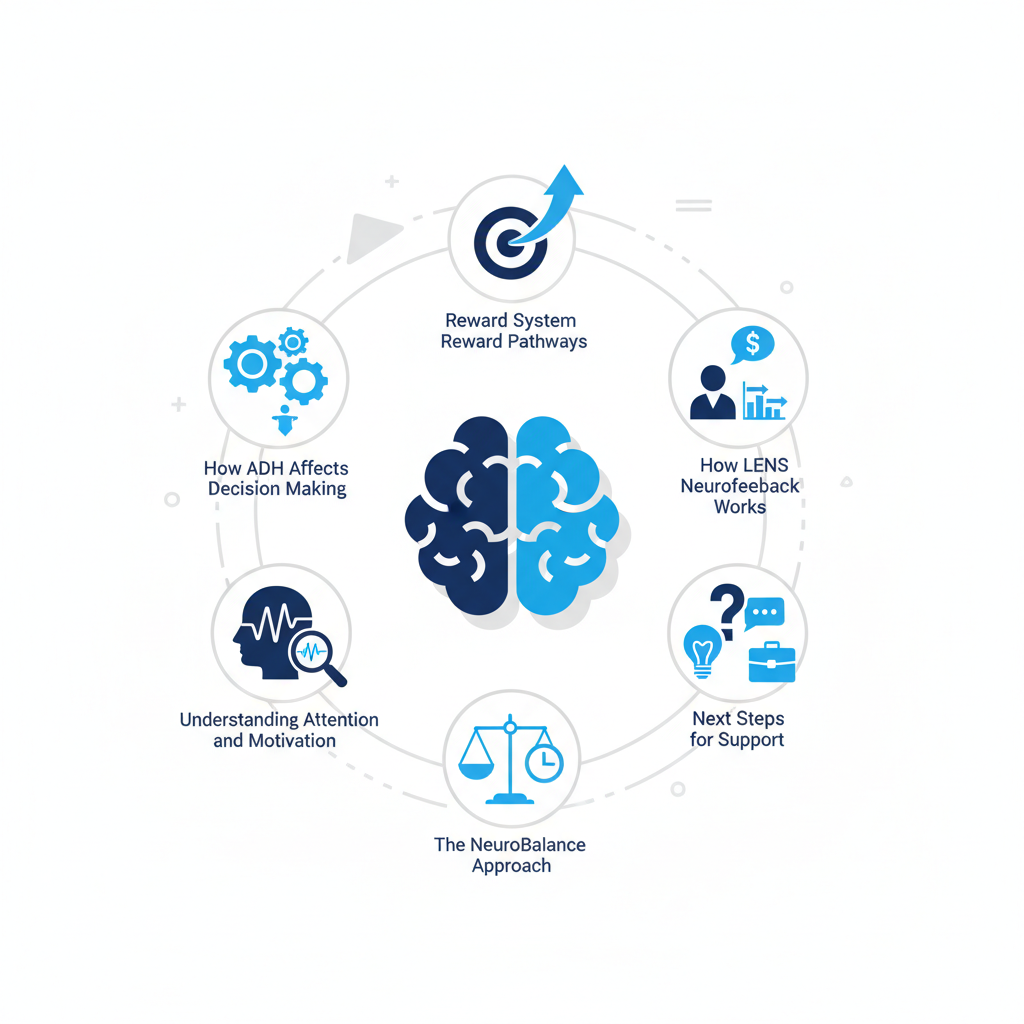
How ADHD Affects Reward Pathways
The brain’s reward system consists of interconnected networks including the ventral tegmental area, nucleus accumbens, and prefrontal cortex.
The neurobiological underpinnings of behavioral addictive disorders primarily involve impairments in the reward circuitry, encompassing these brain regions that form networks communicating through neurotransmitter signaling
.
In ADHD,
symptoms stem from dysregulation within cortico-striatal circuits, resulting in poor inhibitory control contrasted by accumbens-induced altered reward processing and anticipation
. This creates what researchers call a “dual-pathway” dysfunction where the rational, executive “brake” system struggles to regulate the emotional, reward-seeking “accelerator” system.
ADHD brains tend to favor short-term, smaller rewards over long-term, more significant ones
. This preference pattern affects everything from completing homework to maintaining long-term relationships and career goals. Understanding this difference helps explain why traditional reward systems may be ineffective for individuals with ADHD.
The impact extends beyond simple preference patterns.
Research shows a deficient transfer of dopamine response from unconditioned rewards to conditioned stimuli in ADHD, with adolescents showing lower reward-anticipatory neural activity
. This means the brain may not effectively learn to anticipate future rewards based on current cues, making long-term planning and motivation particularly challenging.
Dopamine and Decision Making
Dopamine has been shown to play a critical regulatory role in the processing of reward, as well as in motor planning and the expression of novelty-driven behavior, with these functions being facilitated through mesocorticolimbic circuits
. This neurotransmitter system is essential for motivation, learning, and the ability to work toward future goals.
Research shows specific differences in dopamine markers: the left caudate showed reduced dopamine transporter levels in ADHD participants, and attention ratings correlated with dopamine receptor availability in multiple brain regions including the accumbens, midbrain, and caudate
. These findings provide neurobiological evidence for the attention and motivation difficulties experienced by many individuals with ADHD.
The relationship between dopamine and reward sensitivity creates unique challenges.
An imbalance in dopamine transmission may be associated with ADHD symptoms including inattention and impulsivity, and may interfere with the dopamine reward pathway, changing how the ADHD brain perceives reward and pleasure
.
Recent breakthrough research has revealed that ADHD medications work differently than previously understood.
Stimulants increased connectivity between reward-processing regions and motor systems, suggesting drugs work by altering the brain’s calculation of effort and reward
rather than directly targeting attention centers.
Latest Research Discoveries
Large-scale neuroimaging studies have provided unprecedented insights into ADHD brain function.
Researchers at the National Institutes of Health discovered that ADHD symptoms are tied to atypical interactions between the brain’s frontal cortex and information processing centers deep in the brain, examining more than 10,000 functional brain images
.
Current research rigorously maps pathways that connect the brain’s reward centers to one another and applies advanced machine learning and statistical techniques to understand how individual differences might predict changes in the reward network
. This research approach helps identify personalized patterns that may inform individualized support approaches.
The University of Southern California has received significant funding to investigate
changes in the brain’s reward network as a key theory for what causes both autism and ADHD
. This research recognizes that understanding reward circuitry may provide insights into multiple neurodevelopmental differences, not just ADHD alone.
🧠 Research Insight:
Studies consistently show that
pathophysiological mechanisms for ADHD involve brain networks related to cognitive functions and emotion/reward processing
. This understanding has led to development of targeted interventions like LENS neurofeedback technology that work with the brain’s natural capacity for change.
How LENS Neurofeedback Works
The Low Energy Neurofeedback System (LENS) is an EEG-based, direct neurofeedback system that stimulates the brain to reset itself and achieve optimal performance
. Unlike traditional approaches that require active participation, LENS neurofeedback is a passive process where the brain does the work.
For a fraction of a second, a tiny electromagnetic signal is delivered that causes a slight fluctuation in brainwaves, allowing the brain to reorganize and better regulate itself
. This approach recognizes that
the brain’s defenses against stressors and trauma can create neural gridlock, and LENS works around these blockages by addressing the brain in its own electromagnetic language
.
The LENS approach to reward circuitry differences is based on understanding that
LENS neurofeedback naturally disrupts pathological brain oscillations, so the brain can retune its waves to correct poorly performing synaptic states
. This process supports the brain’s natural ability to optimize its own function.
Research specifically examining neurofeedback and reward processing shows that
neurofeedback is essentially a reward system that teaches the brain how to function in a more optimal range, and the brain creates new neural pathways that stabilize over time
. This neuroplasticity-based approach aligns with current understanding of how the brain can adapt and change throughout life.
📍 NeuroBalance Los Angeles
Located in Mar Vista, serving clients throughout Southern California. Home visits also available.
4029 Alla Road, Los Angeles, CA 90066 • 424.625.5445
Understanding Brain Plasticity and Adaptation
The brain’s remarkable ability to reorganize and adapt—known as neuroplasticity—lies at the heart of understanding how ADHD affects reward circuitry and why interventions like LENS neurofeedback therapy can promote meaningful change. This natural capacity for reorganization continues throughout life, offering hope for those seeking to optimize their brain function.
The Mechanisms of Neural Adaptation
Brain flexibility encompasses multiple mechanisms that allow your nervous system to adapt and optimize its function, involving three key mechanisms: synaptic plasticity, structural plasticity, and functional plasticity.
These interconnected processes work together to reshape neural networks, allowing the brain to compensate for differences or optimize performance based on experience and training.
💡 Understanding Neuroplasticity:
Recent 2024 research from Harvard Medical School shows that neuroplasticity remains active well into our 80s, making brain rewiring possible at any age.
This means that regardless of when ADHD challenges first appeared, the brain retains its capacity for positive change through targeted interventions.
Neuroplasticity serves as the foundation for brain resilience, with experience-driven synaptic plasticity, including long-term potentiation and long-term depression, regulating synaptic strength through α-amino-3-hydroxy-5-methyl-4-isoxazolepropionic acid (AMPA) receptor trafficking, with enriched environments increasing synapse density by up to 25%.
How LENS Neurofeedback Supports Natural Brain Reorganization
LENS neurofeedback helps the entire brain to regulate and rebalance itself by “dis-entraining” or freeing the brain from its frozen maladaptive state or defensive looping mechanisms caused by trauma or stress, effectively disrupting the old neural connectivity that causes the dysfunctional patterns and resets them for much faster and lasting results.
📊 What Research Suggests:
Due to these learning mechanisms, neuroplasticity is expected to take place during neurofeedback training either via Hebbian plasticity or anti-Hebbian/homeostatic plasticity.
These mechanisms help prevent extreme states of brain activity and promote balanced neural functioning.
Unlike traditional approaches that may require conscious effort,
LENS therapy is passive – as you relax in sessions, your brain does the work for you, with a tiny electromagnetic signal causing a slight fluctuation in brainwaves that allows the brain to reorganize and better regulate itself.
This process can be particularly beneficial for individuals with ADHD whose brains may benefit from gentle reorganization of reward circuitry patterns.
Disrupting Maladaptive Neural Patterns
LENS helps the brain reorganize itself by providing gentle electromagnetic feedback that disrupts maladaptive neural patterns, supporting the brain’s natural neuroplasticity mechanisms that contribute to resilience.
This approach recognizes that many symptoms associated with ADHD may stem from stuck or inflexible neural patterns rather than permanent brain deficits.
For individuals whose reward circuitry has developed differently, this neuroplastic reorganization may help restore more balanced communication between brain regions. Many clients exploring peak performance optimization through neurofeedback find that addressing underlying neural flexibility enhances their overall cognitive function.
Practical Implications for Daily Life
Understanding how reward circuitry differences manifest in everyday situations helps individuals recognize patterns and develop strategies for optimal functioning. These neurobiological differences don’t represent deficits—they reflect unique ways the brain processes rewards, motivation, and attention that can be understood and supported.
Recognizing Reward System Patterns in Daily Activities
The heightened connectivity between reward structures and frontal regions can create distinctive patterns in how individuals approach tasks, make decisions, and maintain motivation.
Every moment of your day involves countless examples of your brain’s flexibility in action – from adapting to new situations and learning new information to recovering from stress and adjusting to changing environments.
| Daily Activity | How Reward Circuitry May Influence Experience |
|---|---|
| Work Projects | May seek immediate feedback and struggle with delayed gratification tasks |
| Social Interactions | Often highly attuned to social rewards and rejection sensitivity |
| Learning New Skills | May excel with novelty-based approaches and immediate reinforcement |
| Decision Making | Tendency toward immediate rather than long-term reward calculations |
The Role of Environmental Support
Creating environments that work with, rather than against, unique reward system patterns can significantly improve daily functioning. This might involve structuring tasks to provide more frequent positive feedback, incorporating movement and variety into work routines, or developing systems that make long-term goals feel more immediately rewarding.
💬 What Clients Share:
“After understanding how my brain processes rewards differently, I stopped fighting against it and started working with it. I break large projects into smaller chunks with immediate rewards, and everything feels more manageable.” – Individual results vary
Many individuals find value in exploring cognitive rehabilitation programs that help them develop personalized strategies for working with their unique neurobiological patterns. These approaches recognize that optimal functioning comes from understanding and supporting individual brain differences rather than trying to force conformity to a single standard.
Stress and Overwhelm Management
Understanding how brain flexibility shows up in daily life helps you recognize whether your nervous system is working optimally or stuck in patterns that may need support. When the brain cannot flexibly respond to situations, it may default to maladaptive patterns
, affecting everything from relationships to work performance.
Individuals with heightened reward system connectivity may be particularly sensitive to stress and overstimulation. Developing awareness of these patterns can help in creating more supportive daily routines and seeking appropriate interventions when needed. Some find benefit in exploring anxiety support approaches that address the neurobiological aspects of overwhelm.
Supporting Brain Health Naturally
While understanding neurobiological differences provides valuable insights, supporting overall brain health through natural approaches can complement any intervention strategy. The brain’s plasticity means that lifestyle factors, environmental changes, and targeted therapies can all contribute to optimal neural functioning.
Exercise and Brain Reorganization
Regular aerobic activity doesn’t just strengthen your body; it fundamentally changes your brain structure, with a 2024 study from the University of British Columbia finding that regular aerobic exercise increases the size of the hippocampus by 2-3% within 6 months.
This is particularly relevant for individuals with ADHD, as the hippocampus plays crucial roles in memory, learning, and emotional regulation.
💡 Exercise and Brain Health:
Aerobic exercise increases BDNF levels, which promotes synaptic plasticity.
Brain-derived neurotrophic factor (BDNF) is often called “Miracle-Gro for the brain” because of its role in supporting neuron growth and survival.
Strength training and yoga also contribute significantly to brain rewiring, with aerobic exercise leading to increased hippocampus size and improved connections between neurons in this important brain region responsible for memory and learning.
Many clients exploring performance optimization find that combining physical activity with neurofeedback enhances their overall results.
Nutrition and Neurotransmitter Support
The brain’s reward circuitry relies heavily on neurotransmitter function, particularly dopamine. Supporting these systems through nutrition can complement other interventions. Foods rich in tyrosine (the precursor to dopamine), omega-3 fatty acids, and antioxidants may help support optimal brain function.
However, individual nutritional needs vary significantly, and what works for one person may not work for another. This is why many practitioners emphasize personalized approaches that consider each individual’s unique neurobiological profile and health history.
Sleep and Neural Recovery
Quality sleep plays a crucial role in brain health and neuroplasticity. During sleep, the brain consolidates memories, clears metabolic waste, and strengthens newly formed neural connections. Individuals with ADHD often experience sleep difficulties, which can create a cycle where poor sleep worsens attention and emotional regulation challenges.
📊 Sleep and Brain Health:
Research suggests that adequate sleep is essential for the brain’s glymphatic system, which clears toxins and supports neural repair. Poor sleep can disrupt reward system functioning and executive control.
Some individuals find that addressing sleep quality through approaches like neurofeedback for sleep support creates a foundation for improved overall functioning. Better sleep can enhance the brain’s natural plasticity and support the effectiveness of other interventions.
The Science of Brain Training
Understanding how brain training approaches like neurofeedback work requires examining both the underlying neuroscience and the practical mechanisms that promote positive change. Recent research has provided increasingly clear evidence about how targeted interventions can support neuroplasticity and optimize brain function.
Evidence-Based Neurofeedback Research
Meta-analysis research has observed significant improvements in global executive function, inhibitory control, and working memory following neurofeedback training, with NFT exceeding 1,260 minutes showing particular effectiveness in enhancing inhibitory control and working memory.
This duration translates to approximately 20-25 sessions of typical neurofeedback training.
📊 Recent Research Findings:
Recent 2025 meta-analyses confirm that neurofeedback produces a medium-to-large effect size, ranging from 0.6 to 0.8 for inattention and impulsivity.
These effect sizes are considered clinically meaningful in research settings.
Based on meta-analyses and large multicenter randomized controlled trials, three standard neurofeedback training protocols, namely theta/beta (TBR), sensori-motor rhythm (SMR), and slow cortical potential (SCP), turn out to be efficacious and specific.
Each of these protocols targets different aspects of brain function and may be selected based on individual needs and assessment findings.
How LENS Differs from Traditional Neurofeedback
While traditional neurofeedback typically requires active participation and training over many sessions,
LENS neurofeedback therapy works from the bioelectrical side by sending a tiny low energy signal to the scalp that is precisely timed and different in frequency to what your brain naturally produces, with the offset signal affecting the reactivity of current brainwaves and directly influencing biochemical changes that assist the brain to self-adjust to a more optimal state.
The timeframe for success with LENS is typically shorter than with other forms of neurofeedback, with most clients requiring approximately 9 to 11 sessions.
This efficiency can make the approach more accessible for individuals seeking support for various conditions, from ADHD support to TBI recovery.
Personalized Approach and Real-Time Adaptation
The process is personalized because the computer software program allows the signal to adapt in real time to what is most appealing to the brain that it’s connected to, reading the data it receives just milliseconds before and making proper adjustments in frequencies to the specific area of the brain in need.
💬 What Practitioners Report:
“In the last 17 years I have used 10 different neurofeedback systems. LENS is the most user friendly of the systems and produces the fastest results, to the delight of my patients and myself. Many small children who struggle with or could not do traditional neurofeedback can easily be treated with LENS.”
– Dr. Daniel Amen – Individual results vary
This personalized, adaptive approach may be particularly beneficial for individuals whose brains have developed unique patterns due to differences in reward circuitry or other neurobiological factors. Rather than imposing a standardized training protocol, the system responds to each individual’s brain patterns in real time.
Long-Term Outcomes and Sustainability
Additionally, the effects of NFT on inhibitory control and working memory were found to be enduring.
This sustainability is crucial for individuals seeking lasting improvements rather than temporary relief.
By facilitating neuroplasticity, LENS helps the brain to “relearn” healthier patterns of activity, leading to long-lasting improvements in brain function.
⚕️ Important Note:
Individual results vary significantly. While research suggests promising outcomes, neurofeedback is not intended to diagnose, treat, cure, or prevent any medical condition. Always consult with qualified healthcare providers about your specific situation.
For individuals interested in exploring how neurofeedback might support their unique needs, getting started typically involves an initial consultation to discuss goals and determine if this approach might be a good fit. Our Los Angeles practice also offers support for various conditions including depression and PTSD.
The NeuroBalance Method
At NeuroBalance, we understand that reward circuitry differences in ADHD require a specialized approach that honors the brain’s unique wiring while supporting its natural capacity for change.
Our method leverages neuroplasticity research showing the brain’s ability to reorganize neural connections through experience
, offering hope for lasting improvements in reward processing and executive function.
Jon S. Haupers, our certified LENS neurofeedback specialist with over 12 years of experience, has witnessed firsthand how LENS neurofeedback therapy can gently support the brain’s natural reorganization process.
Since beginning treatment with LENS in 2012, we have witnessed rapid, meaningful and often dramatic results, and these changes are enduring
.
Personalized Brain Assessment
Every NeuroBalance journey begins with a comprehensive understanding of your unique brain patterns.
By analyzing oscillatory patterns through qEEG, we can detect state-dependent neural dysregulation that frequently evades detection by structural imaging
. This detailed analysis helps us understand how reward circuitry differences may be affecting your daily experience.
Our assessment process examines brainwave patterns associated with attention, emotional regulation, and reward processing. We look for the specific signatures of ADHD – often characterized by
higher delta/theta waves associated with slow impulse control and confusion, along with lower beta waves affecting attention and memory processing
.
The LENS Difference
Unlike traditional neurofeedback approaches, LENS technology works in a fundamentally different way.
LENS delivers a weak electromagnetic signal to change the patient’s brain waves while they are motionless with their eyes closed. This type of neurofeedback has been used to treat traumatic brain injury, ADHD, insomnia, fibromyalgia, restless legs syndrome, anxiety, depression, and anger
.
For a fraction of a second, a tiny and imperceptible electromagnetic signal (1/300th of that emitted by a cell phone) is delivered. This signal causes a slight fluctuation in brainwaves that allows the brain to reorganize and better regulate itself
. This gentle approach supports the brain’s natural healing mechanisms without requiring conscious effort or active participation.
🧠 Why LENS Works for ADHD Reward Systems:
LENS naturally disrupts pathological brain oscillations, allowing the brain to retune its waves either high or low to correct poorly performing synaptic states
. This process can help normalize reward circuitry function and improve dopaminergic signaling patterns.
Evidence-Based Approaches
The scientific foundation for neurofeedback in ADHD treatment has grown substantially over the past decade.
The American Academy of Pediatrics has approved neurofeedback and EEG biofeedback therapy as a level 1 (highest) evidenced-based treatment option for children and adolescents suffering from ADHD. There are approximately 500 studies, papers and reviews along with neuro-imaging dedicated to this neurogenetic condition
.
Neuroplasticity and Reward Learning
Recent research has illuminated the specific mechanisms through which neurofeedback supports brain reorganization.
Successful self-modulation of the brain triggers reward pathways, and repeated training has been demonstrated to induce structural reorganization in thalamocortical networks
. This is particularly relevant for individuals with ADHD, where reward processing differences may benefit from targeted intervention.
Neurofeedback leverages the brain’s capacity for neuroplasticity, defined as the ability to reorganize neural connections through experience. As with music or meditation training, repeated sessions induce enduring structural/functional changes by reinforcing specific oscillation patterns
.
Clinical Outcomes and Success Rates
The clinical evidence for neurofeedback therapy continues to grow, particularly for conditions involving executive function and attention.
Multiple studies demonstrate effectiveness for conditions like ADHD, anxiety, depression, and PTSD, with success rates ranging from 65-85% across different conditions, including 70-85% improvement in attention and hyperactivity for ADHD
.
What makes these findings particularly encouraging is the duration of benefits.
Research indicates that LENS therapy benefits often persist long-term, with many patients maintaining improvements 6-12 months post-treatment. This durability suggests genuine neuroplastic changes rather than temporary effects
.
In just a few sessions, clients often experience better focus, increased energy and improved mood. Anxiety and depression symptoms lift. Insomniacs sleep. Children and teens with ADD or ADHD can focus
. These rapid improvements, combined with lasting benefits, reflect the brain’s remarkable capacity for positive change when given appropriate support.
📊 Research Insights:
Studies show that neurofeedback for anxiety and ADHD support may work through distinct mechanisms that complement reward system regulation, offering comprehensive support for complex presentations.
Frequently Asked Questions
Your Brain Wellness Journey
Understanding reward circuitry differences in ADHD opens new pathways for supporting brain health and optimizing function. The research reveals that these differences aren’t deficits to be overcome, but unique patterns that can be supported through targeted interventions like neurofeedback therapy.
At NeuroBalance, we’ve witnessed remarkable transformations when individuals receive appropriate support for their unique brain wiring. The combination of advanced understanding of reward systems, neuroplasticity research, and gentle LENS technology creates opportunities for lasting positive change.
Whether you’re exploring options for anxiety support, looking to understand ADHD and brain function, or interested in peak performance optimization, we’re here to provide educational resources and personalized support.
🌱 Take Your Next Step:
Learn more about getting started with NeuroBalance, explore our client testimonials, or browse our FAQ for more information.
This content is for educational purposes only and is not intended as medical advice. Individual experiences with neurofeedback therapy may vary. Always consult with qualified healthcare professionals regarding your specific health concerns and treatment options.
Ready to Explore Neurofeedback?
Take the first step toward supporting your brain wellness journey. Schedule a consultation to learn if LENS neurofeedback might be right for you.
📞 424.625.5445 | ✉️ [email protected]
📍 4029 Alla Road, Los Angeles, CA 90066