

When Trauma Lives in the Body
Trauma doesn’t just affect memory and emotion—it embeds itself in the nervous system, locking the body into survival states. Understanding this somatic dimension is the key to genuine healing.
- Trauma is stored in the body through dysregulation of the autonomic nervous system, particularly the polyvagal circuits
- The dorsal vagal shutdown response creates immobilization, numbness, and disconnection that persists long after the threat is gone
- Disrupted proprioception and interoception prevent the body from accurately sensing its own state, perpetuating the trauma response
- Brain-based approaches like LENS neurofeedback can retrain neural circuits to restore healthy somatic regulation
A 2022 study published in Frontiers in Psychology found that 52% of trauma survivors report persistent physical symptoms—tension, pain, numbness, or hyperarousal—even years after the traumatic event. Many of these individuals have never understood that their body is not broken; it is doing exactly what it was designed to do: protect them. The nervous system encoded the danger into muscle memory, breath patterns, heart rate, and reflex. The problem is that the “off switch” never activated. Understanding how trauma becomes somaticized—literally embedded in the body’s tissues, reflexes, and autonomic circuits—is the crucial first step to releasing it.
The Polyvagal System and Survival States
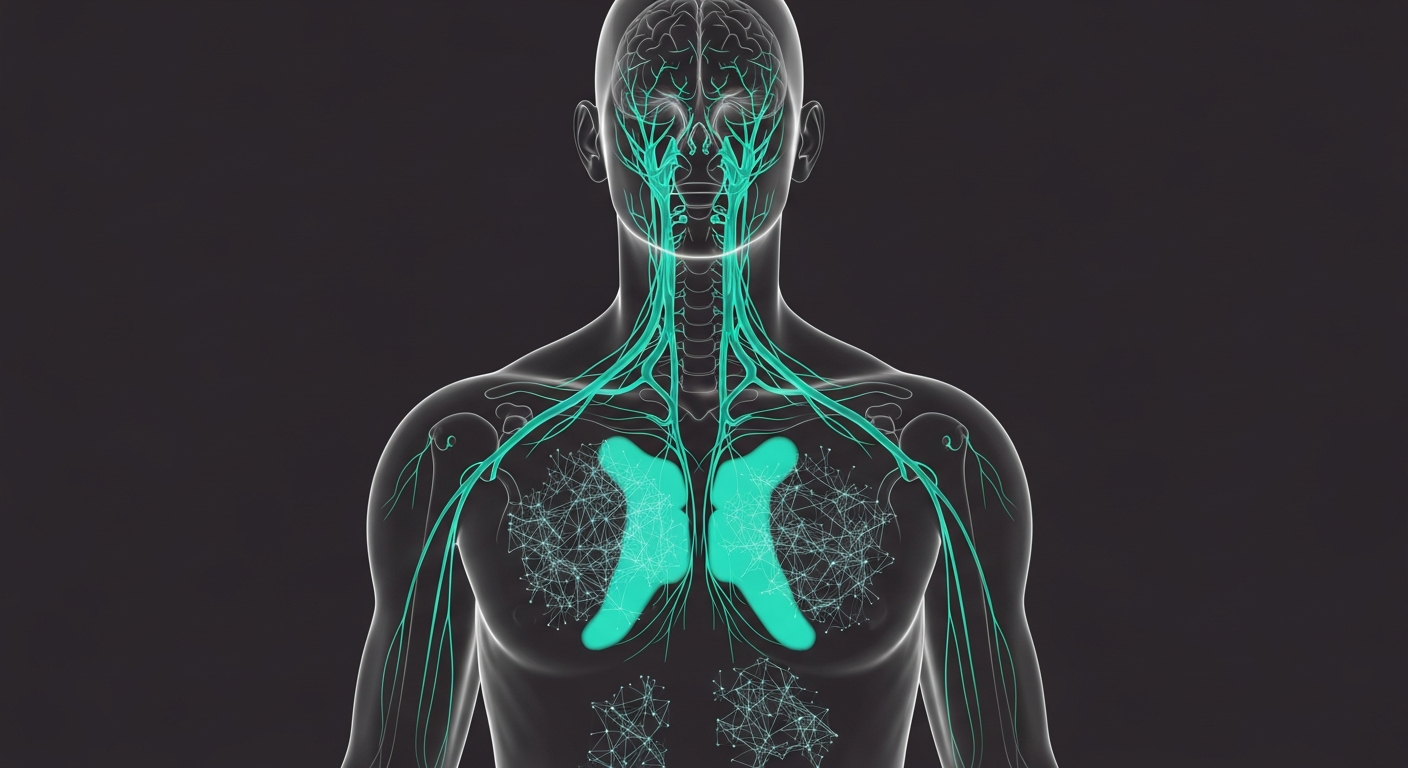
Neuroscientist Stephen Porges’s polyvagal theory explains how the vagus nerve—the longest cranial nerve in the body—orchestrates three distinct survival states. In safety, the ventral vagal system activates the parasympathetic brake, allowing rest, digestion, social connection, and healing. Under threat, the sympathetic nervous system takes over, mobilizing the body to fight or flee through elevated heart rate, muscle tension, and rapid breathing. When escape is impossible, the dorsal vagal system engages an ancient shutdown mechanism: the animal goes limp, dissociates, and enters a state of profound immobilization.
Trauma occurs when a person is exposed to overwhelming threat with no effective escape. The nervous system, unable to discharge the mobilized survival energy, becomes stuck in one of these states. A person may remain chronically sympathetically activated—hypervigilant, jumpy, in a perpetual state of alert. Or they may lock into dorsal vagal shutdown—numb, fatigued, disconnected from sensation and emotion. Many trauma survivors oscillate between both, creating a chaotic internal experience that defies logical control. No amount of cognitive reassurance will convince the nervous system that danger has passed if the body is still encoded with the trauma blueprint.
The Dorsal Vagal Freeze: Immobilization Without Presence
When the amygdala—the brain’s threat-detection center—assesses that fighting or fleeing is futile, it signals a cascade of changes designed for survival in the face of certain death. Blood pools away from the limbs and toward core organs. Metabolism slows. The person becomes physically immobilized and psychologically dissociated. This response is evolutionarily ancient; it works in nature, where predators are less likely to attack prey that appears already dead.
In human trauma, this shutdown response becomes a prison. A person may experience profound fatigue that sleep does not resolve, emotional numbness, a sense of disconnection from their own body, and difficulty accessing motivation or joy. They are physiologically present but psychologically absent—a condition clinically recognized as depersonalization or derealization. The body remains in a protective cocoon, but the person cannot access the life that surrounds them. This state can persist for months or years, creating what many describe as “existing but not living.”
Proprioception and Interoception: The Broken Body Map
Two sensory systems are critical to feeling safe in your own body: proprioception (the sense of where your body is in space) and interoception (the ability to sense internal bodily states—heartbeat, breath, digestion, tension). Trauma disrupts both. The hippocampus, which normally integrates sensory information and creates coherent memory, becomes partially offline during severe threat, fragmenting the experience into disconnected sensations, images, and emotions without narrative context.
When interoception is disrupted, a person cannot accurately read their own nervous system state. They may not notice they are holding their breath or tensing their shoulders until they are in full panic. They cannot sense subtle shifts toward safety, making it impossible to naturally downregulate. This creates a feedback loop: the body remains dysregulated because the person cannot perceive the signals that would inform corrective action. Many trauma survivors describe feeling “disconnected from their body” or “watching themselves from outside”—a literal description of disrupted interoceptive awareness. For those experiencing fibromyalgia treatment needs, this somatic fragmentation often amplifies pain perception, as the brain cannot accurately distinguish threat signals from actual tissue damage.
The Amygdala, Hippocampus, and Somatic Memory
The amygdala is exquisitely sensitive to threat and encodes emotional memories with exceptional clarity. A person may consciously forget details of a trauma, but their body remembers every threat cue perfectly. A particular smell, sound, or bodily position can instantly reactivate the full survival response—increased heart rate, shallow breathing, muscle tension—even in objectively safe circumstances. This is not a conscious choice; it is neurological encoding.
The hippocampus normally contextualizes these emotional memories, allowing the mind to say “that was then; I am safe now.” But when the hippocampus is suppressed during the trauma itself, this contextual framework never forms. The trauma memory becomes a sensory fragment—stored in the body rather than in narrative memory. This explains why talking alone often fails to resolve trauma: the person may intellectually understand they are safe, but the body’s subcortical circuits remain unconvinced. Understanding the relationship between chronic pain and the brain reveals that similar mechanisms amplify pain perception and maintain pain cycles years after the original injury.
Physical Manifestations of Somatic Trauma
Trauma stored in the body emerges as a constellation of physical symptoms. Chronic tension, particularly in the shoulders, jaw, and lower back, reflects the sustained fight-or-flight state. Digestive dysfunction—irritable bowel syndrome, constipation, or irregular digestion—occurs because the vagus nerve, which controls the gut, is stuck in shutdown or alert mode. Breathing becomes shallow and restricted, limiting oxygen exchange and perpetuating the nervous system’s threat perception. Heart rate variability—the healthy variation between heartbeats—becomes suppressed, indicating reduced parasympathetic regulation.
Many trauma survivors experience pain that medical professionals cannot explain. Functional MRI studies show that in PTSD, pain-processing regions of the brain (the anterior insula and anterior cingulate cortex) are hyperactive even at rest. This neural sensitization means the brain amplifies normal sensations into pain signals. A light touch may feel burning; muscle tension may feel unbearable. Recent research on neural adaptation to pain demonstrates that the brain can be retrained to recalibrate these threat thresholds, reducing false pain signals and restoring accurate sensation.
Why Talk Therapy Alone Is Not Enough
Cognitive processing—talking through what happened—engages the prefrontal cortex, the logical reasoning center. But trauma is not stored in the prefrontal cortex; it is encoded in older brain structures: the amygdala, the brainstem, and the somatic nervous system. A person can rationally understand their trauma while their body remains locked in protective shutdown. This is not a failure of willpower or intelligence; it is neurobiology. For recovery, the body itself must receive the message that danger has passed. This requires approaches that directly address the dysregulated nervous system and the somatic memory encoded within it.
Approaches that work with the somatic nervous system—trauma-sensitive yoga, somatic experiencing, neurofeedback, and body-centered therapies—bypass the cognitive barrier and retrain the neurological circuits that maintain the trauma response. For those seeking PTSD treatment without medication, brain-training methods offer a pathway to rewire threat detection at the neurological source, allowing the body to finally release its protective grip.
How Neurofeedback Addresses Somatic Trauma
Restoring Vagal Tone
LENS neurofeedback helps restore healthy parasympathetic function by training the brain to shift out of stuck states. As vagal tone improves, the nervous system can more fluidly transition between alert and relaxed, breaking the cycle of chronic activation or shutdown.
Reintegrating Somatic Awareness
By training the brain to regulate at the source, neurofeedback enhances interoceptive accuracy. Clients gradually recover the ability to sense their own internal state and recognize subtle shifts toward safety, reestablishing the mind-body connection that trauma fractured.
Reducing Amygdala Hyperreactivity
Neurofeedback protocols targeting threat-detection circuits reduce the amygdala’s hair-trigger response to harmless stimuli. Over time, the brain recalibrates its threat threshold, allowing trauma reminders to lose their power to activate full survival states.
Releasing Held Energy
As neural regulation improves, many clients experience spontaneous release of trapped survival energy—emotional catharsis, improved sleep, easier breathing, and reduced chronic tension—without requiring forced “processing” or repeated trauma recounting.
Frequently Asked Questions
How long does it take to release trauma stored in the body?
The timeline varies depending on the severity and age of the trauma, but neurofeedback typically shows measurable shifts in nervous system regulation within 4–8 weeks of consistent sessions. More substantial changes in body awareness, pain reduction, and symptom relief often emerge over 3–6 months. The body’s nervous system can retrain itself; it simply needs the right feedback loop to know how to do so.
Can somatic trauma be released without reliving the traumatic memory?
Yes. LENS neurofeedback and similar body-based approaches work at the nervous system level without requiring detailed recounting or re-experiencing of the trauma. The brain is retrained to regulate itself through real-time feedback, allowing the somatic memory to gradually lose its charge. Many clients report that as their nervous system settles, the trauma narrative becomes less emotionally loaded—almost as if it happened to someone else.
Is chronic pain always connected to emotional trauma?
Not always, but the nervous system’s past experiences powerfully shape how it processes pain. A person with chronic pain from an old injury may find that the pain persists or amplifies because the nervous system remains in a state of protective hypervigilance. Addressing the underlying dysregulation through neurofeedback can reduce pain perception significantly, even when the original tissue damage has fully healed.
How does neurofeedback differ from traditional therapy for trauma?
Traditional talk therapy primarily engages the logical, narrative brain to process meaning and context. Neurofeedback targets the dysregulated nervous system directly, allowing the brain to optimize its own self-regulation through biofeedback. Many clients benefit most from combining both: neurofeedback restores nervous system balance while therapy processes meaning and builds coping skills. This integrative approach addresses trauma at multiple levels.
What does the evidence say about neurofeedback for trauma-related conditions?
Peer-reviewed research demonstrates that neurofeedback improves symptoms in PTSD, anxiety disorders, chronic pain, and other trauma-related conditions. Brain imaging shows that after neurofeedback training, the amygdala’s threat response decreases and functional connectivity between threat-detection and regulation centers improves. While more large-scale studies are ongoing, the current evidence supports neurofeedback as an effective, evidence-informed treatment.
Ready to Release Stored Trauma and Reclaim Your Body?
If your body has been holding onto survival patterns long after the threat has passed, neurofeedback offers a pathway to nervous system reset. Your brain can learn to trust safety again. Getting started is as simple as a consultation with our team.
Schedule Your Free Consultation
Call us: (424) 625-5445 · Los Angeles, CA
Disclaimer: This content is for informational purposes only and does not constitute medical advice, diagnosis, or treatment. LENS Neurofeedback is not FDA-approved for all conditions mentioned. Please consult with a qualified healthcare provider before beginning any new treatment program.