

The Brain’s Relationship With Nature: Neuroscience Explains Why Forests Heal
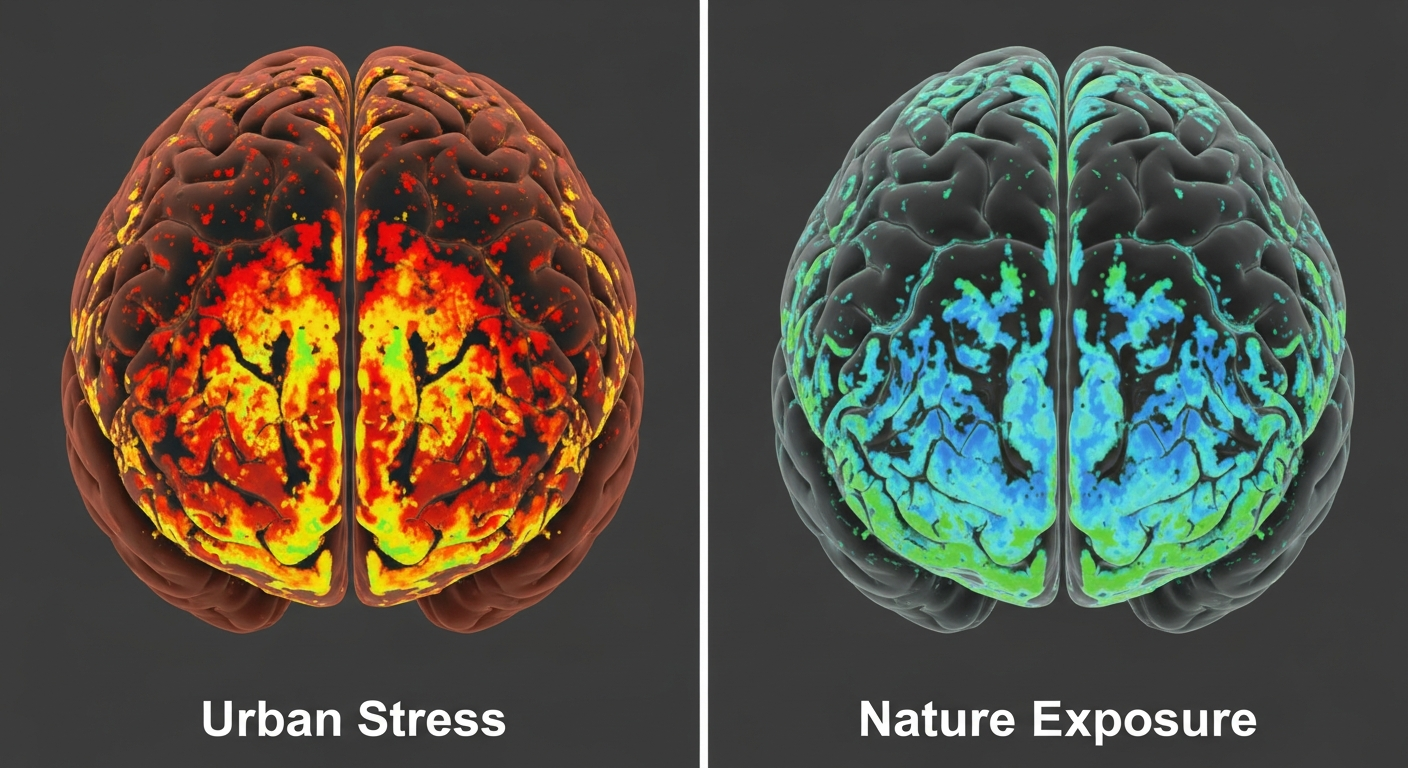
Nature isn’t just pleasant—it’s neurobiologically restorative. Exposure to natural environments reduces amygdala activation, shifts brain waves toward calmness, and repairs the attention systems damaged by chronic stress. This is why time outdoors is among the most evidence-backed interventions for anxiety, rumination, and mental fatigue.
- Nature activates the parasympathetic nervous system, lowering cortisol and heart rate within minutes of exposure
- Fractal patterns in nature (trees, coastlines, leaves) engage attention restoration, directly countering the depletion caused by digital devices
- Forest bathing (shinrin-yoku) increases parasympathetic tone and immunocompetence through phytoncide inhalation, measurable in reduced blood pressure and improved NK cell activity
- LENS neurofeedback can retrain the brain’s stress response systems to achieve the same calm-alertness state that nature exposure naturally produces
A 2019 study published in Frontiers in Psychology found that just 20 minutes in a natural setting significantly reduced cortisol, the primary stress hormone. But the effects go deeper than simple relaxation. Nature works on the brain’s fundamental architecture—reshaping how attention is allocated, how threat detection operates, and how the mind defaults when not focused on external tasks. As urbanization accelerates and screens dominate our sensory environment, understanding this relationship has become clinical urgency. For people struggling with anxiety, hypervigilance, rumination, or attention dysfunction, nature exposure offers a free, accessible, evidence-based intervention that complements therapeutic approaches like neurofeedback.
Attention Restoration Theory: How Nature Repairs Cognitive Depletion
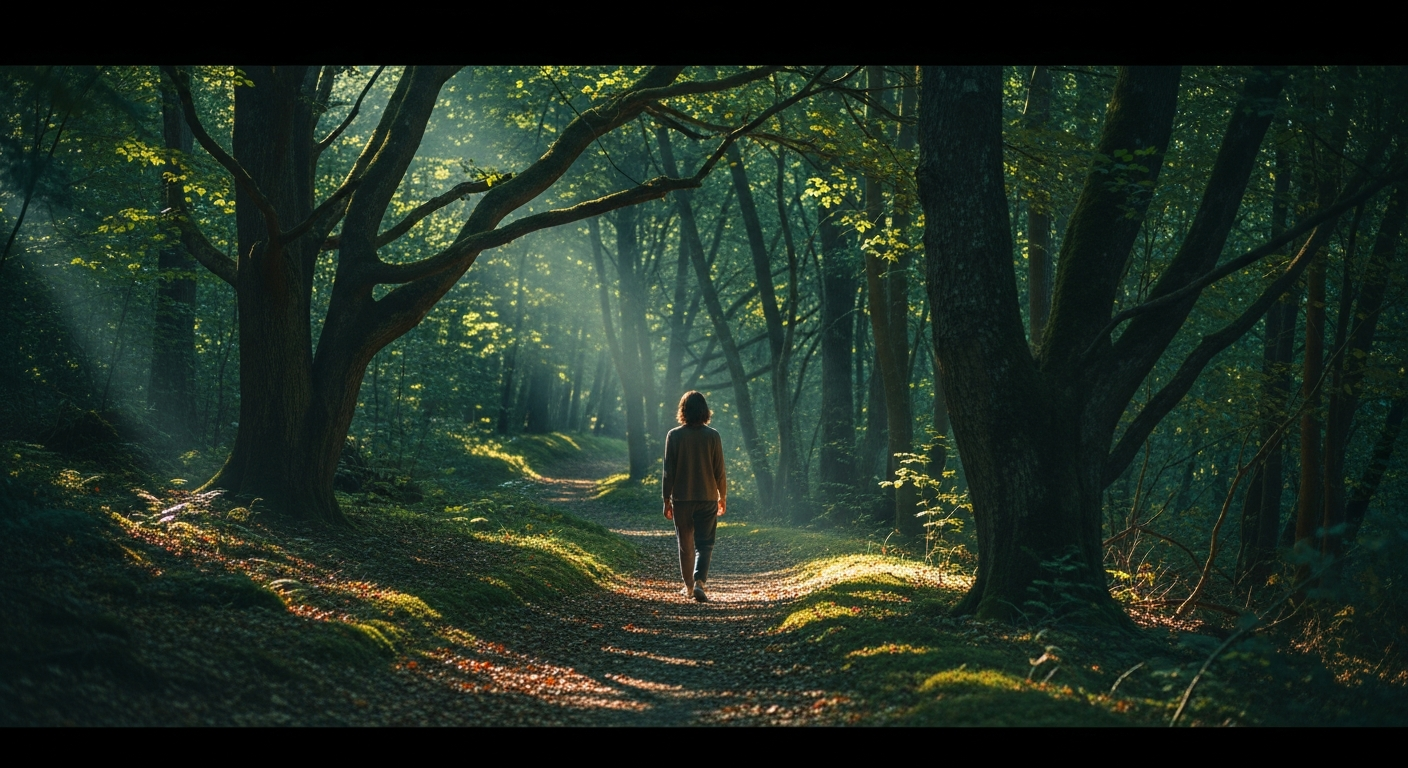
The modern brain is under constant demand. Email, notifications, traffic, work deadlines—all require what neuroscientists call “directed attention,” the effortful focus we apply when we must concentrate despite distractions. This form of attention is finite. Prolonged use depletes it, leading to mental fatigue, reduced impulse control, and increased irritability.
Attention Restoration Theory (ART), developed by psychologists Rachel and Stephen Kaplan, proposes that natural environments engage “soft fascination”—gentle, involuntary attention to elements like flowing water, rustling leaves, or bird calls. This shifts the brain away from directed attention, allowing the prefrontal cortex (responsible for executive function) to recover. Meanwhile, your attention is engaged just enough that intrusive thoughts—the rumination that defines worry and default mode network hyperactivity—are naturally suppressed.
A 2015 study in Psychological Science measured this directly. Participants who walked through a natural park showed 20% improvement in working memory and cognitive flexibility compared to those who walked through urban streets. Brain imaging during nature exposure reveals reduced activation in the subgenual prefrontal cortex, the region implicated in rumination and depressive thinking. In essence, nature doesn’t just feel restorative—it measurably rebuilds the cognitive systems that chronic stress erodes.
Stress Recovery Theory: Parasympathetic Activation in Natural Spaces
Beyond attention, nature engages what’s called the parasympathetic nervous system—the biological “rest and digest” mode that is the opposite of the sympathetic “fight or flight” response. When you’re in a forest or near water, your autonomic nervous system reads the environment as safe. There are no predators hiding in the trees, no immediate threats. Your body responds by down-regulating the amygdala, your brain’s threat-detection center.
Research on patients with diagnosed anxiety treatment shows that nature exposure produces changes identical to those achieved through months of cognitive therapy. Heart rate drops. Blood pressure normalizes. The vagus nerve, which governs parasympathetic tone, becomes more dominant. Cortisol levels fall—sometimes within just 5 minutes outdoors.
A 2019 meta-analysis in Frontiers in Psychology synthesized 38 studies of “forest bathing” and found consistent reductions in sympathetic nervous system activation across all populations studied. The effect was strongest in people with pre-existing anxiety or stress-related conditions. Notably, the effect requires actual nature—even viewing nature photos or virtual nature produced weaker results, suggesting that multisensory immersion (sight, sound, smell, the tactile experience of walking on uneven ground) is essential to the neurobiological shift.
Fractal Patterns and Natural Complexity: Why Trees Calm the Brain
Not all natural environments affect the brain equally. The specific geometry of nature—the branching patterns of trees, the fractal structure of coastlines, the self-similar shapes of leaves and ferns—engages attention in a unique way. Fractals are shapes that repeat at every scale; a branch of a tree resembles the whole tree, and the veins in a leaf follow the same pattern as the rivers in a landscape.
Neuroscientist Richard Taylor, who studies the relationship between fractal patterns and brain activity, found that fractal complexity in the range of 1.3–1.5 (the range found throughout nature) produces the most significant reduction in physiological stress. Eye-tracking studies show that when viewing fractals, the eye moves in a slow, efficient pattern that minimizes neural effort. The brain finds these patterns inherently easy to process, and this effortlessness itself is calming. Urban environments, by contrast, contain mostly non-fractal geometries (straight lines, right angles, uniform surfaces), which demand more active neural processing.
This is why a forest is more restorative than a city park with geometric landscaping. The brain’s visual cortex is calibrated by millions of years of evolution to find fractal patterns—which characterize all of nature—intuitive and restful. Modern architecture and digital interfaces, lacking these patterns, leave the visual system in a perpetual state of low-level strain.
Phytoncides, Air Ions, and Biochemical Signaling: How Forest Air Strengthens Immunity
The effects of nature aren’t purely psychological. Trees and plants release volatile organic compounds called phytoncides—antimicrobial molecules that serve as plant immune defenses. When you breathe the air of a forest, you’re inhaling these compounds. Your body responds by increasing the activity of natural killer (NK) cells, white blood cells that patrol for pathogens and abnormal cells. This effect is measurable: a single day of forest bathing increases NK cell activity by 40%; the effect persists for up to 30 days with repeated exposure.
Additionally, forests and moving water generate negative air ions—oxygen molecules with an extra electron. These ions appear to enhance serotonin availability in the brain and improve oxygen absorption in the lungs. Studies comparing coastal and mountain environments to urban air show that natural environments contain 10 to 100 times more negative ions. While the exact mechanism of action remains under investigation, participants exposed to high-ion environments report improved mood, reduced fatigue, and better sleep quality.
Light exposure matters too. Natural sunlight, particularly in the morning, synchronizes circadian rhythms and increases dopamine and serotonin production. The full spectrum of sunlight (which includes wavelengths filtered out by window glass and artificial lighting) is essential for proper melatonin synthesis at night. This is why people who spend significant time outdoors typically have superior sleep quality and more stable mood.
Default Mode Network Quieting: How Nature Interrupts Self-Referential Thinking
The default mode network (DMN) is the brain system active when you’re not focused on external tasks—when your mind wanders. In people with anxiety, depression, or rumination, this network is hyperactive. The mind loops obsessively through past regrets and future fears, interpreting ambiguous situations as threats, and reinforcing negative self-beliefs. This is the neurobiological substrate of worry.
Nature exposure, particularly in natural settings with high sensory richness (forests more than open fields, moving water more than still), produces a different pattern. The default mode network quiets, and simultaneously, the attention networks (particularly the right hemisphere’s ventral attention network, which detects behaviorally relevant changes in the environment) activate. This shift interrupts rumination in real time. You’re not suppressing negative thoughts through willpower; the external environment naturally captures your attention and redirects the brain’s processing.
Functional MRI studies comparing meditation (which voluntarily quiets the DMN through focused attention) with nature exposure show similar patterns of DMN suppression and anterior insula activation. The key difference: nature produces this state effortlessly. There’s no cognitive load, no struggle. Your brain naturally reorganizes when immersed in a complex, non-threatening sensory environment. This is why even people who struggle with traditional meditation often find nature walks immediately settling.
Light Exposure and Circadian Alignment: Why Outdoor Time Restores Sleep and Mood
The suprachiasmatic nucleus (SCN), a small cluster of neurons in the hypothalamus, acts as the brain’s master clock. It orchestrates the release of melatonin, cortisol, body temperature fluctuations, and immune function—all tied to a roughly 24-hour cycle. This circadian rhythm is not hardwired; it must be synchronized daily to the actual light-dark cycle. The primary synchronizer is bright light exposure, particularly blue wavelengths, in the morning.
Outdoor light intensity is 5,000–10,000 lux in the morning; even on cloudy days, it exceeds 2,000 lux. Typical indoor lighting is 300–500 lux. This difference matters profoundly. People who spend most daylight hours indoors often develop circadian dysrhythmia—misalignment between their internal clock and the actual day-night cycle. This manifests as poor sleep quality, daytime fatigue, mood instability, and increased susceptibility to illness.
Regular morning outdoor exposure (even 15–20 minutes) realigns the SCN and restores healthy circadian function. Sleep becomes deeper and more refreshing. Mood improves. The immune system functions better. This is why light therapy is a first-line intervention for seasonal affective disorder, and why natural light exposure is foundational for anyone struggling with sleep or mood dysregulation. For those working with neurofeedback or other brain-training modalities, circadian alignment amplifies the efficacy of those interventions.
How Neurofeedback Addresses This
Training Parasympathetic Tone
LENS neurofeedback retrains your autonomic nervous system to default toward calm and alertness rather than hypervigilance. Combining neurofeedback with regular nature exposure creates a dual reinforcement: nature temporarily shifts you into parasympathetic mode while neurofeedback trains your brain to stabilize in that state over time.
Quieting Default Mode Hyperactivity
If your default mode network is chronically overactive—driving rumination and anxiety—neurofeedback can directly suppress excessive DMN activity. Nature exposure then provides daily practice in DMN quieting, reinforcing the neural patterns your brain is learning in sessions.
Circadian Restoration With Brain Optimization
Neurofeedback sessions are most effective when circadian function is healthy. Morning outdoor exposure synchronizes your sleep-wake cycle, ensuring your brain is in optimal condition for both therapy and recovery. Light exposure also supports the neuroplasticity that makes neurofeedback work.
Accelerating Attention Recovery
Nature’s attention-restoration effects complement neurofeedback’s capacity to strengthen attention networks. People who combine regular nature exposure with photobiomodulation therapy and neurofeedback show faster gains in focus, working memory, and executive function than those relying on neurofeedback alone.
Frequently Asked Questions
How much time in nature do I need to see brain benefits?
Research suggests that 20–30 minutes of nature exposure produces measurable reductions in cortisol and improvements in attention. However, consistency matters more than duration. Daily 20-minute walks in a natural setting produce greater cumulative benefits than infrequent long hikes. The ideal protocol appears to be 4–5 days per week of outdoor time, ideally in the morning to maximize circadian synchronization and light exposure.
Does urban nature (parks) work as well as forests?
Parks provide meaningful benefits, but forests are more effective. The key difference is fractal complexity and sensory richness. A dense forest with varied canopy structure, water features, and biodiversity produces stronger attention restoration and parasympathetic activation than a groomed park with geometric landscaping. If forest access is limited, prioritize parks with mature trees, water elements, and minimal human-made structures. Views of nature through windows provide modest benefits but do not match the effects of immersion.
Can I use nature exposure as a substitute for anxiety treatment?
Nature exposure is a powerful complementary tool, but for clinical anxiety, it works best in combination with other evidence-based approaches. Nature quiets the amygdala and supports parasympathetic tone, but it doesn’t retrain the associative learning that underlies phobias or panic. Integrating nature walks with anxiety treatment protocols—including neurofeedback—produces superior outcomes to either approach alone.
Does the weather or season affect nature’s benefits?
Yes, but the benefits persist year-round. Winter outdoor time provides less visible light exposure, which is why seasonal affective disorder is common in high-latitude populations. However, cold exposure itself activates the vagus nerve and can enhance parasympathetic tone. Autumn and spring typically offer optimal conditions: adequate light, moderate temperature, and high fractal complexity from foliage. If seasonal light is limited where you live, morning outdoor exposure becomes even more critical for circadian alignment.
How do I integrate nature exposure with neurofeedback for the best results?
The optimal protocol combines consistent nature exposure with targeted neurofeedback. Aim for 20–30 minutes of outdoor time 4–5 times weekly, ideally in the morning for circadian benefits. Schedule neurofeedback sessions 2–3 times per week. The combination produces synergistic effects: nature provides real-time parasympathetic activation and DMN quieting, while neurofeedback trains your brain to stabilize those states when nature isn’t available. For more details on how neurofeedback works and whether it’s right for you, getting started with a consultation is the next step.
Ready to Support Your Brain Health?
Nature is one pillar of brain health; neurofeedback training is another. Together, they address the root causes of anxiety, rumination, attention dysfunction, and sleep disruption. If you’re ready to combine evidence-based natural interventions with clinically refined neurofeedback, our team at MyNeuroBalance can help you develop a personalized protocol tailored to your brain’s specific needs.
Schedule Your Free Consultation
Call us: (424) 625-5445 · Los Angeles, CA
Disclaimer: This content is for informational purposes only and does not constitute medical advice, diagnosis, or treatment. LENS Neurofeedback is not FDA-approved for all conditions mentioned. Please consult with a qualified healthcare provider before beginning any new treatment program.