

The Brain’s Ability to Adapt After Adversity: How Neuroscience Explains Post-Traumatic Growth
Your brain is not hardwired by trauma. After adversity, the brain undergoes measurable structural changes that enable growth, healing, and renewed resilience—a process we can actively support through targeted neurofeedback.
- Neuroplasticity allows the brain to rewire itself in response to adversity, forming new neural pathways that support recovery and growth.
- The default mode network plays a critical role in meaning-making and narrative reconstruction after trauma.
- Dysregulated neural activity after trauma can block adaptive change, but targeted interventions restore the conditions for healing.
- LENS neurofeedback directly facilitates brain self-regulation, enabling the natural neuroplastic processes that support post-traumatic growth.
Approximately 70% of American adults experience at least one traumatic event in their lifetime, according to the National Center for PTSD (2024). Yet research published in Psychological Review (2021) shows that 50-60% of trauma survivors eventually experience measurable post-traumatic growth—increased personal strength, deeper relationships, greater life appreciation, and renewed sense of purpose. This is not resilience by chance. It reflects a fundamental biological truth: the human brain is built to adapt, learn, and integrate adversity into a more resilient self. Understanding the neuroscience of post-traumatic adaptation reveals both how this process works and how to support it when the brain becomes stuck.
Neuroplasticity: The Brain’s Capacity for Structural Change

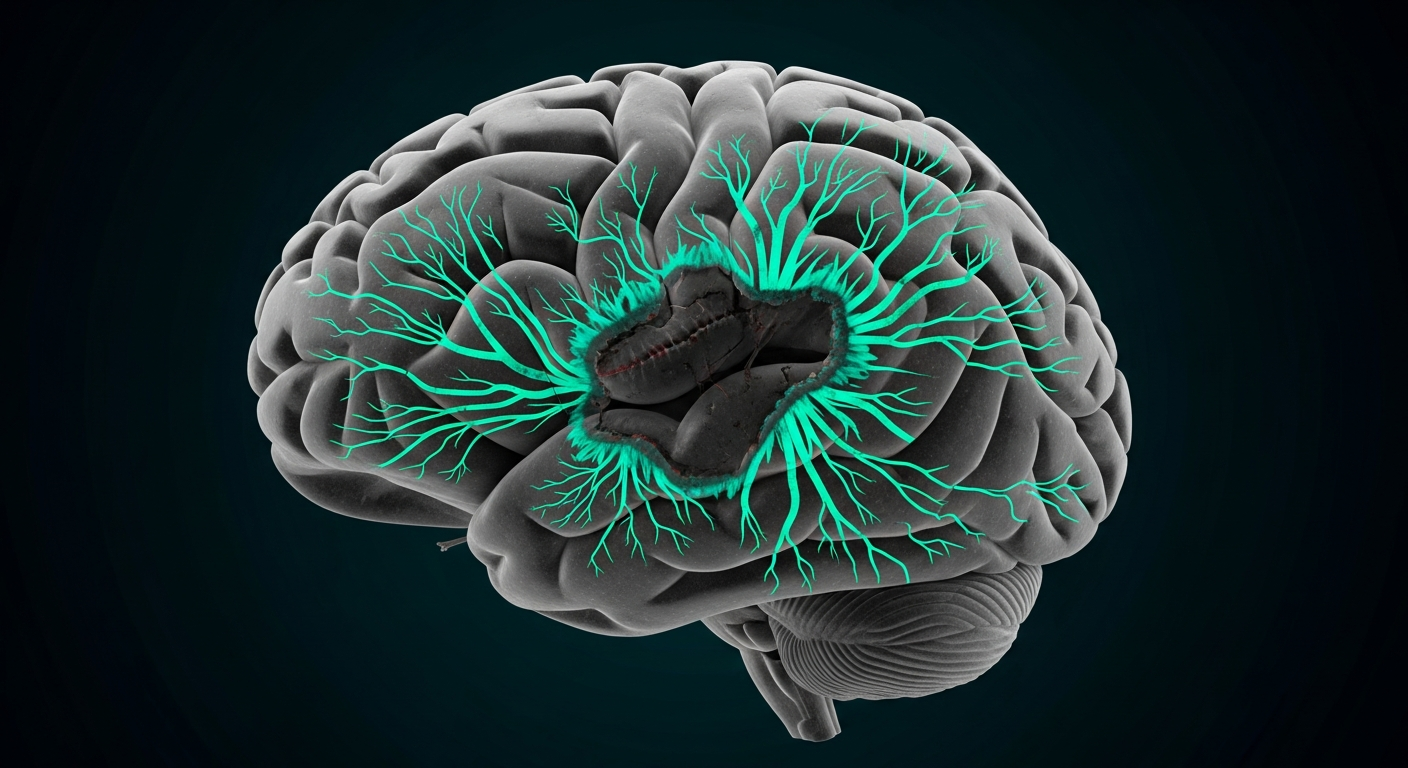
Neuroplasticity—the brain’s ability to form new neural connections and reorganize existing ones—is the biological foundation of post-traumatic growth. When you experience adversity, your brain doesn’t simply record the event as a static memory. Instead, it activates hundreds of millions of neurons, triggering chemical cascades that either strengthen or weaken connections throughout your neural network. This process is continuous across the lifespan, though it operates differently in childhood versus adulthood.
Research using functional MRI (fMRI) shows that even brief experiences—a single conversation, a moment of insight, a day of practice—can produce measurable changes in brain activation patterns within hours. Over weeks and months, these changes consolidate into stable neural rewiring. A study in Nature Reviews Neuroscience (2023) demonstrated that individuals who engaged in consistent cognitive and emotional work after trauma showed significant gray matter increases in the prefrontal cortex and hippocampus, brain regions critical for emotional regulation and memory processing.
This is why traditional trauma talk therapy works at all: it creates a safe space for the brain to repeatedly engage with the traumatic memory in a new context, triggering neuroplastic reorganization. However, when the brain’s basic regulatory systems are dysregulated—when the nervous system is locked in a state of threat or shutdown—neuroplasticity alone is insufficient. The brain must first achieve a state of relative calm and safety before it can effectively rewire itself. This is where targeted interventions like LENS neurofeedback become essential.
The Default Mode Network: Your Brain’s Narrative System
Post-traumatic growth is not purely emotional or psychological—it is a narrative process orchestrated by a specific brain network called the default mode network (DMN). The DMN, which includes the medial prefrontal cortex, posterior cingulate cortex, and angular gyrus, becomes active when you are not focused on the external world—when you are thinking about yourself, your past, your relationships, and your future. This network is your brain’s storytelling system.
Trauma disrupts the DMN’s normal function. Immediately after trauma, the network shows hyperactivity—the mind loops obsessively over the traumatic event, generating intrusive thoughts, rumination, and a fragmented narrative sense of self. Months or years later, some individuals show a different pattern: reduced connectivity within the DMN, reflecting a kind of dissociation or narrative numbness. Both patterns prevent post-traumatic growth.
Research from Harvard and Stanford (2022) tracked trauma survivors for 18 months post-event. Those who achieved the greatest post-traumatic growth showed a specific pattern: initial DMN hyperactivity that gradually normalized, accompanied by increased connectivity between the DMN and regions involved in emotional processing (the insula and amygdala). In other words, the brain was literally rewiring the relationship between storytelling and feeling, integrating the trauma into a coherent narrative that acknowledged both the difficulty and the person’s capacity to survive and transform. This integration is the hallmark of post-traumatic growth, and it depends on the DMN finding a balanced, flexible state—not locked in rumination, not dissociated, but actively engaged in meaningful reflection.
Dysregulation and the Blocked Pathway to Adaptation
Not every trauma survivor achieves post-traumatic growth. Some remain stuck in chronic PTSD, depression, or anxiety—not because they lack resilience, but because their nervous system remains dysregulated. Dysregulation refers to a persistent mismatch between the actual threat level in the present moment and the brain’s threat response. A person may be sitting safely at home, yet their amygdala remains in high alert, their sympathetic nervous system flooded with adrenaline, their prefrontal cortex offline. In this state, the brain cannot perform the flexible, integrative work that post-traumatic growth requires.
Neuroimaging studies of chronic PTSD reveal specific patterns. The amygdala (threat detection) shows elevated resting activation and heightened reactivity to trauma-related cues. The medial prefrontal cortex (emotional regulation) shows reduced gray matter volume and connectivity. The insula (bodily awareness) shows hyperactivity, creating a persistent sense of bodily threat. These are not character flaws—they are measurable changes in brain function that prevent adaptive reorganization.
Several factors determine whether dysregulation persists. Childhood trauma, repeated or prolonged trauma, lack of social support, and co-occurring depression all increase the risk of chronic dysregulation. Critically, the severity or type of trauma itself is not the primary predictor—what matters is whether the brain’s regulatory systems can restabilize. A severe trauma can be followed by rapid adaptive change if the nervous system has adequate resources to rebalance. A moderate trauma can lead to chronic dysregulation if the brain’s self-regulatory capacity is compromised. This distinction is crucial because it points to an actionable path: we cannot undo the trauma, but we can directly enhance the brain’s self-regulatory capacity.
The Critical Role of Regulated Relationship and Safe Activation
What conditions enable the brain to move from dysregulation toward adaptive change? Neuroscience and trauma research converge on two factors: regulated relationship and safe activation of the nervous system.
Regulated relationship refers to consistent interaction with another nervous system that is itself calm, attuned, and non-reactive. When a trusted clinician, therapist, or support person remains present and regulated while the traumatized person processes difficult material, the trauma survivor’s nervous system gradually synchronizes with that external regulation. This is neural entrainment—a measurable phenomenon where one brain’s oscillations begin to mirror another’s. Neuroscientist Stephen Porges’ polyvagal theory explains this through the vagal brake: the parasympathetic nervous system can literally “feel” the safety signals (tone of voice, facial expression, breathing rhythm) from another person and downshift its own threat response.
Safe activation refers to engaging the nervous system through movement, breathing, sensation, or cognitive work in a way that gradually expands the window of tolerance—the zone between hyperarousal and collapse where the brain can process information and learn. Trauma therapy approaches like somatic experiencing, EMDR, and prolonged exposure all work by carefully titrating activation: bringing the nervous system into contact with trauma memories just enough to trigger learning, but not so much that the system floods into dysregulation.
However, many trauma survivors struggle with conventional talk therapy because the very act of verbally processing trauma can be destabilizing. This is where technology and neuroscience-based interventions become transformative. Approaches that directly improve brain self-regulation—such as integrated brain health protocols—can prepare the nervous system for deeper therapeutic work, or can support recovery in isolation when traditional therapy is not accessible.
LENS Neurofeedback and Post-Traumatic Growth: Direct Brain Support
LENS (Low Energy Neurofeedback System) neurofeedback operates on a principle distinct from traditional therapy: it provides real-time feedback directly to the brain about its own electrical activity, allowing the brain to self-correct toward more efficient patterns. In a LENS session, sensors placed on the scalp measure the brain’s EEG activity at specific frequencies. The system detects where the brain is showing excessive or inefficient activity, then provides feedback (a brief, imperceptible radio frequency signal) at the exact moment dysregulation is detected. Over repeated sessions, the brain learns to suppress the dysregulated pattern and self-organize toward greater stability.
The relevance to post-traumatic growth is direct. By improving the brain’s baseline capacity to regulate itself, LENS creates the nervous system stability necessary for adaptive change. Clients report experiencing calmer sleep, reduced intrusive thoughts, improved focus, and greater emotional flexibility—precisely the changes that unlock the brain’s neuroplastic potential. When the amygdala is not constantly in alarm, the prefrontal cortex can come back online. When the DMN finds a balanced state, narrative integration becomes possible. When the nervous system is not depleted by constant dysregulation, the cognitive and emotional energy required for therapy and growth becomes available.
This is not to say that LENS neurofeedback replaces therapy—rather, it creates the optimal neurobiological substrate for therapy to work. Clients receiving LENS support for PTSD treatment or post-trauma recovery often find that their therapy becomes more effective because their brain is in a better state to process and integrate material. Similarly, individuals recovering from TBI recovery benefit from LENS’s capacity to restore neural self-regulation after the neuroinflammation and dysconnection that characterize brain injury.
From Dysregulation to Growth: A Timeline of Neural Change
What does the actual pathway from dysregulation to post-traumatic growth look like, neurologically speaking? Research and clinical observation reveal a rough timeline:
Weeks 1-4 after trauma: The brain is in acute stress response. Neural networks associated with the trauma are hyperactive and densely encoded. This is adaptive—the brain is trying to process threat. For most people, this phase naturally resolves as the brain’s regulatory systems rebalance.
Weeks 4-12: The critical period. Approximately 50% of trauma survivors show significant improvement without formal intervention, driven by natural neuroplasticity and social support. The other 50% show signs of dysregulation consolidating. This is when early intervention—such as initial neurofeedback sessions or trauma-informed therapy—can prevent chronic dysregulation from becoming entrenched.
Months 3-12: For those with persistent dysregulation, targeted treatment becomes essential. The brain’s neuroplastic response is still robust, but the dysregulated patterns are becoming habitual. Neurofeedback, therapy, somatic work, and medication (when indicated) all work together to restore nervous system balance and reopen the pathway to adaptive change.
Month 6-24: This is the window when post-traumatic growth most commonly emerges in treated individuals. The brain has reestablished baseline regulation. The DMN has found a balanced state. The person is no longer consumed by dysregulation, and can now invest cognitive and emotional energy into meaning-making, relationship repair, identity integration, and personal development. New neural patterns supporting resilience, wisdom, and purpose begin to stabilize.
Beyond 24 months, continued growth is possible but requires deliberate engagement—ongoing therapy, contemplative practice, creative expression, or community contribution. The brain’s structural changes consolidate over time. Individuals with strong post-traumatic growth often report that the trauma, though deeply difficult, became a turning point in their life narrative—a moment where their brain was forced to reorganize in a way that revealed new capacities and values.
How Neurofeedback Addresses Post-Traumatic Adaptation
Restores Regulatory Capacity
LENS directly trains the brain’s self-regulation mechanisms. By reducing dysregulated EEG patterns and promoting efficient neural oscillation, neurofeedback restores the nervous system’s baseline calm—the prerequisite for all healing work.
Supports Narrative Integration
With baseline dysregulation managed, the default mode network can engage in healthy reflection and meaning-making. Clients report greater access to their own story and capacity to integrate trauma into a broader life narrative.
Accelerates Therapy Effectiveness
A regulated brain can process trauma material more effectively. LENS clients often experience faster progress in therapy and require fewer overall sessions than those not receiving neurofeedback support.
Non-Invasive Brain Change
LENS requires no medications, no talk-based processing, and minimal cognitive effort. For those with dissociation, severe anxiety, or speech difficulties, neurofeedback provides an alternative pathway to nervous system healing.
Frequently Asked Questions
How long does it take for neuroplastic changes to happen after trauma?
Initial neuroplastic changes can occur within hours to days of a corrective experience, but stable structural reorganization typically requires 6-12 weeks of consistent engagement with therapy, neurofeedback, or other interventions. Post-traumatic growth—the psychological integration phase—most commonly emerges 6-24 months after trauma, once the nervous system has restabilized and the brain’s narrative networks can engage in meaning-making. Timeline varies significantly based on trauma severity, support availability, and individual neurobiological factors.
Is post-traumatic growth guaranteed, or do some people stay stuck?
Post-traumatic growth is not automatic. Without adequate support, social resources, or intervention, approximately 40-50% of trauma survivors may remain in chronic dysregulation characterized by PTSD, depression, or anxiety. However, research shows that with evidence-based treatment—including neurofeedback, therapy, and social support—the majority of individuals can restore nervous system regulation and access the conditions for growth. The barrier is not inherent resilience but available support and brain regulation.
Can LENS neurofeedback help if I’m still in acute trauma symptoms?
Yes, LENS can be helpful in the acute phase, though the timing and dosing are critical. In the immediate 1-4 weeks after trauma, the nervous system is in heightened activation by design. Very gentle neurofeedback (low frequency, brief sessions) can help stabilize the system without overwhelming it. Most clinical protocols recommend waiting 2-4 weeks post-trauma to begin LENS, allowing the acute phase to naturally begin resolution. If you are in acute crisis, immediate intervention with trauma-trained therapy or crisis support is recommended first.
Does the brain ever fully heal after severe trauma?
The brain’s structure and function do reorganize after trauma, but “fully healing” may not mean returning to a pre-trauma baseline. Instead, healing means restoring regulation, integrating the experience into narrative identity, and often developing expanded capacity for meaning, compassion, and resilience. Many individuals report that while they still remember the trauma, it no longer dominates their nervous system or limits their life. The brain becomes whole again, though different—more aware, more cautious perhaps, but also deeper.
Where can I start if I’m experiencing trauma symptoms?
First, reach out to a trauma-informed mental health professional—a therapist, psychiatrist, or clinical social worker. If you are interested in neurofeedback as a complement to therapy, our clinic specializes in supporting trauma recovery. If you’re not yet connected to treatment, we recommend getting started with an initial consultation, where we can assess your needs and help determine if LENS is appropriate for your situation.
Ready to Support Your Brain’s Healing Journey?
Your brain is built to adapt and grow after adversity. If you’re stuck in dysregulation or ready to deepen your post-traumatic growth, LENS neurofeedback can restore the nervous system stability you need to move forward. We offer personalized assessments and treatment protocols designed to meet you where you are.
Schedule Your Free Consultation
Call us: (424) 625-5445 · Los Angeles, CA
Disclaimer: This content is for informational purposes only and does not constitute medical advice, diagnosis, or treatment. LENS Neurofeedback is not FDA-approved for all conditions mentioned. Please consult with a qualified healthcare provider before beginning any new treatment program.