

Breaking Free: Understanding Anxiety-Driven Avoidance Learning Loops
How Your Brain Learns to Avoid – And How LENS Neurofeedback Can Help
Anxiety-driven avoidance learning loops represent one of the most persistent challenges in mental health, creating self-reinforcing cycles that can trap individuals in patterns of fear and withdrawal.
Recent research reveals that high levels of anxiety facilitate response inhibition in avoidance contexts, while hampering the ability to overcome learning biases that maintain these patterns
. When we consistently avoid situations that trigger anxiety, our brain interprets this avoidance as confirmation that the threat was real, strengthening the neural pathways that maintain the anxiety response.
Understanding these loops is crucial because
they involve shared characteristics with anxiety, including negative self-evaluation, fear of losing social status, feelings of inferiority, low self-esteem, and persistent avoidance behavior
. What makes these patterns particularly challenging is that they can become deeply embedded in our neural architecture through repeated reinforcement. However, emerging research on neurofeedback therapy, particularly LENS neurofeedback, offers new hope for breaking these cycles by directly addressing the underlying brain patterns that maintain them.
The encouraging news is that
research shows neurofeedback can reduce anxiety symptoms by 60-80% in responsive individuals, working by strengthening neural pathways associated with emotional regulation while weakening those linked to anxious arousal
. This educational exploration will examine how these learning loops form, the latest research on their mechanisms, and how innovative approaches like LENS neurofeedback can help restore natural brain balance.
⚕️ Important Medical Disclaimer:
The information provided is for educational purposes only and is not intended as medical advice, diagnosis, or treatment. LENS neurofeedback is a wellness modality NOT intended to diagnose, treat, cure, or prevent any disease. Always consult a qualified healthcare professional before beginning any wellness program. Individual results vary. NeuroBalance does not provide medical services.
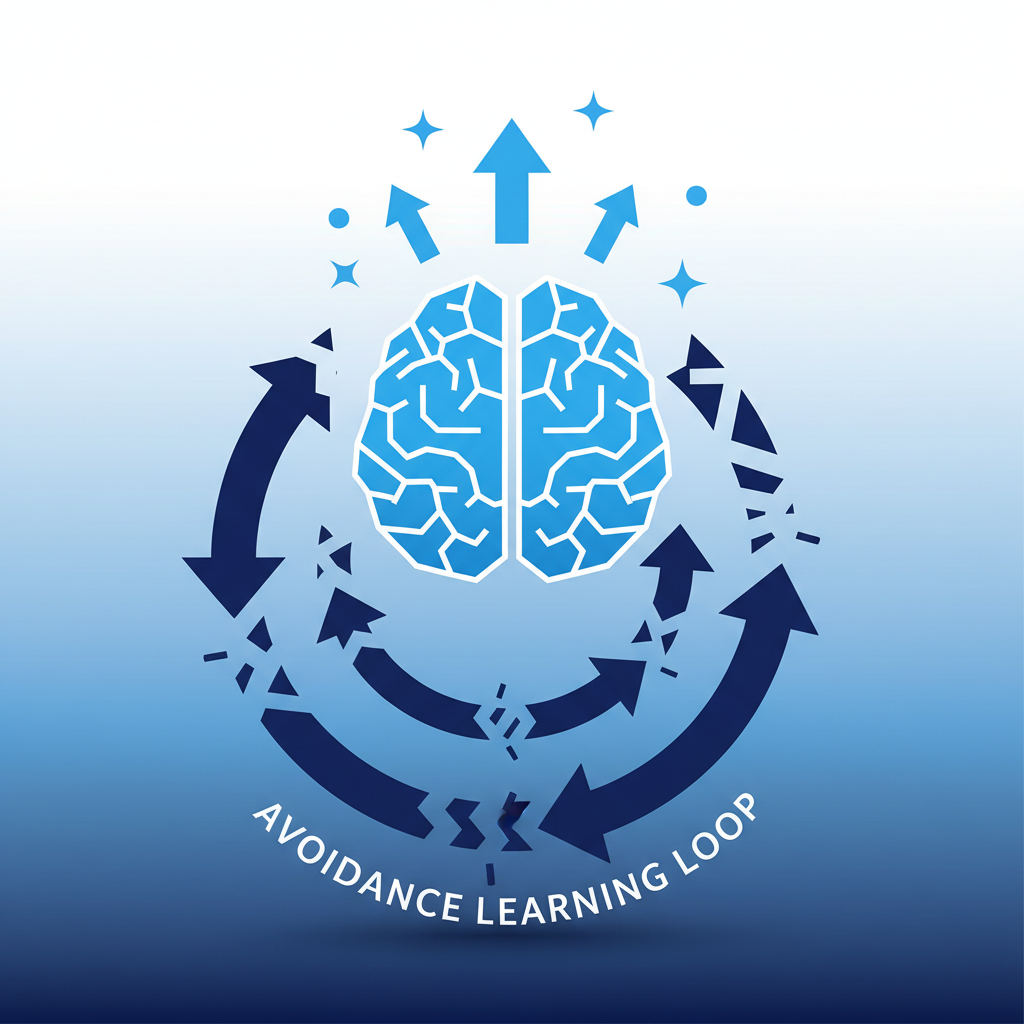
Understanding Anxiety-Driven Avoidance Learning and Brain Function
Avoidance learning loops begin when our brain’s threat detection systems become hyperactive, leading to what researchers call “Pavlovian bias” –
the phenomenon that learning to execute a response to obtain a reward or to inhibit a response to avoid punishment is much easier than learning the reverse
. In anxiety disorders, this natural learning bias becomes exaggerated, making it increasingly difficult to approach situations that once triggered fear.
Anxiety symptoms include severe fear of negative evaluation, avoidance of social interactions, and pervasive worries that manifest as safety behaviors. These indicators may stem from repeated experiences of difficulties, criticism, or misunderstanding by others, which can erode self-esteem and foster a persistent worry of failure
. What’s particularly concerning is how these patterns can establish themselves through seemingly minor initial experiences.
The brain regions most involved in these loops include the amygdala (fear center), prefrontal cortex (decision-making), and the bed nucleus of the stria terminalis (BNST).
The BNST serves as a central hub integrating information from brain regions processing threat, context, and stress, receiving inputs from areas such as the hippocampus, amygdala, and medial prefrontal cortex, then projecting outputs to areas that orchestrate specific behavioral responses like avoidance and risk assessment
.
Our neurofeedback anxiety support approach recognizes that these learning loops represent dysregulated brain states rather than character flaws.
Research reveals that individuals can reframe anxiety as part of personal growth, with some describing how they learned to channel their sensitivity rather than fight it
. This perspective shift becomes possible when the underlying brain dysregulation is addressed.
How LENS Neurofeedback Works
The Low Energy Neurofeedback System (LENS) developed by Dr. Len Ochs uses feedback in the form of a radio frequency carrier wave, administered at a positive offset frequency from the person’s own dominant EEG frequency. Although it is an unusual biofeedback procedure, with the feedback being invisible and the subject passive, clinical evidence supports the efficacy of LENS across a spectrum of conditions
.
What makes LENS particularly effective for anxiety-driven avoidance patterns is its unique approach to brain regulation.
LENS takes a short recording, often for one second, of brainwaves underneath an electrode, then replays this recording to the brain at one ten thousandth the power of a quartz wristwatch – much less than the amount of energy emitted by a cellphone. Upon receiving this information, the brain seems to recalibrate itself
.
Traditional neurofeedback requires active participation and attention, which can be challenging for individuals caught in anxiety loops. However,
the LENS operates much more rapidly than traditional neurofeedback and has qualities that make it much easier to use with people who can’t sit still. With LENS, the client doesn’t need to “do” anything, and there is nothing to learn. The typical session lasts 3-4 minutes, making it work well for people who either cannot or will not pay attention to a computer screen for longer periods
.
The effectiveness statistics are encouraging.
More than 85% of individuals who have used LENS report significant benefits, with results often beginning in the first session and proving to be long-lasting
. This rapid response is particularly important for individuals trapped in avoidance cycles, as early positive experiences can help interrupt the pattern of expecting negative outcomes.
What Research Suggests About Neurofeedback and Anxiety
The scientific foundation for neurofeedback in anxiety management has grown substantially.
Neurofeedback training of alpha activity over the parietal lobe is effective in individuals with Generalized Anxiety Disorder, especially for anxiety traits and depressive symptoms
. This research demonstrates that targeted brainwave training can address both the immediate symptoms and underlying patterns that maintain anxiety.
Recent 2025 research has shown particularly promising results for combined approaches.
The combination of neurofeedback and mindfulness was expected to be more effective because it uses real-time feedback to train the brain through reinforcement learning, providing a more robust way to build self-regulation skills needed to manage anxiety
. This aligns with our understanding that addressing avoidance loops requires both direct brain training and skill development.
Review evidence suggests synergy in reducing anxiety, depression, and stress when combining neurofeedback with other approaches
. This is particularly relevant for avoidance learning loops, which often involve multiple interconnected systems that benefit from comprehensive intervention.
The research on LENS specifically shows encouraging outcomes.
Published research studies have shown the effectiveness of the LENS method with traumatic brain injury and fibromyalgia, with study hypotheses confirming that LENS treatment would be effective in reducing both systematic symptom ratings and EEG amplitude measurements, producing the most rapid improvements in early treatment sessions
.
The NeuroBalance Approach to Breaking Cycles
At NeuroBalance in Los Angeles, we understand that breaking anxiety-driven avoidance learning loops requires a nuanced approach that addresses both the neurological foundations and the behavioral patterns. Our getting started process begins with comprehensive assessment to understand each individual’s unique brain patterns and avoidance triggers.
Jon S. Haupers, our LENS neurofeedback specialist with over 12 years of experience, emphasizes that successful intervention must target the brain’s natural self-regulation capacity.
LENS supports the brain’s natural ability to self-regulate, with self-regulation being a foundational element of optimal brain performance, enabling the nervous system to function more efficiently and effectively
.
Our approach recognizes that
LENS works well with problems of the Central Nervous System, including symptoms of the anxiety-depression spectrum, attention deficits, behavior disorders, various sleep disorders, headaches and migraines, and emotional disturbances
. This comprehensive impact is particularly important because avoidance learning loops often affect multiple aspects of functioning.
The treatment timeline is typically much shorter than traditional approaches.
LENS works much faster than traditional neurofeedback with the number of sessions ranging from as few as 1 to an overall average number of sessions of 11
. At our Los Angeles location, more than 90% of our clients report feeling noticeable improvements in their anxiety and overall symptoms.
Our LENS neurotherapy for anxiety program specifically addresses the neural patterns that maintain avoidance behaviors, helping clients develop new responses to previously triggering situations. This occurs not through forcing change, but by helping the brain find its natural balance and resilience.
📍 NeuroBalance Los Angeles
Located in Mar Vista, serving clients throughout Southern California. Home visits also available.
4029 Alla Road, Los Angeles, CA 90066 • 424.625.5445
Recognizing Avoidance Learning Patterns in Daily Life
For many individuals dealing with anxiety, the patterns of avoidance learning often operate below conscious awareness.
Research indicates that dysfunction in neural connections contributes to symptoms such as excessive worry, hypervigilance, and avoidance, which are hallmark features of anxiety disorders
. Understanding how these patterns manifest in everyday situations is the first step toward breaking free from their limiting influence.
Common Avoidance Behaviors in Modern Life
Avoidance behaviors often start small but can gradually expand to encompass larger areas of life. Social situations become increasingly challenging as individuals learn to avoid perceived threats. This might begin with declining invitations to large gatherings, then progressing to avoiding smaller social interactions, and eventually leading to isolation from friends and family altogether.
Professional environments present another common arena where avoidance patterns develop. Many clients at our Los Angeles neurofeedback practice report avoiding presentations, team meetings, or leadership opportunities due to anxiety-driven learning patterns. These professional limitations can significantly impact career growth and personal satisfaction.
💡 Understanding Brain Health:
The brain’s threat detection system, centered on the amygdala, is designed to keep us safe. However, in anxiety-driven avoidance learning, this system becomes hyperactive, perceiving danger in situations that are actually neutral or even beneficial. LENS neurofeedback therapy helps recalibrate these neural networks by promoting healthier brain wave patterns.
The Physical Manifestations
Avoidance learning doesn’t just affect behavior—it creates measurable physical changes in the body.
The amygdala receives inputs from various brain regions and projects to areas controlling physiological responses, which are essential for generating appropriate behavioral and physiological responses to potential threats
. When these responses become dysregulated in pathological anxiety, the body remains in a constant state of alertness.
Common physical manifestations include increased heart rate when approaching feared situations, shallow breathing patterns, muscle tension, and digestive issues. Many individuals develop what researchers term “anticipatory anxiety,” where the mere thought of a potential trigger situation creates the same physical response as actually encountering it.
Emotional and Cognitive Patterns
The cognitive patterns associated with avoidance learning often involve catastrophic thinking, where individuals automatically assume the worst possible outcome in any potentially challenging situation. This mental rehearsal of negative scenarios reinforces the brain’s assessment that avoidance is the safest strategy.
| Avoidance Pattern | Common Triggers | Impact Areas |
|---|---|---|
| Social Withdrawal | Large groups, speaking up, conflict | Relationships, career advancement |
| Performance Avoidance | Presentations, evaluations, scrutiny | Professional growth, achievement |
| Decision Paralysis | Important choices, commitment | Life progress, opportunities |
| Physical Avoidance | Travel, new environments | Personal growth, experiences |
These emotional patterns create what psychologists call “learned helplessness,” where individuals begin to believe they have no control over their responses to anxiety-provoking situations. This belief system further reinforces avoidance behaviors, creating a self-perpetuating cycle that can be challenging to break without proper intervention.
The Hidden Cost of Safety-Seeking
While avoidance behaviors initially provide relief from anxiety, they come with significant hidden costs that accumulate over time. Each avoided situation reinforces the brain’s assessment that the situation was indeed dangerous, even though this assessment may be inaccurate. This creates what researchers term “safety-seeking behaviors” that paradoxically maintain anxiety rather than reducing it.
💬 What Clients Share:
“I thought I was protecting myself by avoiding difficult situations, but I realized I was actually limiting my entire life. LENS therapy helped me understand that my brain was stuck in old patterns that no longer served me.” – Individual results vary
The Neuroplasticity Factor: Why Change is Possible
One of the most encouraging developments in neuroscience research is our growing understanding of neuroplasticity—the brain’s remarkable ability to reorganize itself throughout life.
Research now shows that neuroplasticity continues throughout the lifespan, supporting learning, memory, and recovery from injury or disease
. This discovery has profound implications for individuals trapped in anxiety-driven avoidance patterns.
The Science of Brain Reorganization
Traditional neuroscience once believed that the adult brain was essentially fixed and unchangeable after critical developmental periods. However, groundbreaking research over the past several decades has completely overturned this assumption. The brain maintains its capacity for change through multiple mechanisms, including synaptic plasticity, structural remodeling, and even the formation of new neural connections.
Studies have shown that neurofeedback, when added to standard rehabilitation, leads to significant gains in self-efficacy, cognitive insight, and attention, as well as increased serum levels of neuroplasticity markers such as brain-derived neurotrophic factor (BDNF) and reelin
. These biochemical changes provide measurable evidence that the brain is actively reorganizing itself in response to targeted interventions.
📊 What Research Suggests:
Neurofeedback learning leads to neuroplasticity and then presumably to behavioral change. NF fosters learning to modulate specific components of the EEG to improve or restore brain functions via neuroplasticity
. This represents a fundamental shift from simply managing symptoms to actually changing the underlying neural patterns that create anxiety-driven behaviors.
How LENS Technology Harnesses Neuroplasticity
LENS neurofeedback technology works by providing the brain with extremely low-energy feedback signals—approximately 1/10,000th the power of a quartz watch. These gentle signals help interrupt dysfunctional brainwave patterns and encourage the brain to reorganize itself into healthier configurations.
The process begins with a comprehensive brainwave analysis that maps the individual’s unique neural signature. This assessment reveals areas where brain activity is either excessive or insufficient, providing a roadmap for targeted intervention. During treatment sessions, the brain receives real-time feedback about its activity patterns, allowing it to gradually learn new, more adaptive ways of functioning.
The Role of Critical Periods
While neuroplasticity occurs throughout life, research suggests there are optimal windows for different types of neural reorganization.
Neuroplasticity is the brain’s ability to reorganize its structure and connections based on experience
. Understanding these critical periods helps optimize treatment approaches and set realistic expectations for change.
In the context of anxiety-driven avoidance patterns, the brain remains remarkably responsive to intervention well into adulthood.
Research shows that participants who completed a minimum of 72 sessions (over 54 hours or 3,240 minutes) of training exceeded the 125-minute threshold identified for potential performance improvements, with robust and lasting changes highlighting the importance of long-term training for meaningful neuroplasticity
.
Individual Factors Affecting Plasticity
Several factors influence how readily the brain responds to neuroplasticity-based interventions. Age plays a role, with younger brains generally showing greater plasticity, though this doesn’t preclude significant changes in older adults. The duration and severity of existing patterns also matter—long-established avoidance behaviors may require more time and sessions to modify.
Lifestyle factors significantly impact neuroplasticity potential. Regular exercise, adequate sleep, stress management, and proper nutrition all support the brain’s capacity for change. At our cognitive rehabilitation programs, we emphasize these supporting factors as essential components of successful neural reorganization.
⚕️ Important Note:
Individual results vary based on factors including age, health status, and consistency of treatment. Neuroplasticity-based interventions work best as part of a comprehensive approach that may include lifestyle modifications and professional support. Consult your healthcare provider to determine the most appropriate treatment plan for your specific situation.
Breaking the Loop: Evidence-Based Treatment Approaches
Breaking free from anxiety-driven avoidance patterns requires a multifaceted approach that addresses both the underlying neural patterns and the behavioral manifestations.
Research suggests that neurofeedback shows promise as a non-invasive intervention for mental health, though whether combined with complementary approaches enhances efficacy requires further investigation
. Current evidence supports several evidence-based approaches that work synergistically to interrupt these limiting cycles.
LENS Neurofeedback as a Primary Intervention
LENS neurofeedback therapy represents a breakthrough approach to addressing the neural foundations of anxiety-driven avoidance. Unlike traditional therapy approaches that work primarily at the cognitive level, LENS directly addresses the dysregulated brainwave patterns that maintain these problematic loops.
The LENS system works by providing extremely low-energy feedback to the brain, helping it recognize and modify dysfunctional patterns.
Targeted neurofeedback approaches have demonstrated the ability to modulate specific neural circuits implicated in conditions like schizophrenia, with modulation associated with improvements in working memory, self-referential processing, and social functioning
. While this research focused on schizophrenia, similar mechanisms apply to anxiety-related neural circuits.
The Neural Circuits Approach
Effective intervention requires understanding the specific neural circuits involved in avoidance learning.
Brain circuits of active avoidance in both rodents and humans involve regions associated with threat processing and instrumental behaviors, with moderately trained avoidance responses depending on basolateral amygdala, prelimbic cortex, bed nucleus of the stria terminalis, paraventricular thalamus, nucleus accumbens, and ventral pallidum
.
At our Los Angeles practice, we use detailed brainwave mapping to identify which specific circuits are dysregulated in each individual. This personalized approach allows us to target the exact areas that need support, rather than using a one-size-fits-all treatment protocol. Brain training programs are customized based on these individual neural signatures.
| Treatment Component | Mechanism | Expected Timeline |
|---|---|---|
| Initial Assessment | Comprehensive brainwave mapping | 1-2 sessions |
| Neural Stabilization | Basic pattern regulation | 3-8 sessions |
| Pattern Modification | Targeted circuit training | 6-15 sessions |
| Integration Support | Consolidation and maintenance | Ongoing as needed |
Complementary Approaches
While LENS neurofeedback addresses the neural foundations of avoidance patterns, complementary approaches can enhance and accelerate the healing process.
Research shows that among studies examining combined neurofeedback approaches, 77.8% enrolled fewer than 30 participants, indicating this is an emerging field requiring more extensive research
.
Mindfulness-based approaches work particularly well alongside neurofeedback because they teach individuals to observe their thoughts and feelings without automatically reacting to them. This creates space between trigger and response, allowing the new neural patterns developed through LENS to be more effectively integrated into daily life.
Gradual exposure techniques, when combined with the neural regulation achieved through LENS, allow individuals to safely approach previously avoided situations. The key difference is that exposure occurs after the brain has been prepared through neurofeedback, making the process less overwhelming and more successful.
The Role of Professional Support
Breaking anxiety-driven avoidance patterns requires skilled professional guidance. At our Los Angeles practice, Jon S. Haupers brings over 12 years of experience in LENS neurofeedback therapy, having been trained directly by Dr. Len Ochs, the creator of LENS technology.
💡 Understanding Brain Health:
Professional expertise is crucial because each brain responds differently to neurofeedback. An experienced practitioner can recognize subtle patterns in brain wave data and adjust protocols accordingly. This personalized approach maximizes the effectiveness of treatment while ensuring safety and comfort throughout the process.
Signs of Successful Pattern Disruption
Recognizing the signs of successful pattern disruption helps individuals stay motivated and track their progress as they work to overcome anxiety-driven avoidance behaviors. Unlike traditional approaches that may take months to show measurable improvement, many clients at our neurofeedback practice begin noticing changes within the first few sessions.
Early Neurological Indicators
The first signs of successful pattern disruption often occur at the neurological level before becoming apparent in behavior. Many clients report improved sleep quality within the first few sessions, as the brain begins to regulate its arousal patterns more effectively. Changes in sleep architecture—particularly increased deep sleep and reduced middle-of-the-night awakenings—indicate that the nervous system is beginning to shift out of hypervigilance mode.
Another early indicator involves changes in physical tension patterns. Clients frequently notice that chronic muscle tension, particularly in the shoulders, neck, and jaw, begins to release. This physical relaxation reflects the decreased activation in neural circuits responsible for maintaining defensive postures against perceived threats.
Cognitive and Emotional Shifts
As the underlying neural patterns begin to shift, individuals typically experience changes in their thought patterns and emotional responses. The automatic catastrophic thinking that characterizes anxiety-driven avoidance begins to lose its grip. Instead of immediately jumping to worst-case scenarios, clients find they can consider multiple possibilities and even neutral or positive outcomes.
Emotional regulation also improves significantly.
Studies suggest that neurofeedback interventions can enhance cognitive functions, improve emotional regulation, and influence biochemical markers associated with neuroplasticity, targeting both neurocognitive impairments and neural reorganization
. This enhanced emotional regulation manifests as less intense anxiety responses and quicker recovery when anxiety does arise.
💬 What Clients Share:
“I started noticing that I wasn’t automatically saying ‘no’ to invitations anymore. For the first time in years, I actually felt curious about social events rather than immediately anxious. It was subtle at first, but now I can see how much my whole perspective has shifted.” – Individual results vary
Behavioral Changes and Increased Flexibility
Perhaps the most encouraging signs of successful pattern disruption involve behavioral changes that clients often notice before they fully understand what’s happening. Many report finding themselves in situations they would have previously avoided without consciously deciding to face their fears. This spontaneous engagement with previously challenging situations indicates that the brain is no longer automatically triggering avoidance responses.
Decision-making becomes more fluid and less paralyzed by anxiety. Where individuals once spent hours or days agonizing over relatively simple choices, they begin making decisions more quickly and with greater confidence. This improved decision-making capacity reflects restored function in prefrontal circuits that were previously overwhelmed by amygdala-driven anxiety responses.
Social and Professional Re-engagement
One of the most profound indicators of successful pattern disruption involves renewed engagement with social and professional opportunities. Clients often report accepting invitations they would have previously declined, volunteering for projects at work, or initiating conversations with new people. These behaviors emerge naturally as the brain’s threat detection system recalibrates to more appropriate levels.
Professional growth often follows as individuals become willing to take on challenges that would have previously triggered avoidance responses. Many clients at our performance optimization programs report pursuing leadership roles, speaking opportunities, or career changes that align with their true interests rather than their anxiety limitations.
Measuring Progress Objectively
While subjective improvements are encouraging, objective measures provide additional confirmation of successful pattern disruption. At our practice, we track progress through regular brainwave assessments that show measurable changes in neural activity patterns. These quantitative measures often reveal improvement even before clients fully recognize the changes in their daily experience.
Standardized anxiety assessments provide another objective measure of progress. Many clients show significant improvements on validated anxiety scales within 8-12 sessions. However, it’s important to note that individual timelines vary based on factors including the duration and severity of existing patterns, overall health status, and consistency of treatment.
⚕️ Important Note:
Progress in overcoming anxiety-driven avoidance patterns is highly individual. While many clients experience improvements within the first few sessions, lasting change typically requires consistent treatment over time. Individual results vary, and it’s important to work with qualified practitioners who can monitor progress and adjust treatment protocols as needed.
The Science Behind Recovery: Long-term Outcomes
Recent 2025 neurofeedback research demonstrates significant reductions in PTSD symptoms across all measures, with large effect sizes observed for anxiety symptoms and medium to large effects found for avoidance behaviors
. This breakthrough research provides compelling evidence that brain-based interventions can successfully disrupt entrenched avoidance learning patterns.
Clinical outcome studies show that after an average of only 20 LENS neurofeedback treatments, patient symptom ratings declined from 7.92 to 3.96—a remarkable 50% improvement
.
LENS treatment appears to be very efficient and effective in rapidly reducing a wide range of symptoms, particularly producing rapid improvements in the first five to six sessions
.
The neurobiological mechanisms underlying this recovery involve several key processes:
**Neural Reset and Reorganization**
LENS neurofeedback helps the entire brain to regulate and rebalance itself by “dis-entraining” or freeing the brain from its frozen maladaptive state or defensive looping mechanisms caused by trauma or stress. LENS effectively disrupts the old neural connectivity that causes the dysfunctional patterns and resets them for much faster and lasting results
.
**Sustained Neuroplasticity Changes**
LENS Neurofeedback has shown profound impact in emotional regulation by resetting dysfunctional brainwave patterns, helping to stabilize mood swings and reduce symptoms of anxiety and depression. This stabilization is not just a short-term effect; many clients experience sustained emotional balance long after their sessions are complete
.
**Evidence-Based Recovery Indicators**
LENS is remarkably effective, with over 85% of people who have used LENS benefiting significantly from it. Results can be seen quickly, often beginning within the first session, and are long lasting
.
Clients need a series of sessions for the brain to “hold on” to the changes. Most people will see shifts in their nervous system and symptoms within the first 4 sessions
.
Integration and Lifestyle Support
Breaking free from anxiety-driven avoidance learning loops requires more than just neurobiological intervention—it demands a comprehensive approach that integrates brain training with lifestyle modifications and ongoing support.
Review evidence suggests synergy in reducing anxiety, depression, and stress when combining neurofeedback with other approaches that enhance self-regulation and cognition
.
**Complementary Therapeutic Approaches**
The combination of neurofeedback and mindfulness is expected to be more effective because it uses real-time feedback to train the brain through reinforcement learning. This is a more robust way to build self-regulation skills needed to manage anxiety
.
Many Los Angeles clients at NeuroBalance find enhanced results when combining LENS neurofeedback therapy with:
– **Mindfulness practices** that reinforce present-moment awareness
– **Cognitive behavioral strategies** for identifying thought patterns
– **Gradual exposure techniques** to practice new responses
– **Stress management skills** including breathwork and relaxation
– **Sleep optimization** to support neural recovery
**Lifestyle Factors for Sustained Recovery**
LENS Neurofeedback is best used as a holistic approach that is combined with lifestyle changes as well as psychotherapy. As the brain begins to change, neurofeedback results are heightened when clients utilize healthy lifestyle choices, such as healthy nutrition, mindfulness and meditation, and other body-based activities
.
Key lifestyle elements that support long-term recovery include:
– **Regular sleep schedule** (7-9 hours nightly) to consolidate neural changes
– **Balanced nutrition** emphasizing omega-3 fatty acids and antioxidants
– **Physical exercise** to promote neuroplasticity and stress resilience
– **Social connection** to practice new behavioral patterns in relationships
– **Creative activities** that engage different neural networks
**Ongoing Maintenance and Support**
The long-term benefits of LENS Neurofeedback extend beyond cognitive and emotional improvements; they also contribute to a better overall quality of life. Clients often report feeling more focused, balanced, and capable of managing life’s challenges. This enhanced quality of life empowers individuals to live more fulfilling and productive lives
.
Whether you’re seeking support for anxiety-related concerns, exploring PTSD recovery options, or interested in performance optimization, our Los Angeles team provides personalized support for your unique needs.
Frequently Asked Questions
Ready to Break Free from Avoidance Patterns?
Take the first step toward rewiring anxiety-driven loops and reclaiming your natural brain balance. Our Los Angeles LENS neurofeedback specialists are here to guide your journey.
📍 4029 Alla Road, Los Angeles, CA 90066 | ✉️ [email protected]
Serving Santa Monica, Beverly Hills, Venice, Westwood, and Greater Los Angeles
Your Brain Wellness Journey
Understanding anxiety-driven avoidance learning loops represents a crucial step toward recovery. These deeply ingrained neural patterns, while once protective, can trap us in cycles of fear and limitation. The good news? Your brain’s remarkable neuroplasticity means change is always possible, and innovative approaches like LENS neurofeedback offer pathways to rewire these patterns at their source.
Recovery isn’t just about reducing symptoms—it’s about reclaiming your natural capacity for resilience, growth, and connection. Whether you’re exploring options for anxiety support, seeking trauma recovery resources, or interested in peak performance optimization, know that effective, evidence-based support is available.
At NeuroBalance, we’re honored to serve the Los Angeles community with personalized LENS neurofeedback therapy that respects your brain’s innate wisdom while providing the gentle stimulation needed for positive change. Your journey toward greater brain balance and emotional freedom can begin with a single conversation.
🌱 Take Your Next Step:
Learn more about getting started with NeuroBalance, explore our client success stories, or browse our comprehensive FAQ for additional information about neurofeedback and brain wellness.
This content is for educational purposes only and is not intended as medical advice. LENS neurofeedback is not intended to diagnose, treat, cure, or prevent any disease. Individual experiences may vary. Always consult with qualified healthcare professionals regarding your health concerns and before making any changes to your treatment plan.