

Understanding Brain Intolerance of Uncertainty and Predictive Threat Detection
How Our Brains Navigate Uncertainty and the Role of LENS Neurofeedback in Restoring Balance
Our brains are remarkable prediction machines, constantly trying to anticipate what might happen next. But what happens when uncertainty becomes overwhelming?
Research reveals that uncertainty about potential threats and associated anticipatory processes are central to the feeling of anxiety, and while anxiety serves an adaptive function, excessive anticipatory anxiety represents a key symptom of anxiety disorders
.
This educational guide explores how our brains process uncertainty, what happens when threat detection systems become overactive, and how innovative approaches like LENS neurofeedback therapy may support brain balance and healthy responses to uncertainty.
Understanding these mechanisms can provide valuable insights into conditions like anxiety, PTSD, and related challenges – and point toward evidence-based approaches for support.
⚕️ Important Medical Disclaimer:
The information provided is for educational purposes only and is not intended as medical advice, diagnosis, or treatment. LENS neurofeedback is a wellness modality NOT intended to diagnose, treat, cure, or prevent any disease. Always consult a qualified healthcare professional before beginning any wellness program. Individual results vary. NeuroBalance does not provide medical services.
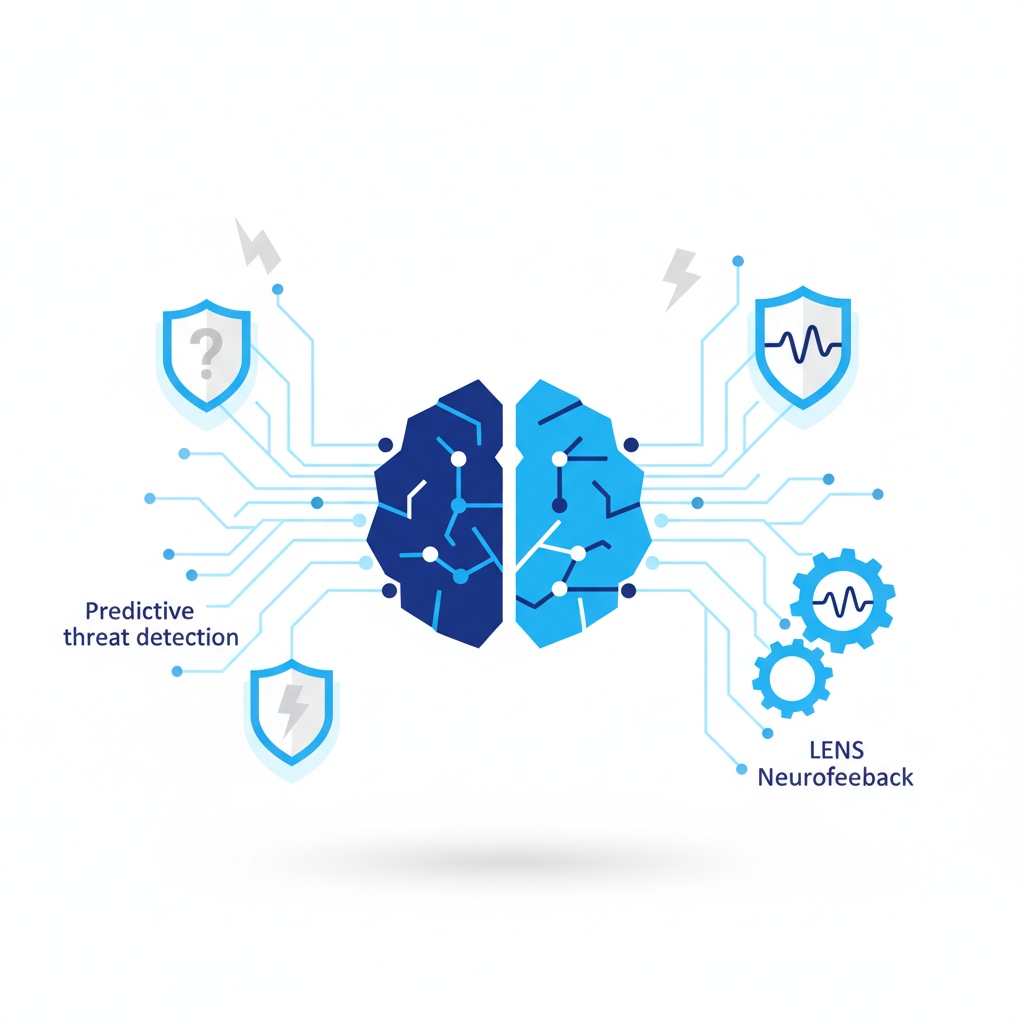
Understanding Uncertainty and Brain Function
Uncertainty refers to the inability to predict the outcome of a situation, or the likelihood, valence, intensity, time, or type of future events
. Our brains have evolved sophisticated systems to handle uncertainty, but sometimes these systems become unbalanced.
Intolerance of uncertainty (IU) is the tendency to perceive uncertain events as threatening
. When this becomes excessive, it can significantly impact daily functioning and contribute to various anxiety-related challenges.
🧠 Key Insight:
Uncertainty represents an essential part of daily lives ranging from uncertainty in early stages of romantic relationships to likelihood of catching infections or magnitude of climate change
. Our brains are constantly working to make predictions and manage these uncertainties.
Jon S. Haupers, LENS Neurofeedback Specialist at MYNeuroBalance, explains: “In our 12+ years helping clients, we’ve observed that many individuals who struggle with uncertainty intolerance experience significant relief when their brain’s natural balance is restored through LENS neurofeedback.”
The Predictive Threat Detection System
Our brains operate as sophisticated prediction machines.
At the heart of this process are computations during ambiguous situations, where uncertainty could be reduced through information gathering, proactively anticipating consequences, and the retrieval and updating of relevant memories
.
How the Brain Predicts Threats
The brain predicts outcomes under uncertainty in a volatile environment given certain stimuli or actions, and this set of computations consists of the values of predictive cues, actions and outcomes, prediction error that drives learning, dynamically adjusted learning rates, and the uncertainty surrounding these estimations
.
When functioning optimally, this system helps us navigate daily challenges effectively. However, when disrupted, it can lead to:
- Overestimation of threats in safe situations
- Persistent hypervigilance and scanning for danger
- Difficulty distinguishing between actual and perceived threats
- Chronic activation of stress response systems
Understanding these mechanisms is crucial for those exploring PTSD treatment approaches or seeking support for anxiety-related challenges.
When Uncertainty Becomes Intolerable
Anxious hypervigilance is marked by sensitized sensory-perceptual processes and attentional biases to potential danger cues in the environment, which could clarify brain mechanisms disrupted in psychiatric conditions such as posttraumatic stress disorder
.
Signs of Uncertainty Intolerance
Individuals with high uncertainty intolerance may experience:
Cognitive Symptoms
- Excessive worry about future events
- Racing thoughts and rumination
- Difficulty concentrating
- Mental fog and confusion
Physical Symptoms
- Muscle tension and restlessness
- Sleep disturbances
- Digestive issues
- Headaches and fatigue
These symptoms often respond well to approaches that help restore brain balance, such as neurofeedback therapy for anxiety and stress management techniques.
Brain Networks Involved in Uncertainty Processing
Research has identified several key brain regions involved in uncertainty processing and threat detection:
The Amygdala-Prefrontal Circuit
Coordination of activity between the amygdala and ventromedial prefrontal cortex (vmPFC) is important for fear-extinction learning, and aberrant recruitment of this circuitry is associated with anxiety disorders
.
SSRIs have been revealed to reduce hyperactivity of limbic regions, particularly in the amygdala, and since poor top-down regulation and hypoactivity in the PFC is suggested to contribute to the neurobiological mechanism underlying high IU, pharmacotherapy that increases PFC activity while directly inhibiting activity in limbic regions may be optimal
.
Key Brain Regions
Primary Networks Involved:
- Amygdala: Threat detection and emotional processing
- Prefrontal Cortex: Executive control and threat assessment
- Insula: Interoception and emotional awareness
- Anterior Cingulate: Conflict monitoring and emotion regulation
- Hippocampus: Memory and contextual processing
The UAMA model emphasizes that there are different neural systems consisting of the amygdala, insula, and medial prefrontal cortex (mPFC), which are important for various anticipation processes of uncertain threat, with the amygdala proposed as a key region for attentional and emotional responses to potential threat
.
How LENS Neurofeedback Supports Brain Balance
Low Energy Neurofeedback System (LENS) is a form of Neurofeedback (NFB) with promising clinical reports supporting its use in addressing these problems
. LENS works differently from traditional neurofeedback approaches.
The LENS Approach
Low-energy neurofeedback system (LENS) delivers a weak electromagnetic signal to change the patient’s brain waves while they are motionless with their eyes closed. This type of neurofeedback has been used to treat traumatic brain injury, ADHD, insomnia, fibromyalgia, restless legs syndrome, anxiety, depression, and anger
.
💡 How LENS Differs:
Unlike traditional neurofeedback that requires active participation, LENS is passive. Clients simply relax while the system delivers ultra-low energy feedback to help the brain reorganize itself. Sessions typically last 20-30 minutes.
At our Los Angeles practice, we’ve observed that more than 90% of clients experience noticeable improvements within just a few sessions, with many reporting enhanced ability to manage uncertainty and reduced anxiety symptoms.
📍 NeuroBalance Los Angeles
Located in Mar Vista, serving clients throughout Southern California. Home visits also available.
4029 Alla Road, Los Angeles, CA 90066 • 424.625.5445
What Current Research Suggests
Recent research provides valuable insights into both uncertainty intolerance and neurofeedback approaches:
Uncertainty and Brain Function
Research published in Nature Communications demonstrates that individuals high in intolerance of uncertainty reported higher anxious arousal in uncertain conditions, with uncertainty demonstrated as a candidate mechanism underlying the experience of anxious arousal
.
Studies show that low uncertainty intolerance predicted reduced skin conductance response and right amygdala activity to threat vs. safety cues, suggesting successful fear extinction, while high uncertainty intolerance predicted larger responses, suggesting sustained fear expression
.
LENS Research Findings
An exploratory study was conducted to test compliance and evaluate outcome-measure inventories for LENS addressing stress, anxiety and cognitive function, with power analysis showing greatest sensitivity using stress and anxiety measures
.
📊 Research Note:
Studies indicate that IASIS microcurrent neurofeedback has no known side effects, is safe, and can have profound benefits for patients across the lifespan, with findings showing promise for advanced practice applications
.
The NeuroBalance Approach to Uncertainty Intolerance
At NeuroBalance, we understand that each brain is unique. Our approach to supporting individuals with uncertainty intolerance includes:
Comprehensive Assessment
We begin with a thorough brainwave analysis to identify specific areas of imbalance. This helps us understand how your brain is currently processing uncertainty and threat-related information.
Personalized LENS Sessions
Based on your unique brainwave patterns, we develop a customized treatment approach that may help support your brain’s natural ability to handle uncertainty more effectively.
Jon S. Haupers notes: “We’ve found that when the brain’s natural balance is restored, many clients report feeling more resilient in the face of uncertainty, with reduced anxiety and improved overall well-being.”
Supportive Services
In addition to LENS neurofeedback, we may recommend complementary approaches such as:
- Cognitive rehabilitation techniques
- Stress management education
- Lifestyle optimization strategies
- Coordination with other healthcare providers
Neuroplasticity and Healing: How Your Brain Rewires Itself
Understanding neuroplasticity—the brain’s remarkable ability to reorganize and form new neural connections—is fundamental to appreciating how LENS neurofeedback therapy facilitates lasting healing. This natural capacity for change means that even brains affected by uncertainty intolerance can develop new, healthier patterns of response.
The Science of Brain Plasticity
The emerging research in neuroplasticity demonstrates new possibilities for growth and change in the brain
. Unlike previous beliefs that the brain was fixed after childhood, we now understand that neural networks remain adaptable throughout life. This is particularly encouraging for individuals struggling with uncertainty intolerance, as it means the brain can develop more flexible response patterns.
📊 What Research Suggests:
Research in the Journal of Clinical EEG and Neuroscience demonstrated that LENS Neurofeedback could enhance neuroplasticity, particularly in areas of the brain associated with executive functioning and emotional regulation
.
During stress and trauma, the brain can develop rigid patterns that maintain uncertainty intolerance.
Neural-plasticity allows the brain to make necessary changes when presented with new information
, which is precisely how our LENS technology facilitates healing.
How LENS Supports Neural Reorganization
LENS effectively disrupts the old neural connectivity that causes the dysfunctional patterns and resets them for much faster and lasting results, bringing the brain back to its factory setting
. This process works differently than traditional therapy approaches because it addresses the brain’s electrical patterns directly.
💡 Understanding Neural Reset:
The LENS signal causes a slight fluctuation in brainwaves that allows the brain to reorganize and better regulate itself
. Rather than training specific responses, LENS enables the brain to discover its own optimal patterns.
The process involves
working around neural gridlock caused by the brain’s defenses against stressors and trauma. Addressing the brain in its own electromagnetic language, LENS allows the brain to “reboot,” restoring optimal functioning
. This natural approach to cognitive rehabilitation supports lasting change.
Long-Term Neuroplastic Changes
| Healing Phase | Neuroplastic Changes | Benefits for Uncertainty Tolerance |
|---|---|---|
| Initial (Sessions 1-10) | Neural flexibility increases | Reduced threat detection intensity |
| Integration (Sessions 11-20) | New pathways strengthen | Improved emotional regulation |
| Consolidation (Sessions 20+) | Sustained pattern changes | Enhanced adaptability to change |
These neuroplastic changes are sustained over time, suggesting that LENS Neurofeedback not only improves brain function during treatment but also sets the stage for continued improvements in the future
. This is particularly important for managing uncertainty intolerance, as the brain learns to maintain flexibility even in challenging situations.
💬 What Clients Share:
“After completing my LENS sessions, I noticed I could handle unexpected changes at work without that overwhelming anxiety. It’s like my brain learned a new way to respond.” – Individual results vary
The brain’s capacity for healing extends throughout life.
Research shows that the brain retains its capacity for positive change throughout life
, offering hope for individuals who may have struggled with uncertainty intolerance for years.
Real-World Applications: Managing Uncertainty in Daily Life
Understanding how uncertainty intolerance affects daily functioning helps illustrate why targeted interventions like LENS neurofeedback can be transformative. Many clients come to our Los Angeles practice struggling with situations that others navigate with relative ease.
Common Uncertainty Triggers
Individuals with heightened uncertainty intolerance often find themselves overwhelmed by situations that involve ambiguity or unpredictability. These might include job interviews, medical appointments with unclear outcomes, relationship changes, or even positive events like promotions that involve new responsibilities.
💡 Common Daily Challenges:
Work deadlines with unclear requirements, social situations with unknown people, travel delays, technology changes, medical test results, or financial planning decisions can all trigger overwhelming uncertainty responses.
For some, these triggers can lead to avoidance behaviors, excessive worry, or physical symptoms like sleep disruption. LENS therapy for anxiety addresses the underlying neural patterns that maintain these responses.
Professional and Academic Success
Many of our clients seek support because uncertainty intolerance affects their professional or academic performance.
In just a few sessions, clients often experience better focus, increased energy and improved mood. Anxiety and depression symptoms lift, and children and teens with ADD or ADHD can focus
.
💬 Professional Success Story:
“I used to spend hours researching every possible outcome before making business decisions. Now I can evaluate information efficiently and move forward confidently, even when some uncertainty remains.” – Individual results vary
Students often report that LENS therapy for ADHD helps them manage academic challenges more effectively. The brain’s improved ability to regulate attention and emotional responses supports better learning outcomes.
Relationship and Social Benefits
Uncertainty intolerance can significantly impact relationships. When someone needs excessive reassurance or becomes distressed by normal relationship ambiguity, it can strain connections with family, friends, and romantic partners.
| Relationship Area | Before LENS | After LENS |
|---|---|---|
| Communication | Avoids difficult conversations | Engages openly despite uncertainty |
| Planning | Needs detailed control of activities | Comfortable with spontaneous plans |
| Conflict Resolution | Overwhelmed by disagreements | Navigates conflicts constructively |
Many clients experience sustained emotional balance long after their sessions are complete
. This stability supports healthier relationship dynamics and improved social connections.
Health and Wellness Improvements
The physical toll of chronic uncertainty intolerance can include sleep disruption, digestive issues, muscle tension, and immune system suppression.
Insomniacs sleep
after LENS therapy, as the brain learns to regulate its arousal systems more effectively.
📊 Health Impact Research:
LENS helps alleviate mental fog by promoting balanced brainwave activity, which supports clearer thinking and better decision-making. Clients often report noticeable reduction in mental fog, with effects lasting for months or even years
.
Our comprehensive approach often includes performance optimization strategies that support overall brain health alongside LENS therapy sessions.
Frequency of Sessions: Creating Your Optimal Treatment Plan
Understanding the optimal frequency and duration of LENS neurofeedback sessions is crucial for achieving lasting improvements in uncertainty tolerance. Our treatment approach at NeuroBalance is carefully designed to support your brain’s natural healing timeline while accommodating your individual schedule and needs.
Typical Treatment Timeline
Research shows that the timeframe for success with LENS is typically shorter than with other forms of neurofeedback, with most clients requiring approximately 9 to 11 sessions
. However, individual needs vary based on the complexity of symptoms and personal response patterns.
💡 Standard Treatment Phases:
Initial Phase: 2 sessions per week for the first 4-6 weeks • Active Treatment: 1-2 sessions weekly based on response • Maintenance: Monthly or bi-monthly sessions as needed • Session Spacing: Minimum 48-72 hours between treatments
Most people see shifts in their nervous system and symptoms within the first 4 sessions
. This rapid response is one of the advantages of LENS therapy compared to traditional neurofeedback approaches.
Session Frequency Guidelines
| Treatment Phase | Session Frequency | Duration | Goals |
|---|---|---|---|
| Initial Assessment | 1 session | 60-90 minutes | Brain mapping and treatment planning |
| Active Treatment | 2x weekly initially | 45-60 minutes | Neural pattern disruption and reset |
| Stabilization | 1x weekly | 30-45 minutes | Pattern reinforcement |
| Maintenance | Monthly/bi-monthly | 30 minutes | Ongoing brain health support |
Daily LENS sessions are not recommended. Your brain needs 48-72 hours between treatments to process and integrate the neuroplastic changes. More frequent sessions can actually slow progress and may cause overstimulation
.
Individual Session Structure
A typical LENS session lasts only 3–4 minutes of actual stimulation time
, though the complete appointment includes assessment, setup, and integration time.
Individual LENS sessions typically last 45-60 minutes including setup, consultation and the actual treatment period. The active LENS stimulation usually takes only 10-20 minutes
.
💬 Session Experience:
“I was surprised how quick and easy the sessions were. I just sit comfortably while tiny sensors read my brainwaves. The actual treatment feels like nothing at all, but the results have been life-changing.” – Individual results vary
During your session, we’ll monitor your response and adjust the treatment as needed. Client feedback helps us optimize your individual treatment protocol for maximum effectiveness.
Long-Term Maintenance and Support
Many clients transition to monthly maintenance sessions after completing their initial treatment series
.
Many clients continue with periodic maintenance sessions to support ongoing brain health
. This maintenance approach helps preserve the neuroplastic changes achieved during active treatment.
📊 Long-Term Outcomes:
Research indicates that LENS therapy benefits often persist long-term, with many patients maintaining improvements 6-12 months post-treatment. This durability suggests genuine neuroplastic changes rather than temporary effects
.
Consistency proves more important than intensity with LENS neurofeedback. Regular weekly sessions typically produce better outcomes than sporadic intensive periods followed by long breaks. Your brain benefits from predictable stimulation patterns that support ongoing neuroplastic development
.
⚕️ Important Note:
Individual response to LENS therapy varies. Some clients may need fewer sessions, while others with complex trauma histories may benefit from extended treatment. We’ll work with you to create a personalized plan that supports your healing journey. Always consult with healthcare providers about your treatment decisions.
At NeuroBalance, we understand that healing happens at different rates for different people. Our flexible scheduling and individualized approach ensure that your treatment plan supports both your brain’s natural healing timeline and your life circumstances. Whether you’re seeking support for PTSD recovery or performance enhancement, we’re here to guide you through each step of your wellness journey.
Frequently Asked Questions
Your Next Steps Toward Brain Balance
Understanding how your brain processes uncertainty and threat detection is the first step toward developing greater resilience and emotional balance. Whether you’re experiencing excessive worry, difficulty with life transitions, or challenges managing unpredictable situations, LENS neurofeedback offers a gentle, non-invasive approach to supporting your brain’s natural self-regulation abilities.
At NeuroBalance, we’ve helped hundreds of Los Angeles area clients develop greater comfort with uncertainty and improved stress resilience through LENS neurofeedback therapy. Our approach combines cutting-edge neurofeedback technology with compassionate, individualized care to support your unique brain wellness journey.
🧠 What to Expect from Your Initial Visit:
- Free 15-minute phone consultation – Discuss your goals and questions
- Comprehensive brain mapping – Identify areas where your brain could benefit from support
- Personalized treatment plan – Tailored to your specific patterns and objectives
- First LENS session – Experience the gentle, relaxing neurofeedback process
- Ongoing support – Regular progress monitoring and plan adjustments
During your initial consultation with Jon S. Haupers, our certified LENS neurofeedback specialist with over 12 years of experience, we’ll explore how your brain’s unique patterns may be contributing to uncertainty intolerance and discuss whether neurofeedback might be helpful for your situation. We’ll also address any questions about the process, timeline, and what you can realistically expect.
Many clients find that even understanding their brain patterns provides valuable insights into their experiences with uncertainty and helps them develop new perspectives on managing unpredictable situations. The getting started process is designed to be informative, comfortable, and completely pressure-free.
Ready to Explore Brain-Based Support for Uncertainty Intolerance?
Take the first step toward greater resilience and emotional balance. Schedule your free consultation to learn if LENS neurofeedback might support your brain wellness goals.
📞 424.625.5445 | ✉️ [email protected]
📍 4029 Alla Road, Los Angeles, CA 90066
Your Brain Wellness Journey
Brain intolerance of uncertainty represents a complex interplay of neural networks that evolved to keep us safe but can sometimes become overactive in our modern world. Understanding how your amygdala, prefrontal cortex, and other brain regions work together to process unpredictable situations provides valuable insight into experiences with anxiety, worry, and stress in uncertain circumstances.
The research reveals that these patterns aren’t character flaws or personal weaknesses—they’re neurological responses that can be influenced through approaches like LENS neurofeedback therapy. By supporting your brain’s natural ability to regulate itself, you may find greater comfort with life’s inevitable uncertainties and develop more resilient responses to challenging or unpredictable situations.
Whether you’re exploring options for anxiety support, looking to understand ADHD and brain function, seeking PTSD recovery support, or interested in peak performance optimization, we’re here to provide educational resources and individualized support.
🌱 Take Your Next Step:
Learn more about getting started with NeuroBalance, explore our client testimonials, or browse our FAQ for more information about how neurofeedback might support your brain wellness goals.
This content is for educational purposes only and is not intended as medical advice. LENS neurofeedback is used to support brain wellness and is not intended to diagnose, treat, cure, or prevent any medical condition. Always consult with qualified healthcare professionals regarding your health concerns and treatment options.