

Understanding Evolutionary Negativity Bias in Information Processing
How Your Brain’s Ancient Survival Mechanism Affects Modern Life and Mental Health
Evolutionary negativity bias represents one of the most fascinating yet challenging aspects of human brain function.
Theoretically, the negativity bias provides an evolutionary advantage, as it is more critical for survival to avoid a harmful stimulus than to pursue a potentially helpful one
, yet in our modern world, this ancient protective mechanism often creates more problems than it solves. Understanding how your brain naturally prioritizes negative information—and what you can do to restore balance—offers hope for better mental health and cognitive function.
⚕️ Important Medical Disclaimer:
The information provided is for educational purposes only and is not intended as medical advice, diagnosis, or treatment. LENS neurofeedback is a wellness modality NOT intended to diagnose, treat, cure, or prevent any disease. Always consult a qualified healthcare professional before beginning any wellness program. Individual results vary. NeuroBalance does not provide medical services.
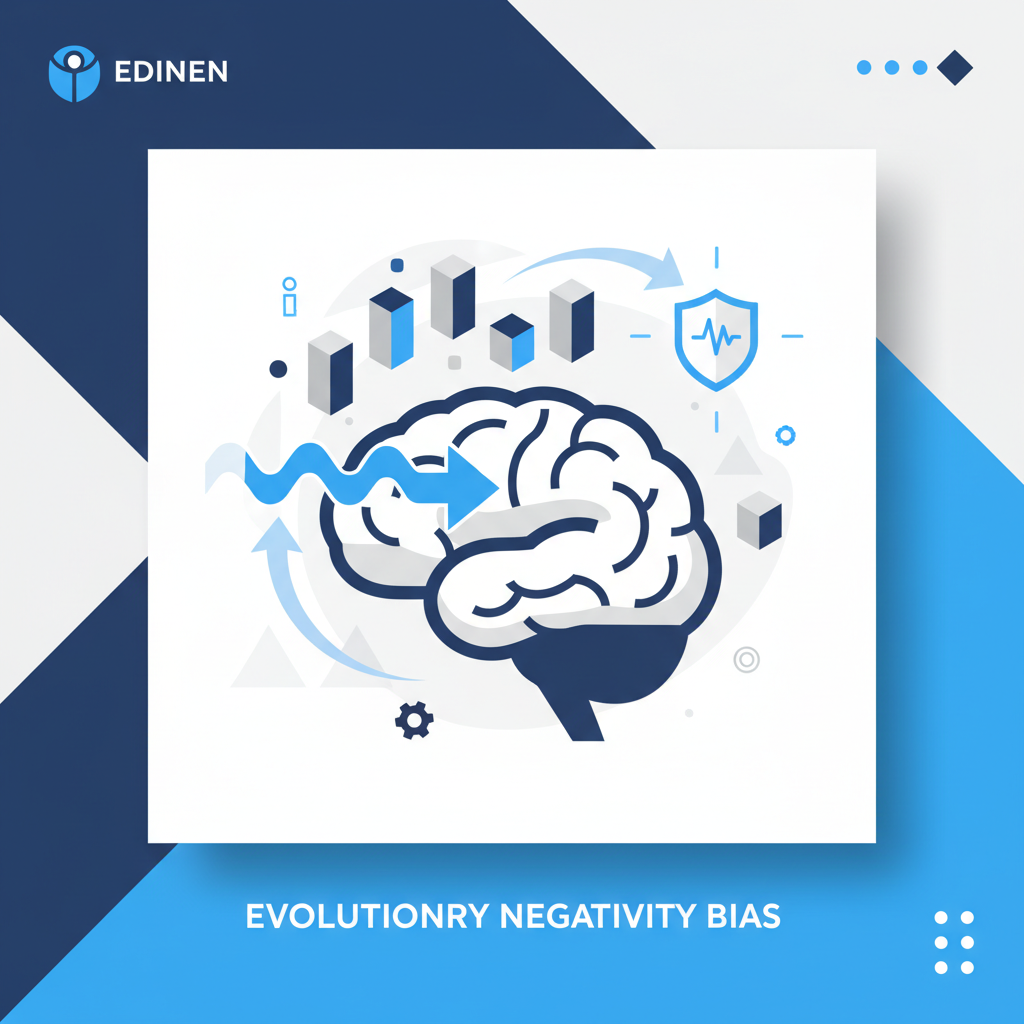
What Is Evolutionary Negativity Bias?
Across many psychological domains there is evidence of negativity bias: the greater subjective potency of negative events when compared with positive events of the same objective magnitude
. This cognitive phenomenon affects how we perceive, remember, and respond to information in our environment.
Neuropsychologist Rick Hanson, PhD, University of California, Berkeley, explains how our amygdala uses about two-thirds of its neurons to detect negativity and then quickly stores it into long-term memory
. This means that negative experiences, threats, and pessimistic information naturally receive more attention and processing power than positive experiences of equal intensity.
The bias manifests in multiple ways throughout daily life:
– **Attention Capture**: Negative news stories, criticism, and threats immediately grab our focus
– **Memory Enhancement**: We remember bad experiences more vividly than good ones
– **Decision Making**: Potential losses weigh heavier than equivalent gains
– **Social Perception**:
Across an array of psychological situations and tasks, adults display a negativity bias, or the propensity to attend to, learn from, and use negative information far more than positive information
At MYNeuroBalance, we often see clients whose negativity bias has become so pronounced that it interferes with their daily functioning, relationships, and overall wellbeing. Understanding this bias is the first step toward developing healthier information processing patterns.
The Ancient Origins of Negative Focus
Negativity bias is thought to be an adaptive evolutionary function. Thousands of years ago, our ancestors were exposed to immediate environmental threats that we no longer need to worry about – predators, for example – and being more attentive to these negative stimuli played a useful role in survival
.
It was a way for our ancestors to be cautious of all environmental dangers around us. Being constantly so alert to threats and worst case scenarios is what helped our ascendants survive
. Those individuals who quickly identified and responded to dangers—rustling bushes that might hide predators, contaminated food, or hostile neighbors—were more likely to survive and pass on their genes.
“From our perspective, it is evolutionarily adaptive for bad to be stronger than good. We believe that throughout our evolutionary history, organisms that were better attuned to bad things would have been more likely to survive threats and, consequently, would have increased probability of passing along their genes”
.
This evolutionary perspective helps explain why our brains are naturally wired to:
– Scan the environment for potential threats
– Give more weight to negative feedback than positive praise
– Remember criticism longer than compliments
– Focus on what could go wrong rather than what might go right
However,
as Vaish et al. point out, infants don’t have extensive life experience to draw on: “the earlier an organism learns that it should avoid those stimuli that its conspecifics find aversive, the better are its chances for survival.” It’s hard to argue that a negative bias isn’t still helpful in some circumstances, but as we grow and society develops, this hardwired tendency is not as useful as it once was
.
Understanding the evolutionary basis of negativity bias through LENS neurofeedback therapy can help clients develop compassion for their brain’s natural tendencies while working toward healthier processing patterns.
How Your Brain Processes Negative Information
Modern neuroscience research reveals the specific brain mechanisms underlying negativity bias.
Negativity bias, the cognitive tendency to prioritize negative stimuli, is commonly observed in anxiety disorders and contributes to emotional and cognitive dysregulation. These findings suggest that negativity bias contributes to widespread brain dysfunction, exacerbating emotional instability, and cognitive control deficits in patients with anxiety disorders
.
Recent neuroimaging studies show that negativity bias involves several key brain regions and networks:
**The Amygdala**:
Take into account the machinery that regulates our emotions and motivation, a brain region called the amygdala. Neuropsychologist Rick Hanson, PhD, University of California, Berkeley, explains how our amygdala uses about two-thirds of its neurons to detect negativity and then quickly stores it into long-term memory
.
**The Frontoparietal Network**:
Modern neuroscience research reveals that the ADHD-like cognitive instability of the ASD+ADHD condition was correlated with the atypically frequent neural transition along a specific brain state pathway, which was induced by the atypically unstable activity of the frontoparietal control network and the left prefrontal cortex. This research demonstrates that transitions difficulties aren’t simply behavioral preferences—they reflect fundamental differences in how brain networks communicate and coordinate. The frontoparietal network acts like a master conductor, coordinating between different brain regions during cognitive tasks
.
**Stress Response Systems**:
Moreover, in situations of high stress or distrust, your body releases another hormone, cortisol. It can hijack your advanced thought processes, reason and logic – what psychologists call the executive functions of your brain
.
The processing speed difference is particularly striking.
Cognitive assessments from the total brain platform showed that higher negativity bias was linked to deficits in emotional regulation, memory, stress and anxiety control, and resilience
. This creates a cycle where negative information receives priority processing, which can overwhelm other cognitive functions.
At our Los Angeles practice, we often see how persistent negativity bias affects clients struggling with PTSD, depression, and chronic anxiety.
Modern Challenges: When Ancient Wiring Hurts
In today’s world, having a constant negativity bias is no longer necessary for our survival. Besides, continually using it can increase stress levels, impair our happiness and general quality of life
. Our modern information environment—social media, 24-hour news cycles, and constant connectivity—amplifies negativity bias in ways our ancestors never experienced.
**Information Overload**:
Findings revealed mixed effects of social media on cognitive development. Excessive use was associated with impaired attention, reduced working memory, and diminished executive functioning, particularly among adolescents with social media addiction
.
**Decision Fatigue**:
The human brain craves the easiest path to understanding, as this can help us overcome the mental discomfort of confusion. When logic is not immediately discernible, we may turn to shortcuts to derive our own sense of meaning—even if that meaning is not truly accurate
.
**Confirmation Loops**:
Confronting facts that don’t line up with your worldview may trigger a “backfire effect,” which can end up strengthening your original position and beliefs, particularly with politically charged issues. Researchers have identified this phenomenon in a number of studies, including ones about opinions toward climate change mitigation policies and attitudes toward childhood vaccinations
.
The consequences of unchecked negativity bias in modern life include:
– Chronic anxiety and depression
– Difficulty focusing on positive aspects of life
– Impaired decision-making abilities
– Relationship challenges
– Reduced cognitive flexibility
– Sleep disturbances
– Persistent worry and rumination
Some of the effects of negative bias can include increased heart rates during fear perception and higher startle responses, both stress responses that are associated with anxiety. In this study, the authors also present evidence that self-reported negativity bias measures are correlated with depression and anxiety, suggesting that while the phenomenon may be evolutionary, it doesn’t come without its costs
.
Many clients arrive at NeuroBalance feeling trapped by persistent negative thinking patterns, unaware that their brain’s ancient protective mechanisms are working overtime in an environment that no longer requires such vigilance.
📍 NeuroBalance Los Angeles
Located in Mar Vista, serving clients throughout Southern California. Home visits also available.
4029 Alla Road, Los Angeles, CA 90066 • 424.625.5445
How LENS Neurofeedback May Support Brain Balance
LENS (Low Energy Neurofeedback System) offers a unique approach to supporting brain optimization that may help address the challenges of evolutionary negativity bias.
What makes LENS neurofeedback therapy so different is that it is passive. LENS does not “train” brainwaves like all other slower traditional neurofeedback therapy
.
**How LENS Works**:
LENS neurofeedback therapy works from the bioelectrical side to alleviate brain based problems by sending a tiny low energy signal to the scalp that is precisely timed and very similar yet different in frequency to what your brain naturally produces. The difference the offset signal has, effects the amount of reactivity that the current poor brainwaves will have to it and directly influences it to stimulate a biochemical change that is believed to assist the brain to self-adjust to a more optimal state
.
**Research Support**:
After an average of only 20 treatments the mean average of patient symptom ratings (0-10) declined from 7.92 to 3.96, a 50% improvement. LENS treatment appears to be very efficient and effective in rapidly reducing a wide range of symptoms. It particularly produces rapid improvements in the first five to six sessions
.
LENS neurofeedback may support individuals with heightened negativity bias by:
– Promoting more balanced brainwave patterns
– Supporting improved emotional regulation
– Enhancing cognitive flexibility
– Reducing hypervigilance and overreactivity
– Supporting better sleep and stress recovery
– Optimizing prefrontal cortex function
One of the most notable long-term benefits of LENS Neurofeedback is its ability to enhance cognitive function, leading to sustained improvements in mental clarity. Research indicates that LENS Neurofeedback can promote better attention, memory, and problem-solving abilities by optimizing brainwave patterns associated with these cognitive functions
.
Unlike traditional approaches that require conscious effort to change thinking patterns,
unlike traditional neurofeedback, in which you actively try to regulate brainwaves, LENS therapy is passive. As you relax in sessions, your brain does the work for you
.
What Current Research Reveals About Negativity Bias
Understanding the science behind our brain’s tendency to focus on negative information is crucial for recognizing why modern information processing has become so challenging. Recent research provides fascinating insights into how our evolutionary wiring affects our daily mental health and cognitive function.
The Evolutionary Purpose of Negative Processing
Research has documented decades of evidence showing that negativity bias applies to various domains, from emotion to attention and memory, with stronger activation and response to negative stimuli attributed to the greater adaptive relevance of negative events. From an evolutionary psychology perspective, organisms are more likely to survive by paying more attention to negative over positive stimuli.
📊 What Research Suggests:
Although positive words are slightly more prevalent than negative words in content, negative words in news headlines increased consumption rates by 2.3% for each additional negative word in headlines of average length.
This research helps explain why individuals seeking support for conditions like anxiety disorders often find themselves caught in cycles of negative information consumption. Our brains are naturally programmed to prioritize potentially threatening information as a survival mechanism.
Social Media Amplifies Natural Bias
Large-scale data analysis from four US and UK news sites (95,282 articles) and two social media platforms (579,182,075 posts) shows social media users are 1.91 times more likely to share links to negative news articles, with the impact varying by platform and topic focus.
The implications are profound for mental wellness.
News sources post almost twice as much negative content as positive content overall, and advertising-driven engagement metrics incentivize even balanced news sources to amplify negative emotional content to chase eyeballs.
⚕️ Important Note:
Individual brain responses to negative information vary significantly. Consult healthcare professionals for personalized approaches to managing information-related anxiety or mood concerns.
The “Affective Pollution” Effect
Research indicates this pattern can drive further polarization, harm users’ ability to make well-informed decisions, and might decrease users’ well-being while increasing political division – creating what researchers call “affective pollution” that exacerbates social strife.
For clients experiencing challenges with mood regulation or trauma recovery, understanding this environmental factor becomes crucial for developing effective coping strategies.
The NeuroBalance Approach to Brain Optimization
At NeuroBalance, we understand that addressing negativity bias requires more than willpower or conscious effort. Our LENS neurofeedback therapy approach works at the neurological level to help restore natural brain balance and improve information processing patterns.
How LENS Addresses Information Processing
LENS (Low Energy Neurofeedback System) works by providing gentle feedback to help the brain optimize its natural functioning. Unlike traditional approaches that rely on conscious effort, LENS technology operates at a subconscious level where automatic processing patterns – like negativity bias – are formed.
💡 Understanding Brain Health:
LENS therapy may help support the brain’s natural ability to process information more effectively by addressing the underlying neural patterns that contribute to excessive focus on negative content.
Addressing Multiple Conditions Simultaneously
Many clients find that information overwhelm affects multiple aspects of their wellbeing. Our comprehensive approach addresses various conditions that may be interconnected with negative information processing:
| Condition | Information Processing Impact | LENS Support |
|---|---|---|
| Anxiety | Heightened threat detection | Regulation of stress response |
| ADHD | Difficulty filtering information | Enhanced focus and attention |
| PTSD | Hypervigilance to threats | Trauma pattern processing |
| Depression | Rumination on negative themes | Mood pattern optimization |
The Los Angeles Advantage
Located in Los Angeles, our practice serves clients throughout the region, including Santa Monica and Beverly Hills. Jon S. Haupers, our certified LENS specialist with over 12 years of experience, understands the unique challenges of information overload in our digital culture.
💬 What Clients Share:
“I noticed I wasn’t automatically clicking on every negative headline after just a few LENS sessions. It’s like my brain learned to pause before reacting.” – Individual results vary
Breaking Free from Negative Information Loops
Understanding why we get trapped in negative information cycles is the first step toward developing healthier patterns. The combination of neurological support and practical strategies can help create lasting change in how we process daily information.
The Neurological Component
Research demonstrates that negative information presented on secondary screens draws more attention to itself than similar positive information, representing a novel replication of the negativity bias phenomenon in media multitasking contexts.
This finding helps explain why our attention gets hijacked by negative content even when we’re trying to focus elsewhere.
For individuals working on cognitive optimization or addressing brain injury recovery, this automatic negative processing can significantly impact daily functioning and quality of life.
The Social Contagion Effect
Public figures contribute substantially to people’s exposure to negative content on social media. Their shared content makes up a large share of material presented on platforms, and this negatively biased sample may lead other users to infer that credible users use negative language, potentially influencing emotion expression norms.
💡 Understanding Brain Health:
Social media algorithms may inadvertently reinforce negativity bias by amplifying emotionally charged content, creating feedback loops that can affect mental wellness over time.
Supporting Brain Flexibility
Breaking negative information loops requires supporting the brain’s natural flexibility – its ability to shift between different processing modes. Our neurofeedback brain training approach may help support this cognitive flexibility by working with the brain’s natural neuroplasticity.
Many clients pursuing learning support or cognitive rehabilitation find that addressing underlying information processing patterns helps improve their overall cognitive function and emotional regulation.
Supporting Healthy Information Processing
Developing a balanced relationship with information requires both neurological support and practical strategies. The goal isn’t to eliminate all negative information – which serves important functions – but to restore natural balance in how our brains process and prioritize different types of content.
The Role of Neurological Balance
Approximately 64% of American citizens believe negative social media bias affects how things are going in the U.S. today, with pessimism spreading primarily due to algorithms that amplify it, leading to an overall cultural shift toward a negatively biased online space.
Supporting healthy information processing often involves addressing the neurological foundations of how we automatically respond to different types of content. Our comprehensive approach at NeuroBalance includes PBM therapy alongside LENS neurofeedback to support optimal brain function.
📊 What Research Suggests:
Emotions and sentiment generally increase information popularity across platforms, with effects found most consistently for negative discrete emotions like anger, anxiety, sadness and fear. Positivity bias is often identified in health communication, while negativity bias is prevalent in political communication.
Creating Information Balance
Healthy information processing involves developing what researchers describe as staying in a “grey zone” – content that exists between legitimately beneficial and harmful information. This balanced approach helps prevent the extreme polarization that can occur with excessive negative content consumption.
| Processing Pattern | Unhealthy Expression | Balanced Approach |
|---|---|---|
| Threat Detection | Constant vigilance | Appropriate awareness |
| Information Seeking | Compulsive scrolling | Purposeful consumption |
| Emotional Response | Reactive patterns | Thoughtful processing |
| Social Engagement | Conflict-driven sharing | Constructive dialogue |
Integrating Multiple Support Approaches
Effective support for healthy information processing often involves addressing multiple aspects of brain function. Clients pursuing performance optimization often find that improving their information processing patterns enhances their overall cognitive performance and emotional wellness.
⚕️ Important Note:
Individual responses to information processing support vary. Working with qualified practitioners helps ensure approaches are appropriate for your specific needs and circumstances.
Ready to explore how LENS neurofeedback therapy might support your information processing wellness? Contact us at (424) 625-5445 or visit our getting started page to learn about our comprehensive approach to brain optimization.
Real Client Experiences with LENS Therapy
At NeuroBalance, we’ve witnessed thousands of transformative experiences over our 12+ years of practice.
Client testimonials consistently reveal that improvements often begin within the first few sessions, with lasting changes occurring within 18-20 treatments
. These real-world experiences demonstrate how effectively LENS neurofeedback can help the brain overcome its evolutionary negativity bias.
🌟 Breaking Through Brain Fog & Anxiety
One client shared: “LENS Neurofeedback has given me my brain back! The constant brain fog, lack of concentration, anxiety + stress has greatly diminished”
. This reflects how LENS helps restore natural information processing and reduces the brain’s tendency to amplify negative patterns.
Many clients report feeling “like themselves again” after LENS therapy, particularly those who had struggled with chronic stress responses that kept their brains locked in negative information loops.
Focus and Emotional Regulation Improvements
Clients frequently describe improvements in their ability to focus on tasks and complete them: “Within a few weeks I was noticing that I was able to focus and complete tasks”
. This demonstrates how LENS therapy helps optimize the brain’s information processing capacity.
Parents consistently report remarkable changes in their children’s emotional regulation.
One parent noted: “In just 10 weeks of neurofeedback therapy, his anger has changed from blind uncontrollable rages that could last for over an hour, to a more typical anger pattern. He does not demonstrate the blind rages and he is able to control and modulate his behavior”
. These improvements reflect the brain’s enhanced ability to process information more objectively rather than defaulting to negative interpretations.
Long-Term Cognitive and Emotional Benefits
Clients often describe comprehensive improvements: “I find my concentration levels improving, ability to understand and retain information while studying has increased, and I have more natural and restful sleep cycles—all adding up to a more relaxed feeling throughout my day. These sessions are well worth my time because in the long run, I feel much more clarity”
.
These experiences align with research showing that LENS technology helps create new neural pathways that support balanced information processing. Rather than automatically focusing on potential threats or negative information, the brain develops more flexible response patterns.
Creating Positive Information Habits
While LENS neurofeedback helps optimize brain function, developing healthy information processing habits amplifies these benefits.
A digital detox helps you realize what you want more and less of so you can break unhelpful habits and create new, more meaningful ones
. Combined with neurofeedback, these strategies create a comprehensive approach to overcoming negativity bias.
Intentional Media Consumption
Research supports targeted approaches: “Are you spending too much time on social media? Figure out which activities you want to reduce or eliminate. Set a goal for yourself based on whether you’d like to reduce or eliminate the use of a certain device or type of media”
. This strategic approach helps retrain the brain away from negative information loops.
💡 Practical Strategies for Balanced Information Diet:
- Set specific times for news consumption rather than constant updates throughout the day
- Choose one reliable news source instead of consuming multiple conflicting perspectives
- Practice the 80/20 rule: 80% positive/constructive content, 20% necessary negative information
- Use “Do Not Disturb” modes during focused activities and family time
- Replace doom scrolling with purposeful reading or educational content
Building Present-Moment Awareness
Studies show that “during a digital detox, you may find that you notice more in your immediate surroundings. Your brain can concentrate much better on your tasks”
. This increased present-moment awareness naturally counteracts the brain’s tendency to focus on hypothetical threats or negative scenarios.
When combined with LENS therapy for anxiety, present-moment practices become more accessible. Clients often report that meditation, mindfulness, and other awareness practices feel easier and more natural after neurofeedback sessions.
Social Connection and Real-World Engagement
Research demonstrates that “eliminating digital distractions creates more opportunities to pay attention to those around you. For example, without devices around at dinner, you naturally interact and connect more with your family”
. These face-to-face connections activate different neural pathways than digital interactions, supporting more balanced information processing.
Clients undergoing LENS therapy for depression often find that real-world social connections become more rewarding and less draining as their brain’s information processing becomes more balanced.
Frequently Asked Questions
Next Steps for Brain Balance
Understanding your brain’s evolutionary negativity bias is the first step toward creating lasting change. By recognizing how your brain naturally processes information, you can make more intentional choices about what you consume and how you respond to the world around you. LENS neurofeedback provides the neurological foundation for these improvements, while conscious information habits support long-term brain health.
Whether you’re exploring options for anxiety support, looking to understand ADHD and brain function, or interested in peak performance optimization, we’re here to provide educational resources and support. Our comprehensive approach addresses both the neurological foundations and the practical skills needed for lasting change.
🌱 Take Your Next Step:
Learn more about getting started with NeuroBalance, explore our client testimonials, or browse our FAQ for more information about how LENS neurofeedback might support your brain wellness journey.
Ready to Explore Neurofeedback?
Take the first step toward supporting your brain wellness journey. Schedule a consultation to learn if LENS neurofeedback might be right for you.
📞 424.625.5445 | ✉️ [email protected]
📍 4029 Alla Road, Los Angeles, CA 90066
Your Brain Wellness Journey
The human brain’s evolutionary negativity bias served our ancestors well in dangerous environments, but in our modern information-rich world, it can create unnecessary stress and anxiety. Understanding this natural tendency is empowering—it explains why breaking news feels more compelling than positive stories, why social media can be emotionally draining, and why our minds often default to worry rather than optimism.
LENS neurofeedback therapy offers a unique opportunity to help your brain develop more flexible and balanced responses to information. Combined with conscious media habits and present-moment awareness practices, you can transform your relationship with information from reactive to intentional.
Whether you’re exploring options for anxiety support, looking to understand ADHD and brain function, or interested in peak performance optimization, we’re here to provide educational resources and support.
This content is for educational purposes only and is not intended as medical advice. Always consult with qualified healthcare professionals regarding your health concerns.