

Persistent Symptoms After Concussion Due to Network Dysregulation
Understanding Brain Network Disruption and Natural Recovery Approaches
Persistent symptoms following concussion affect
10-30% of patients
, creating a complex neuropsychiatric challenge that can significantly impact daily life for weeks, months, or even years. While most people recover from concussion within 2-6 weeks, those experiencing persistent symptoms often struggle with headaches, cognitive difficulties, mood changes, and fatigue that resist traditional treatment approaches.
Recent groundbreaking research published in 2025 has identified
neural network dysfunction as a core factor in persistent symptoms after concussion
, with particular emphasis on disruption within the brain’s salience network. This educational exploration examines how brain network dysregulation contributes to lasting symptoms and how approaches like LENS neurofeedback therapy may support natural recovery through gentle network rebalancing.
⚕️ Important Medical Disclaimer:
The information provided is for educational purposes only and is not intended as medical advice, diagnosis, or treatment. LENS neurofeedback is a wellness modality NOT intended to diagnose, treat, cure, or prevent any disease. Always consult a qualified healthcare professional before beginning any wellness program. Individual results vary. NeuroBalance does not provide medical services.
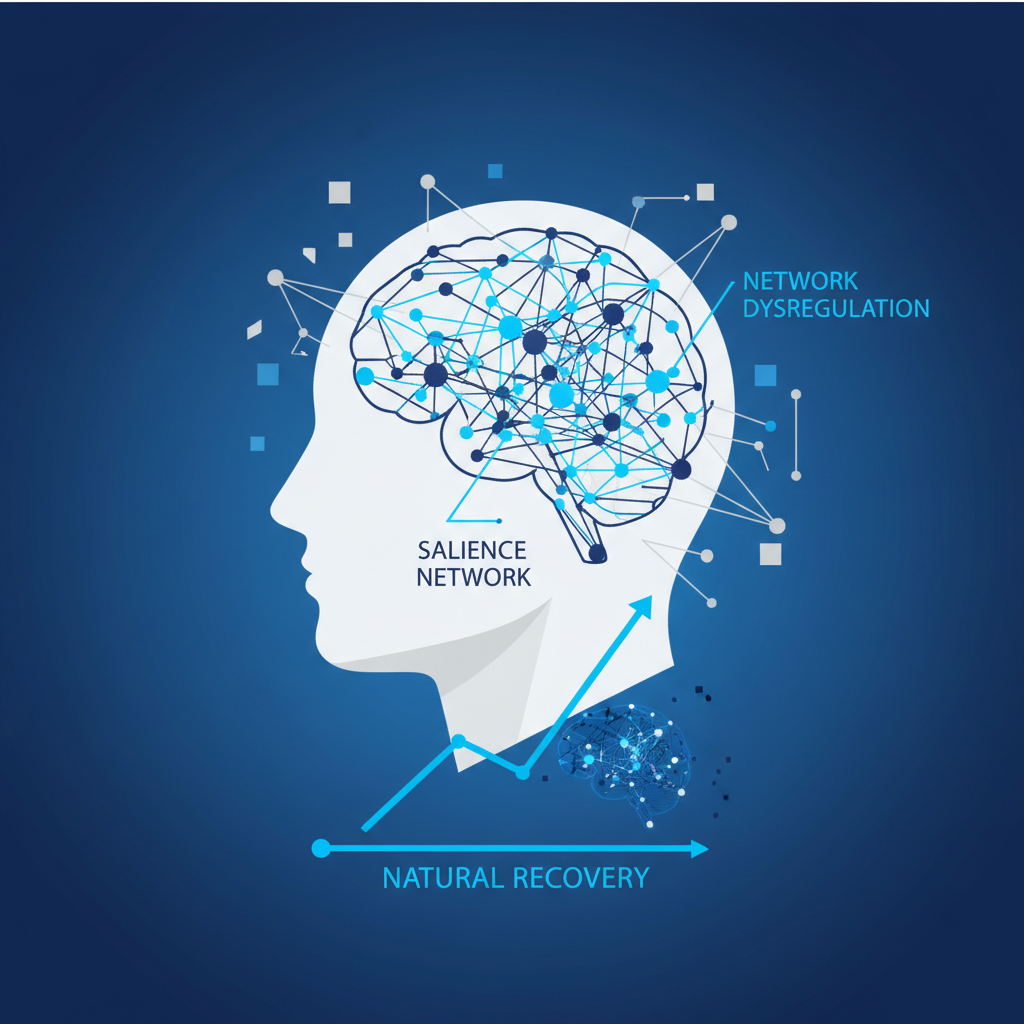
Understanding Network Dysregulation After Concussion
The brain operates through interconnected networks that coordinate different functions like attention, memory, and emotional regulation. When concussion occurs, these networks can become disrupted, leading to the complex array of symptoms that characterize persistent post-concussion syndrome.
A comprehensive 2025 meta-analysis revealed that
persistent symptoms after concussion represent a complex neuropsychiatric phenomenon with neural network dysfunction as a core feature
. Unlike the initial injury which may heal, these network disruptions can become self-perpetuating, maintaining symptoms long after tissue damage has resolved.
The Triple Network Model
Modern neuroscience research identifies three critical brain networks that become disrupted in persistent concussion symptoms:
- Default Mode Network (DMN): Active during rest and self-referential thinking
- Central Executive Network: Manages working memory and cognitive control
- Salience Network: Acts as a “switch” between networks and processes important information
Research shows that
decreased dorsal anterior cingulate cortex connectivity and within-salience network connectivity correlate with poorer symptom outcomes and cognitive performance
. This network disruption helps explain why individuals with persistent symptoms struggle with transitions, attention regulation, and symptom perception.
💡 Key Research Insight:
Studies indicate that
abnormalities in the salience network are linked to factors like somatosensory amplification, hyperarousal-associated insomnia, and fear-avoidance behavior
– all commonly seen in persistent post-concussion symptoms.
The Salience Network: Core of Persistent Symptoms
The salience network, centered around the anterior insula and dorsal anterior cingulate cortex, serves as the brain’s “attention director” – determining what internal sensations and external stimuli deserve conscious awareness. When this network becomes dysregulated after concussion, it can create a cascade of persistent symptoms.
How Salience Network Dysfunction Manifests
Research published in Nature Mental Health demonstrates that
the salience network emerges as a core dysfunction hub in persistent symptoms after concussion
. This dysfunction can manifest in several ways:
- Hypervigilance to symptoms: Amplified awareness of headaches, fatigue, and cognitive difficulties
- Attention regulation problems: Difficulty filtering relevant from irrelevant information
- Network switching deficits: Problems transitioning between rest and task states
- Interoceptive dysfunction: Altered perception of internal body sensations
A 2024 study of high school football players found that even without diagnosed concussion,
repetitive head impacts led to decreased salience network connectivity that correlated with worsening symptom scores and verbal memory performance
.
The Amplification Cycle
When the salience network becomes overactive or poorly regulated, it can create a self-perpetuating cycle where
initial symptoms like dizziness, headache, and fatigue become amplified and sustained due to excess attention on these sensations
. This explains why some individuals develop persistent symptoms while others with similar injuries recover normally.
Understanding this mechanism is crucial for developing effective interventions. Rather than simply managing individual symptoms, approaches that help restore natural network balance – such as neurofeedback therapy for traumatic brain injury – may address the underlying network dysregulation.
How LENS Neurofeedback Works
LENS (Low Energy Neurofeedback System) represents a unique approach to supporting brain network recovery after concussion. Unlike traditional neurofeedback that requires active training, LENS works passively to help the brain recognize and correct its own dysregulated patterns.
The LENS Process
During a LENS neurofeedback session, clients simply rest comfortably while the system:
- Monitors brainwave patterns in real-time using EEG sensors
- Provides gentle feedback through extremely low-energy electromagnetic signals
- Encourages self-regulation as the brain recognizes and adjusts its own patterns
- Supports natural optimization of network coordination and timing
Research indicates that
LENS delivers weak electromagnetic signals to change brain wave patterns and has been used to treat traumatic brain injury, anxiety, depression, and other conditions
. The approach is considered particularly suitable for concussion recovery because it doesn’t require cognitive effort from individuals who may already be struggling with mental fatigue.
Supporting Network Rebalancing
LENS appears to work by helping dysregulated brain networks return to more balanced states. Studies suggest that
LENS neurofeedback can enhance neuroplasticity, particularly in areas associated with executive functioning and emotional regulation, which may explain improvements in transition-related challenges
.
For individuals with persistent concussion symptoms, this network rebalancing may help address the underlying salience network dysfunction that maintains symptom perception and attention difficulties. Many clients report improvements in sleep quality, cognitive clarity, and emotional regulation as their brain networks become better coordinated.
What Research Suggests
The scientific foundation for understanding persistent concussion symptoms as network dysfunction has grown substantially, with multiple 2024-2025 studies providing compelling evidence for this model and potential interventions.
Clinical Outcomes Research
Studies examining LENS neurofeedback outcomes show promising results for brain injury recovery. Research published in the Journal of Neurotherapy found that
LENS treatment appears very efficient and effective in rapidly reducing symptoms, particularly producing rapid improvements in the first five to six sessions
.
Additional research indicates that
mean symptom ratings on standardized scales fell to exactly half of pretreatment levels, with the top improvement areas being disorganization, cognitive problems, attention, and fatigue
– all commonly seen in persistent post-concussion syndrome.
Safety and Tolerability
Safety research reveals that
neurotherapy rarely produces negative side effects, with reported effects from LENS being transient exacerbation of existing symptoms that typically drop away after only a few sessions
. This makes LENS particularly suitable for individuals with sensitive nervous systems following concussion.
📊 Research Highlight:
A controlled study of 100 subjects with different diagnoses including traumatic brain injury showed that
90 percent of participants demonstrated improvement after LENS therapy
, suggesting benefits across multiple neurological conditions.
The NeuroBalance Approach
At NeuroBalance, we understand that persistent symptoms after concussion often reflect underlying network dysregulation rather than ongoing tissue damage. Our comprehensive approach focuses on supporting the brain’s natural healing mechanisms through gentle, targeted interventions.
Comprehensive Assessment
We begin with detailed evaluation of your unique symptom pattern and brain wave analysis to identify areas of network dysfunction. This information guides the development of a personalized treatment approach targeting your specific needs.
Gentle Network Optimization
Our LENS protocols are designed to support natural network rebalancing without forcing specific changes. Many clients notice improvements in:
- Cognitive clarity and mental energy
- Sleep quality and restorative rest
- Emotional regulation and mood stability
- Headache frequency and intensity
- Overall sense of well-being
For individuals in the Los Angeles area seeking support for persistent concussion symptoms, our office provides a calm, supportive environment where healing can occur naturally. We also offer specialized concussion support and collaborate with other healthcare providers as appropriate.
📍 NeuroBalance Los Angeles
Located in Mar Vista, serving clients throughout Southern California. Home visits also available.
4029 Alla Road, Los Angeles, CA 90066 • 424.625.5445
Understanding Symptom Persistence and Recovery Timelines
While most people recover from a concussion within days to weeks, some experience symptoms that persist far beyond the expected healing timeframe. Understanding why this happens—and what it means for your recovery—is crucial for making informed decisions about your care.
Normal vs. Prolonged Recovery Patterns
In typical concussion recovery, symptoms gradually fade as the brain’s natural healing mechanisms restore balance.
Most experts recommend waiting at least 2-4 weeks after a major concussion to give your brain time to rebalance
before considering specialized interventions. However, when symptoms persist beyond three months, we’re looking at a different pattern entirely—one that suggests the brain’s networks may be stuck in dysfunctional patterns.
💡 Understanding Recovery Timelines:
Research shows that mild traumatic brain injury patients with post-concussion syndrome have greater brain network alterations than patients without persistent symptoms, with changes specifically affecting temporal and thalamic regions at the subacute stage and frontal regions at later phases
.
The distinction is important: acute concussion symptoms reflect the brain’s initial response to injury, while persistent symptoms often indicate ongoing network dysregulation that requires targeted intervention.
These conditions may share phenotypic expressions, such as subjective cognitive complaints, fatigue, and emotional dysregulation, yet neuroimaging evidence reveals overlapping vulnerabilities in fronto-limbic circuits and default mode network dysregulation
.
Factors That Influence Recovery Trajectory
Several factors can influence whether someone develops persistent symptoms after a concussion. Understanding these can help explain why some individuals recover quickly while others struggle with ongoing challenges:
| Risk Factor | Impact on Recovery |
|---|---|
| Previous Concussions | Each injury increases vulnerability to persistent symptoms |
| Pre-existing Mental Health | Anxiety or depression may complicate recovery patterns |
| Age at Injury | Older adults may experience longer recovery times |
| Injury Severity | More severe symptoms initially often predict persistent issues |
| Network Vulnerability | Some individuals have greater baseline network instability |
Importantly,
multiple concussions will not necessarily cause post-concussion syndrome, but they are a risk factor for developing persistent symptoms. We do not know why some individuals develop symptoms and others do not, but we do know that you have a chance of developing persistent symptoms after each concussion
.
When to Seek Specialized Support
The decision to pursue specialized treatment should be based on both timing and symptom impact. Here are key indicators that suggest it may be time to explore LENS neurofeedback therapy or other targeted interventions:
- Persistent symptoms beyond 3 months: If symptoms haven’t improved significantly after three months, this suggests network-level dysfunction
- Interfering with daily function: When symptoms prevent return to work, school, or normal activities
- Traditional treatments haven’t helped:
LENS is especially supportive when nothing else has worked, or for people who feel stuck in recovery - Multiple symptom domains: When cognitive, emotional, and physical symptoms cluster together
- High sensitivity:
LENS can even be helpful for people who are too sensitive to tolerate more stimulating therapies
⚕️ Important Note:
Always work with your healthcare provider when considering new treatments. LENS neurofeedback is designed to complement, not replace, medical care for concussion recovery.
The Role of Early Intervention
While it’s important to allow time for natural healing, emerging research suggests that targeted interventions like LENS therapy can support the brain’s natural reorganization processes.
Many clients notice improvements within 10 to 20 sessions, with some individuals experiencing positive changes after just a few sessions
.
The key is understanding that persistent symptoms often represent a treatable condition rather than permanent damage.
Better understanding of the neuropathophysiology underlying post-concussion symptoms could enhance diagnostic accuracy
, leading to more targeted and effective treatments.
Network-Based Treatment Approaches
Traditional concussion treatments often focus on managing individual symptoms—pain medications for headaches, sleep aids for insomnia, or cognitive therapy for attention problems. While these approaches can provide relief, they don’t address the underlying network dysfunction that drives persistent symptoms. Network-based treatments like LENS neurofeedback take a fundamentally different approach.
Beyond Symptom Management: Addressing Root Causes
The breakthrough insight that led to network-based treatments comes from understanding that
post-concussion syndrome is associated with specific abnormalities in functional brain networks that may contribute to explain deficits typically observed in patients
. Rather than treating symptoms in isolation, network approaches target the dysregulated communication patterns that create multiple symptoms simultaneously.
📊 What Research Suggests:
Research shows that the default mode network (DMN) and salience network (SN) are key networks affected in mild traumatic brain injury. Dysregulation in both networks is linked to depression, anxiety, and emotional regulation—symptoms commonly experienced post-concussion
.
This network perspective explains why concussion symptoms often cluster together. When the brain’s communication networks become dysregulated, it creates cascading effects across multiple systems.
LENS acts like traffic control, helping the brain sense these inefficiencies and access new resources to heal. Your own brain provides the feedback, as it traces the tiny signal from LENS and exercises out of stuck, inefficient pathways
.
How Network Rebalancing Differs from Traditional Approaches
LENS neurofeedback represents a paradigm shift in how we approach brain dysfunction.
LENS neurofeedback is different from traditional neurofeedback because it requires minimal conscious effort from the client. It works by gently stimulating the brain to disrupt maladaptive patterns and promote healthier brainwave activity. The pulses are designed to slightly disrupt the brain’s current patterns, allowing it to reorganize and function more efficiently
.
| Traditional Approach | Network-Based Approach |
|---|---|
| Treats individual symptoms | Addresses underlying network dysfunction |
| Requires medication or conscious effort | Works passively with brain’s natural processes |
| Temporary symptom relief | Supports long-term brain reorganization |
| May have side effects | Gentle signals weaker than cell phones |
| One-size-fits-all protocols | Individualized based on brain’s response |
The elegance of LENS lies in its simplicity:
Patients don’t need to “do” anything — your brain does the work
.
The system measures brainwave activity and sends back a signal slightly offset from what it reads. Sessions are very brief — often just a few minutes of stimulation
.
Complementary Therapies and Integrative Care
While LENS neurofeedback can be highly effective on its own, many clients benefit from an integrative approach. At MYNeuroBalance, we recognize that optimal recovery often involves supporting the brain through multiple modalities. Our Photobiomodulation (PBM) therapy can complement LENS by supporting cellular healing and reducing inflammation.
💬 What Clients Share:
“After trying everything—medications, therapy, physical rehab—LENS was the first thing that actually helped my brain feel clear again. It’s like someone reset my internal computer.” — Individual results vary.
When your brain is less stuck, it becomes receptive again to other treatments. Cognitive, speech, vision, or physical therapy often become more effective
. This is why many clients find that LENS accelerates progress across all areas of their recovery.
Role of Lifestyle Factors in Network Health
Supporting brain network health extends beyond clinical sessions. Several lifestyle factors can either support or hinder the brain’s ability to maintain balanced network function:
- Sleep Quality:
By helping regulate the nervous system, LENS supports better sleep patterns and emotional balance - Stress Management:
LENS is FDA cleared for stress. It calms overactive fight-or-flight responses, giving your brain and nervous system the support it needs to regulate and repair itself - Physical Activity: Gentle exercise can support neuroplasticity and network recovery
- Nutrition: Anti-inflammatory foods support overall brain health
- Social Connection: Healthy relationships support emotional regulation networks
The goal is creating an environment that supports the brain’s natural capacity for healing and reorganization. When combined with targeted interventions like those offered at our Los Angeles neurofeedback center, these lifestyle factors can significantly enhance recovery outcomes.
The Science of Brain Plasticity in Recovery
One of the most hopeful discoveries in neuroscience is neuroplasticity—the brain’s remarkable ability to reorganize itself throughout life. This capacity for change is what makes recovery from persistent concussion symptoms possible, even when symptoms have lasted months or years.
How the Brain Adapts and Recovers After Injury
When the brain experiences a concussion, it doesn’t just sustain damage—it also begins an immediate process of adaptation and repair.
LENS Neurofeedback Therapy utilizes low-energy neurofeedback system technology to gently influence brainwave patterns, promoting self-regulation without conscious effort. This method delivers microcurrent signals to the brain via small sensors, helping to reduce overactive or irregular brainwave activity. By encouraging the brain to reset its patterns naturally, LENS supports neuroplasticity—the brain’s ability to adapt and form new connections
.
💡 Understanding Neuroplasticity:
Think of neuroplasticity as your brain’s ability to “rewire” itself. When networks become dysregulated after injury, targeted stimulation like LENS can help guide the brain toward healthier patterns of communication.
This process is particularly relevant for understanding why some people develop persistent symptoms.
Neuroscientists believe that the brain’s defenses against stressors and trauma can create a “neural gridlock.” LENS works around these blockages, addressing the brain in its own electromagnetic language. LENS allows the brain to “reboot,” restoring optimal functioning
.
Neuroplasticity Principles in Concussion Recovery
Several key principles guide how we can harness neuroplasticity for concussion recovery:
- Specificity:
Once the brain is presented with new information it will make necessary changes using neural-plasticity. LENS Neurofeedback helps the brain to develop new neural pathways, to get “unstuck” from repeated patterns with anxiety, depression, PTSD and more - Repetition:
Clients need a series of sessions for the brain to “hold on” to the changes. The recommended number of sessions is 10 with more complicated medical issues requiring longer treatment up to 20 or more. Most people will see shifts in their nervous system and symptoms within the first 4 sessions - Timing: The brain is most responsive to plasticity-promoting interventions when it’s in the right state
- Intensity: While LENS uses extremely gentle signals, the brain’s response can be quite powerful
What makes LENS particularly effective is how it works with these principles.
For a fraction of a second, a tiny and imperceptible electromagnetic signal (1/300th of that emitted by a cell phone) is delivered. This signal causes a slight fluctuation in your brainwaves that allows the brain to reorganize and better regulate itself
.
Supporting Natural Healing Mechanisms
Rather than forcing change, LENS works by supporting the brain’s natural tendency toward balance and organization.
Unlike traditional neurofeedback, we are not telling the brain to do anything. LENS is entirely passive, and the physiology is in charge. The brain chooses the reorganization, not the provider
.
📊 What Research Suggests:
LENS is remarkably effective, and over 85% of people who have used LENS have benefited significantly from it. Results can be seen quickly, often beginning within the first session, and are long lasting
.
This approach respects the brain’s innate wisdom while providing the gentle stimulation needed to break free from stuck patterns.
Patients often report clearer thinking, better focus, increased concentration and reduced brain fog. By helping regulate the nervous system, LENS supports better sleep patterns and emotional balance
.
Evidence for Network Reorganization
Modern neuroimaging has allowed researchers to actually observe the brain’s networks reorganizing in response to interventions like LENS.
Research uses functional neurocognitive imaging (a type of functional MRI) to “see” the dysfunctional brain regions of each patient. This research shows how treatment programs can target and repair the dysregulations found in post-concussion syndrome thanks to neuroplasticity
.
Studies consistently show that LENS can help facilitate meaningful brain changes.
Clients with traumatic brain injuries have experienced relief from symptoms quickly and permanently. Clinical studies support the effectiveness of LENS, as well as the results of over 75,000 people who have already been treated
.
⚕️ Important Note:
While neuroplasticity offers tremendous hope for recovery, individual responses vary. Working with experienced practitioners like those at our Los Angeles practice ensures optimal support for your brain’s healing process.
The key insight is that persistent symptoms don’t necessarily indicate permanent damage. They often reflect the brain’s attempt to protect itself—an attempt that may have become counterproductive over time. By providing gentle, targeted feedback, LENS helps guide the brain toward more adaptive patterns that support both recovery and long-term resilience.
Real-World Recovery Experiences
Understanding what recovery can look like in practice helps set realistic expectations while maintaining hope. Over the past 12+ years, we’ve supported hundreds of clients through their concussion recovery journeys. While every person’s experience is unique, certain patterns emerge that can guide your own recovery expectations.
Client Journey Examples (Anonymized)
Consider Sarah, a 28-year-old teacher who came to our Los Angeles brain injury support center six months after a car accident. Despite normal MRI results, she struggled with persistent brain fog, headaches, and emotional volatility that prevented her from returning to work.
💬 Client Recovery Pattern:
“After 4 sessions, I noticed the constant ‘buzzing’ in my head started to quiet down. By session 8, my husband said I seemed like myself again for the first time in months.” — Individual results vary.
Or consider Michael, a 45-year-old executive who suffered a concussion during a cycling accident. Eight months later, he still couldn’t concentrate for more than 20 minutes without exhaustion. Traditional cognitive therapy had helped modestly, but he remained unable to manage his previous workload.
Both individuals experienced what research describes as common patterns:
In just a few sessions, clients often experience better focus, increased energy and improved mood. Anxiety and depression symptoms lift. Insomniacs sleep. Children and teens with ADD or ADHD can focus
.
Common Improvement Patterns
While individual responses vary, we consistently observe several patterns in how people respond to LENS neurofeedback therapy:
| Sessions 1-4 | Sessions 5-10 | Sessions 10+ |
|---|---|---|
| Initial calming of nervous system | Cognitive clarity begins returning | Sustained functional improvements |
| Better sleep quality | Emotional regulation improves | Return to normal activities |
| Reduced sensory sensitivity | Headaches become less frequent | Enhanced stress resilience |
| Subtle mood improvements | Energy levels stabilize | Long-term brain health |
This progression reflects how the brain’s networks gradually reorganize and stabilize.
The effects are cumulative and once the brain has been retrained, the results are long lasting if not permanent
.
Timeline Expectations
Setting realistic timelines helps maintain motivation while allowing for individual variation.
Research suggests potential for gradual improvements in cognitive function, emotional stability, or sleep quality over 6 to 10 weeks, with progress varying based on session frequency and individual response
.
💡 Timeline Guidelines:
Six LENS sessions, once a week, will provide the best results when starting with LENS
. This allows your brain adequate time to integrate changes between sessions while maintaining therapeutic momentum.
Many clients report meaningful improvements within the first month, though more complex presentations may require longer treatment courses.
Since LENS Therapy is working with unique brain wave clusters and problems, there is no “set” amount of sessions you will need. Typically, the more long standing and entrenched the symptoms, the longer they will take to resolve
.
Factors That Support Successful Outcomes
While LENS neurofeedback can be transformative, certain factors consistently support better outcomes:
- Consistency: Regular session attendance allows for optimal brain training effects
- Patience:
Like any therapy, it works best for people that are motivated and want to improve. Attitude and willingness for change are critical - Lifestyle Support: Adequate sleep, nutrition, and stress management enhance outcomes
- Collaborative Care: Working with your healthcare team for comprehensive support
- Realistic Expectations: Understanding that healing is a process, not an event
💬 What Clients Share:
“I didn’t realize how much my personality had changed until about two months into LENS therapy. My family said I was ‘back’—not just better, but actually myself again.” — Individual results vary.
The most successful outcomes often occur when clients view LENS as part of a comprehensive approach to brain health. This might include working with other specialists, maintaining healthy lifestyle habits, and staying engaged with supportive communities. Many clients find that connecting with our community of recovery stories helps maintain hope and motivation throughout their healing journey.
Remember that recovery is not just about returning to your pre-injury state—many clients report developing greater resilience, emotional regulation, and overall brain health than they had before their concussion. This reflects the brain’s remarkable capacity for positive change when given appropriate support.
Comprehensive Recovery Strategies for Network Healing
The salience network acts like a switchboard to detect relevant internal and external stimuli, filters them to prioritize behavior, and directs attention and resources.
Supporting this critical network’s recovery requires a comprehensive approach that addresses multiple aspects of brain health and function.
### Integrating Neurofeedback with Complementary Therapies
When your brain is less stuck, it becomes receptive again to other treatments (cognitive, speech, vision, or physical therapy) often become more effective.
This is why LENS neurofeedback therapy works particularly well as part of an integrated treatment approach.
Effective integration strategies include:
– **Sequential timing**: Begin with neurofeedback to stabilize brain networks before introducing more demanding therapies
– **Coordinated care**: Regular communication between all practitioners to adjust treatment intensity based on brain function improvements
– **Progress monitoring**: Using both subjective symptom tracking and objective measures to guide therapy combinations
### Sleep Optimization for Network Recovery
Sleep plays a crucial role in brain network restoration.
Persisting symptoms after concussion occur in 10-30% of patients
, and sleep disruption is often a primary factor in symptom persistence.
Key sleep support strategies include:
– **Sleep hygiene protocols** tailored for post-concussion sensitivity
– **Light exposure management** to support circadian rhythm restoration
– **Stress reduction techniques** that complement anxiety treatment approaches
Our Photobiomodulation (PBM) therapy can be particularly helpful for supporting healthy sleep patterns during recovery.
### Exercise and Movement Considerations
Physical activity must be carefully calibrated during network recovery. Too little activity can slow healing, while excessive exertion can overwhelm sensitized brain networks.
Recommended approach:
– **Gradual progression** from gentle movement to more complex activities
– **Symptom monitoring** during and after exercise sessions
– **Activity modification** based on brain network tolerance levels
– **Professional guidance** from practitioners experienced with post-concussion exercise protocols
### Stress Management and Emotional Regulation
Continued discomfort due to residual injury from trauma can repeatedly excite the salience network and locus coeruleus for minutes, days, or weeks, repeatedly inducing plasticity and enabling neurophysiological “learning” widely in the brain.
This makes stress management particularly crucial during recovery. Effective strategies include:
– **Mindfulness techniques** adapted for post-concussion sensitivity
– **Breathing exercises** that don’t overstimulate the nervous system
– **Gentle movement practices** like tai chi or yoga
– **Environmental modifications** to reduce sensory overload
Many clients find that combining these approaches with PTSD treatment can be particularly helpful when trauma is a factor in their recovery.
—
Working with Healthcare Providers for Optimal Recovery
Effective concussion recovery often requires coordination between multiple healthcare professionals. Understanding how to navigate this collaboration can significantly improve treatment outcomes.
### Building Your Healthcare Team
A comprehensive post-concussion team might include:
– **Primary care physician** for overall health monitoring
– **Neurologist** for specialized brain injury assessment
– **Physical therapist** for movement and balance issues
– **Neuropsychologist** for cognitive assessment and rehabilitation
– **Neurofeedback specialist** for network-based brain training
At NeuroBalance, we work collaboratively with your existing healthcare team to ensure coordinated care.
### Documentation and Progress Tracking
Effective communication between providers requires consistent documentation:
– **Symptom tracking** using standardized assessment tools
– **Functional improvements** in daily activities
– **Sleep and energy patterns** throughout recovery
– **Cognitive function changes** over time
– **Response to different interventions**
This information helps all team members understand what’s working and adjust treatments accordingly.
### When to Involve Additional Specialists
Persisting symptoms after concussion represents a complex and poorly-understood neuropsychiatric phenomenon that occurs in 10 to 30 percent of patients, and with limited treatment options.
Additional specialists may be needed when:
– Symptoms persist beyond expected recovery timelines
– New symptoms emerge during recovery
– Standard treatments aren’t providing sufficient improvement
– Complex medical comorbidities are present
### Insurance and Accessibility Considerations
Many people have questions about coverage for neurofeedback and complementary treatments. We help navigate these considerations by:
– Providing detailed treatment documentation for insurance purposes
– Offering payment plan options to make treatment accessible
– Connecting with cognitive rehabilitation programs that may have insurance coverage
– Educating about Health Savings Account (HSA) and Flexible Spending Account (FSA) eligibility
—
Frequently Asked Questions
—
Your Next Steps Toward Recovery
A convergent multi-analytic approach combining symptom–activation maps generated from existing fMRI datasets, systematic review of resting-state fMRI studies of PSaC, and network-based meta-analysis of coordinates derived from these studies co-localize to the salience network in high symptom burden PSaC. This aligns with current clinical models of PSaC and may present a new direction for network-based therapy.
Understanding that persistent concussion symptoms stem from network dysfunction rather than structural damage provides hope for recovery. With appropriate support for brain network healing, many people can experience significant improvement in their quality of life.
### Starting Your Recovery Journey
At NeuroBalance, we begin with a comprehensive consultation to understand your unique situation:
– **Initial assessment** of symptoms and recovery goals
– **Brainwave analysis** to identify network disruptions
– **Personalized treatment planning** based on your specific needs
– **Progress monitoring** throughout your recovery journey
### What to Prepare for Your First Visit
To make the most of your consultation:
– **Gather medical records** related to your injury and treatments
– **List current symptoms** and their impact on daily life
– **Note what treatments** you’ve tried and their effectiveness
– **Bring questions** about the LENS approach and recovery timeline
### Scheduling Your Consultation
Ready to explore whether LENS neurofeedback therapy might support your recovery? We offer:
– **Free 15-minute phone consultations** to discuss your situation
– **In-person evaluations** at our Los Angeles location
– **Flexible scheduling** to accommodate your needs
– **Insurance and payment plan guidance**
Whether you’re dealing with anxiety symptoms, exploring options for ADHD support, or seeking peak performance optimization, we’re here to provide educational resources and support.
🌱 Take Your Next Step:
Learn more about getting started with NeuroBalance, explore our client testimonials, or browse our comprehensive FAQ for more information about neurofeedback approaches.
This content is for educational purposes only and is not intended as medical advice. LENS neurofeedback is not intended to diagnose, treat, cure, or prevent any disease. Always consult with qualified healthcare professionals regarding your health concerns and before beginning any new treatment approach.
Ready to Explore Neurofeedback for Recovery?
Take the first step toward supporting your brain network healing. Schedule a consultation to learn if LENS neurofeedback might support your recovery journey.
📞 (424) 625-5445 | ✉️ [email protected]
📍 4029 Alla Road, Los Angeles, CA 90066