

The Brain’s Energy Budget: Understanding Mental Stamina
How Glucose, Oxygen, and Blood Flow Fuel Your Mental Performance
Your brain accounts for just 2% of your body weight but consumes approximately 20% of your daily energy. This remarkable energy budget directly influences your mental stamina, focus, and cognitive performance throughout the day. Understanding how your brain manages glucose, oxygen, and blood flow can help you make informed decisions about supporting your mental clarity and overall brain health.
At MYNeuroBalance in Los Angeles, we help clients optimize their brain’s energy systems through our specialized LENS neurofeedback therapy. More than 90% of our clients experience noticeable improvements in mental stamina and cognitive clarity.
⚕️ Important Medical Disclaimer:
The information provided is for educational purposes only and is not intended as medical advice, diagnosis, or treatment. LENS neurofeedback is a wellness modality NOT intended to diagnose, treat, cure, or prevent any disease. Always consult a qualified healthcare professional before beginning any wellness program. Individual results vary. NeuroBalance does not provide medical services.
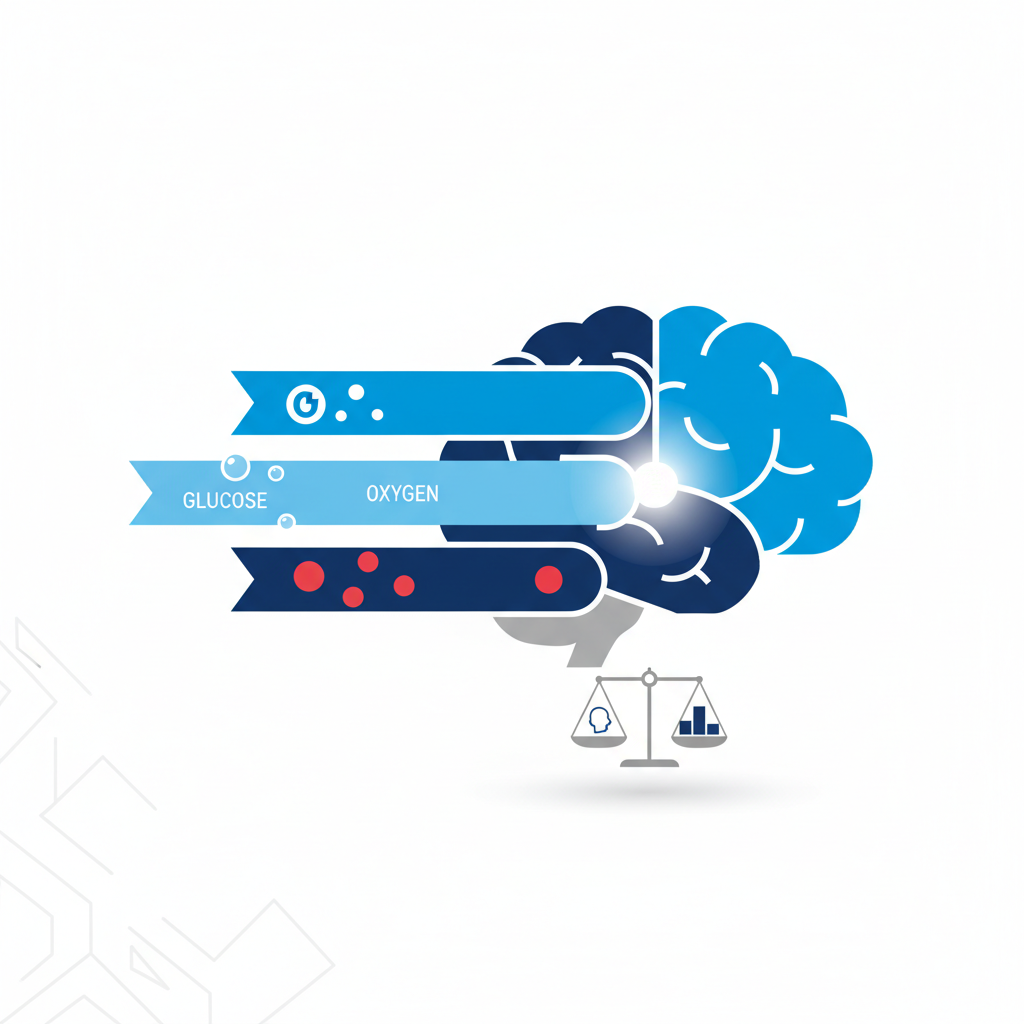
Understanding Your Brain’s Energy System
The brain contributes up to 20% of the body’s resting metabolism despite representing only 2% of body weight. Glucose is considered the almost exclusive blood-borne energy substrate utilized by the adult brain to fuel its activity.
This incredible energy demand reflects the constant activity of approximately 86 billion neurons working together to maintain consciousness, process information, and coordinate bodily functions.
Research indicates that the vast majority of energy expenditure (81%) is devoted to neuronal excitatory signaling.
This means that most of your brain’s energy budget goes toward the fundamental processes of thinking, learning, and memory formation. When these energy systems function optimally, you experience sustained mental clarity and cognitive performance.
🧠 Key Insight:
Your brain’s energy demands are remarkably constant throughout the day, whether you’re actively solving problems or simply maintaining basic awareness. This baseline energy requirement explains why mental fatigue can occur even during periods of apparent rest.
The brain’s energy management system involves complex interactions between neurons, astrocytes (supportive brain cells), and the vascular system that delivers nutrients.
To compensate for varying energy demands throughout the brain and increase efficiency of metabolite supply, neurovascular and neurometabolic coupling mechanisms have evolved. Cerebral blood flow, blood volume, glucose consumption and oxygen metabolism all increase within localized regions of activity following neuronal stimulation.
Our LENS neurofeedback approach works by supporting these natural energy regulation systems. By providing gentle feedback to the brain’s electrical activity, LENS helps optimize the efficiency of energy utilization across neural networks.
Glucose: Your Brain’s Primary Fuel Source
Glucose is the long-established, obligatory fuel for brain that fulfills many critical functions, including ATP production, oxidative stress management, and synthesis of neurotransmitters, neuromodulators, and structural components.
Understanding how your brain utilizes glucose can help explain patterns of mental energy throughout the day.
Studies show that dips in glucose availability can have a negative impact on attention, memory and learning, and that administering glucose can enhance these aspects of cognitive function. The brain also uses up more glucose during challenging mental tasks.
This explains why you might feel mentally drained after periods of intense focus or complex problem-solving.
How Your Brain Uses Glucose
Glucose is the main energy source for every cell in your body, but it is vital for brain cells. Your brain is made up of nerve cells (neurons) that rely on a continuous supply of glucose to send signals to other nerve cells and other parts of the body. The brain is highly metabolically active, meaning that it requires a lot of fuel.
The relationship between glucose and mental performance is nuanced.
The more demanding mental tasks appear to respond better to glucose than simpler tasks. This may be because the brain’s uptake of glucose increases under conditions of mild stress, which includes challenging mental tasks.
This explains why maintaining stable blood sugar levels throughout the day can support consistent cognitive performance.
💡 Educational Insight:
Clients often report improved mental stamina after starting LENS neurofeedback therapy. This may be related to improved efficiency in how the brain utilizes its glucose supply, allowing for more sustained mental performance throughout the day.
Mental Fatigue and Glucose Depletion
Research suggests that doing something mentally demanding for a long period leads to a build-up of the metabolite glutamate in the brain, making it harder to be patient or put in effort for reward. Much of previous work focused on the idea that mental exertion might use up energy reserves, such as glucose.
However, the relationship between mental effort and glucose consumption is more complex than simple depletion.
Research indicates that limitation of cognition by constraints on glucose supply is well established in the neuroscience literature across several cognitive domains.
This suggests that supporting optimal glucose metabolism may be key to maintaining mental stamina.
At NeuroBalance, many clients with ADHD and attention challenges report improvements in sustained focus and mental energy. This may reflect enhanced efficiency in how their brains manage glucose utilization during demanding cognitive tasks.
Oxygen Delivery and Blood Flow: The Brain’s Supply Chain
While glucose provides the fuel, oxygen serves as the essential component that allows your brain to efficiently extract energy from that fuel.
The local blood oxygen content follows closely the change in brain activity because the amount of oxygen supplied increases more than the demand. This phenomenon enables us to view changes in brain activity with fMRI because aspects of the MR signal intensity are sensitive to the amount of oxygen carried by hemoglobin.
The brain is one of the most metabolically active organs in the body, using glucose as its primary energy source. It accounts for only 2% of an adult’s body weight but consumes approximately 20% of the body’s total glucose and oxygen consumption at rest.
This incredible oxygen demand requires a sophisticated delivery system.
Neurovascular Coupling: Brain-Blood Communication
The close correlation of cerebral blood flow (CBF) and cerebral metabolic rate of glucose demands highly dynamic and fine-tuned mechanisms to adapt local glucose and oxygen delivery to the actual demand of active brain regions. The currently-favored ‘neuronal’ hypothesis suggests that neuronal energy demand is communicated to the vasculature in an anticipatory, feed-forward manner by vasoactive neurotransmitters.
This sophisticated communication system means your brain can anticipate energy needs and adjust blood flow accordingly. When you’re engaged in complex problem-solving or learning new information, increased blood flow delivers the necessary oxygen and glucose to support that cognitive work.
🔬 Research Finding:
Studies show that whereas oxygen consumption increases less than blood flow, glucose utilization appears to increase in proportion to the change in blood flow. Therefore, the increase in metabolism accompanying brain activation is, in part, an increase in glycolysis, which is thought to occur in astrocytes related to glutamate cycling.
Optimizing Brain Blood Flow
The efficiency of this oxygen delivery system directly impacts your mental stamina and cognitive performance. Factors that can affect cerebral blood flow include stress levels, sleep quality, physical activity, and overall cardiovascular health. Our peak performance neurofeedback programs often help clients optimize these regulatory systems.
Clients working with us for traumatic brain injury recovery often experience improvements in cognitive stamina as their brain’s oxygen utilization becomes more efficient. This demonstrates the connection between vascular health and mental performance.
Understanding Mental Fatigue: Why Your Brain Gets Tired
Mental fatigue represents a complex interaction between energy supply, metabolic byproducts, and neural efficiency.
The Brain Fatigue Syndrome (BFS) is characterized by cognitive difficulties, disproportionately long recovery times after demanding tasks, emotional instability, and stress sensitivity. Potential underlying mechanisms include astrocyte dysfunction with impaired glutamate signaling and glucose uptake, mitochondrial dysfunction, and blood-brain barrier dysfunction.
Research suggests that fatigue might arise not because of depletion, but because taxing a brain area consistently leads to an accumulation of metabolites within it. Mentally demanding tasks that require cognitive control could lead to an accumulation of glutamate in lateral prefrontal cortex, a region known for its role in cognitive control processes. This accumulation would make lateral prefrontal cortex function less efficiently.
📍 NeuroBalance Los Angeles
Located in Mar Vista, serving clients throughout Southern California. Home visits also available.
4029 Alla Road, Los Angeles, CA 90066 • 424.625.5445
How LENS Neurofeedback Supports Brain Energy Systems
LENS neurofeedback therapy works from the bioelectrical side to alleviate brain based problems by sending a tiny low energy signal to the scalp that is precisely timed and very similar yet different in frequency to what your brain naturally produces.
This gentle intervention may help optimize the brain’s energy management systems.
Low Energy Neurofeedback System (LENS) is a form of neurofeedback with promising clinical reports supporting its use in addressing stress, anxiety and cognitive function problems. Research studies have been conducted to evaluate its efficacy in addressing these conditions.
The Unique LENS Approach
LENS Neurofeedback is considered a non-traditional form of neurofeedback because it works exclusively with the brain’s electrical activity and does not rely on any audio or visual stimulation. Instead, LENS supports the brain’s natural ability to self-regulate. Self-regulation is a foundational element of optimal brain performance, enabling the nervous system to function more efficiently and effectively.
At NeuroBalance, we’ve observed that clients often report improved mental stamina and reduced cognitive fatigue. This may relate to how LENS helps optimize the brain’s energy utilization patterns, allowing for more efficient glucose metabolism and oxygen utilization.
The Neuroscience of Mental Stamina
Understanding how our brain manages its energy budget reveals fascinating insights into why mental stamina varies so dramatically between individuals and circumstances.
Recent research confirms that while the brain represents just 2% of total body weight, it accounts for 20% of resting metabolism
, making it our most energy-demanding organ by far.
The Brain’s Energy Distribution
What makes this energy consumption particularly intriguing is how it’s distributed across different brain functions.
Approximately 25% of glucose use occurs even at rest, with most of this “dark energy” employed for maintaining resting potentials and subthreshold synaptic transmission
. This baseline energy demand is what enables our brain to remain constantly ready for action, whether we’re managing anxiety or tackling complex cognitive tasks.
💡 Understanding Brain Energy:
Glucose serves multiple critical functions beyond ATP production, including oxidative stress management and synthesis of neurotransmitters, with neuronal glucose oxidation exceeding that in astrocytes
. This explains why cognitive tasks feel more demanding than physical ones of similar duration.
Why Mental Fatigue Occurs
One of the most significant recent discoveries in neuroscience helps explain why we experience mental exhaustion after intense cognitive work.
Research shows that mentally demanding tasks requiring cognitive control lead to glutamate accumulation in the lateral prefrontal cortex (lPFC), making this brain region function less efficiently and impacting other cognitive control processes
.
This groundbreaking research helps explain why individuals with conditions like ADHD or PTSD often struggle with sustained attention and mental stamina. Their brains may be working harder to maintain cognitive control, leading to faster glutamate accumulation and earlier onset of mental fatigue.
📊 What Research Suggests:
Studies using magnetic resonance spectroscopy reveal that continued exertion of cognitive control for demanding tasks results in higher glutamate levels in lateral prefrontal cortex at the end of the day, compared to low-demanding tasks
. This provides the first biological marker for mental fatigue.
Individual Variations in Brain Energy Efficiency
Remarkably,
research across six species including humans shows that estimated glucose use per neuron is remarkably constant, varying only by 40%, and doesn’t correlate with neuronal density
. This suggests that while individual neurons have similar energy requirements, the efficiency of neural networks varies dramatically between people.
This variation in neural network efficiency explains why some individuals can maintain focus for hours while others struggle after shorter periods. It also highlights why LENS neurofeedback therapy can be so effective – it helps optimize these neural networks for better energy efficiency.
Brain Energy Optimization Strategies
Understanding the brain’s energy budget opens pathways to optimize mental performance and stamina. Rather than pushing through fatigue, research suggests we can work with our brain’s natural energy management systems to enhance both cognitive capacity and recovery.
Strategic Cognitive Load Management
Under normal conditions with spaced cognitive tasks, there’s a spontaneous glutamate drainage mechanism that regulates levels. However, when glutamate levels become too high, it accumulates at synapses, becoming harmful and preventing normal activation of the lateral prefrontal cortex
.
| Optimization Strategy | Brain Energy Impact | LENS Support |
|---|---|---|
| Cognitive Task Spacing | Allows glutamate drainage between intense focus periods | Enhances natural recovery mechanisms |
| Strategic Rest Breaks | Prevents metabolic waste accumulation | Optimizes brain’s self-regulation systems |
| Attention Training | Improves prefrontal cortex efficiency | Reduces energy cost of cognitive control |
This is particularly relevant for individuals managing conditions that require significant cognitive control, such as depression where maintaining focus and decision-making can be especially taxing on brain energy reserves.
The Role of Neurofeedback in Energy Efficiency
LENS neurofeedback offers a unique approach to brain energy optimization by helping neural networks function more efficiently. Unlike traditional methods that focus on willpower or behavioral changes, LENS technology works directly with the brain’s electrical patterns to promote better energy utilization.
💬 What Clients Share:
“After several LENS sessions, I noticed I could work longer without that heavy, exhausted feeling. It’s like my brain learned how to use energy more efficiently.” – Los Angeles client (individual results vary)
Glucose Metabolism and Network Efficiency
Research demonstrates that glucose metabolism scales linearly with the degree of functional connectivity in individual brains
. This means that better-connected neural networks actually use energy more efficiently, supporting multiple cognitive processes simultaneously rather than working in isolation.
This finding explains why peak performance optimization through neurofeedback can be so effective. By improving network connectivity, we’re essentially upgrading the brain’s energy infrastructure, allowing for sustained high-level performance with less fatigue.
⚕️ Important Note:
Brain energy optimization is highly individual. Results may vary based on baseline brain function, lifestyle factors, and specific neurological patterns. Consult with a qualified practitioner to develop a personalized approach.
LENS Success Stories and Client Outcomes
Over our 12+ years of practice in Los Angeles, we’ve witnessed remarkable transformations in clients’ mental stamina and energy management. These real-world outcomes illustrate how optimizing brain energy budgets can dramatically improve quality of life across diverse conditions and circumstances.
Cognitive Performance and Sustained Attention
Many clients seek our anxiety treatment services initially, only to discover improvements in areas they hadn’t expected – particularly mental stamina and focus endurance. This isn’t coincidental; when the brain’s energy systems function more efficiently, multiple cognitive domains benefit simultaneously.
💬 What Clients Share:
“Before LENS, I’d hit a wall around 2 PM every day. Mental fog, difficulty concentrating, everything felt like pushing through molasses. After 8 sessions, I can work productively until evening without that crushing fatigue.” – Marketing executive, age 34 (individual results vary)
Recovery from Trauma-Related Mental Exhaustion
Clients working through trauma often experience profound mental exhaustion as their brains work overtime to process emotional material and maintain safety vigilance. Our PTSD treatment approach frequently results in improved mental stamina as the nervous system learns to regulate more efficiently.
One military veteran shared how chronic hypervigilance had left him mentally drained by mid-morning. After 12 LENS sessions, he reported being able to engage in complex problem-solving tasks throughout the day – something he hadn’t experienced since before his deployment. This improvement reflects the brain’s enhanced ability to manage its energy budget when not constantly processing threat signals.
ADHD and Executive Function Enhancement
Perhaps nowhere are energy budget improvements more noticeable than with ADHD clients. The constant effort required to maintain focus and suppress distractions can be incredibly taxing. When brain networks begin functioning more efficiently through LENS therapy, many clients report a dramatic reduction in that “trying so hard” feeling.
| Condition | Energy Budget Challenge | Typical LENS Outcomes |
|---|---|---|
| ADHD | Excessive energy for cognitive control | Sustained focus without exhaustion |
| Anxiety | Constant threat monitoring drains reserves | Calmer baseline, more energy available |
| Depression | Cognitive tasks require extra effort | Decision-making becomes easier |
| TBI | Damaged networks work inefficiently | Improved processing speed and stamina |
Professional Performance and Burnout Recovery
Healthcare workers, executives, and other high-stress professionals often seek our services for burnout-related symptoms.
The biological mechanism of mental fatigue isn’t specific to intellectual tasks but applies to any activity requiring intense and prolonged attentional control that cannot rely on well-honed automatisms
.
💬 What Clients Share:
“As an ER physician, I was running on empty by my third 12-hour shift each week. LENS helped me maintain clear thinking and good judgment even during the most demanding cases. I feel like I got my professional edge back.” – Emergency physician, age 42 (individual results vary)
These outcomes align with research showing that cognitive rehabilitation can help restore efficient brain function even after periods of chronic stress and overwork.
Research Evidence and Scientific Backing
The scientific foundation for understanding brain energy budgets and their optimization through neurofeedback continues to strengthen with each passing year. Recent breakthrough studies provide compelling evidence for the mechanisms underlying mental fatigue and recovery, validating approaches like LENS that work with the brain’s natural energy management systems.
Glutamate Accumulation and Mental Fatigue
The most significant recent breakthrough in fatigue research comes from the Paris Brain Institute, where researchers have definitively linked
high-demand cognitive work to higher glutamate concentration and glutamate/glutamine diffusion in the lateral prefrontal cortex, as measured using magnetic resonance spectroscopy throughout an approximate workday
.
📊 What Research Suggests:
Strenuous cognitive work leads to glutamate accumulation in the prefrontal cortex, suggesting that mental fatigue is a neuropsychological mechanism that helps avert the buildup of potentially toxic byproducts
. This research validates neurofeedback approaches that help optimize brain function.
This finding has profound implications for understanding why neurofeedback brain training can be so effective. By helping the brain develop more efficient neural pathways, we may be reducing the cognitive control demands that lead to glutamate accumulation in the first place.
Brain Network Connectivity and Energy Efficiency
Complementary research using combined FDG-PET and fMRI imaging has revealed how different brain networks utilize energy.
Resting-state networks have distinct energetic signatures, with medial-visual and default-mode networks having the highest relative power, while frontoparietal networks have the highest relative cost
.
This research helps explain why clients often experience improvements across multiple domains with LENS therapy. When we optimize the function of high-cost networks like the frontoparietal system – crucial for anxiety management and cognitive control – the energy savings can benefit the entire brain.
Glucose Metabolism Across Development
Research on brain energy allocation across the lifespan reveals important insights about optimal intervention timing.
Studies show that brain energy allocation as a percentage of total energy budget peaks during childhood and declines through adolescence until reaching stable adult levels
.
This finding supports early intervention approaches and explains why autism spectrum disorder support and learning support through neurofeedback can be particularly effective when implemented during critical developmental periods.
Aerobic Glycolysis and Brain Activation
One of the most fascinating aspects of brain energy management is the phenomenon of aerobic glycolysis.
Research shows that glycolysis is preferentially upregulated during brain activation even though oxygen availability is sufficient
, suggesting that the brain has sophisticated mechanisms for matching energy production to cognitive demands.
💡 Understanding Brain Research:
These research findings validate the LENS approach used at our practice. By working with the brain’s natural energy management systems rather than against them, we can help optimize function without forcing changes that the brain isn’t ready to sustain.
The growing body of research continues to support what we’ve observed clinically over 12+ years: when we help the brain optimize its energy budget through approaches like LENS neurofeedback, clients often experience improvements that extend far beyond their initial presenting concerns. Whether someone comes to our Los Angeles practice for focus issues, mood concerns, or performance optimization, supporting the brain’s energy management systems can create positive ripple effects throughout their entire neurological function.
⚕️ Important Research Note:
While research provides strong theoretical support for neurofeedback approaches, individual outcomes vary based on many factors including baseline brain function, lifestyle, and specific neurological patterns. Consult with qualified healthcare providers to understand how these findings may apply to your situation.
Practical Applications for Daily Life
Understanding your brain’s energy budget isn’t just academic knowledge—it has real-world applications that can transform your daily performance and well-being.
Research shows that mentally demanding tasks significantly impact the brain’s energy demands and localized brain glucose availability
, which explains why you might feel drained after a challenging workday or why making decisions becomes harder as the day progresses.
### Recognizing Energy Depletion Patterns
Your brain’s
need to clear waste products that accumulate during cognitive control exertion and restore energetic resources specifically consumed in cognitive control brain regions
creates predictable patterns of mental fatigue. You might notice decreased decision-making quality in late afternoon, increased irritability during stressful periods, or difficulty concentrating after intense mental work.
These symptoms aren’t character flaws—they’re natural responses to your brain’s energy management system.
Mental processes require physical energy, and the body is limited in its ability to supply the brain with sufficient energy to fuel mental processes
, making energy conservation a critical aspect of optimal cognitive function.
### Strategic Energy Management
Professional athletes understand energy systems and pace themselves accordingly. Your brain deserves the same strategic approach. Consider implementing “cognitive periodization”—alternating between high-demand mental tasks and restorative activities throughout your day.
Exercise serves as a way to provide additional energy for brain function in the form of glucose and lactate, with exercise sessions lasting an hour or less associated with decreased desire for food and improved cognitive function
. A brief walk between challenging tasks isn’t procrastination—it’s brain fuel delivery.
### Optimizing Decision-Making Windows
Individual variability in motivation and effort-based decision-making involves key brain regions including the dorsomedial prefrontal cortex and anterior insula
. Understanding your personal energy rhythms allows you to schedule important decisions during peak cognitive hours.
Many clients report dramatic improvements in work performance and life satisfaction when they align demanding tasks with their brain’s natural energy cycles. Whether you’re a morning person or night owl, working with your neurochemistry rather than against it yields remarkable results.
Working with NeuroBalance: What to Expect
At NeuroBalance Los Angeles, we understand that every brain has unique energy patterns and challenges. Our comprehensive approach addresses your brain’s energy budget through personalized LENS neurofeedback therapy designed to optimize your neurological function.
### Initial Assessment Process
Your journey begins with a thorough brainwave analysis using advanced EEG technology. We map your brain’s current energy utilization patterns, identifying areas where efficiency can be improved. This isn’t guesswork—we’re measuring the actual electrical activity that reflects your brain’s energy consumption.
Jon S. Haupers, our certified LENS neurofeedback specialist, brings over 12 years of experience in understanding how brain energy imbalances contribute to conditions like anxiety, ADHD, depression, and PTSD.
### Personalized Treatment Approach
LENS technology works by providing extremely low-energy electromagnetic signals to specific brain regions, helping restore optimal energy distribution patterns. Think of it as tuning your brain’s energy system—similar to how a mechanic fine-tunes an engine for better fuel efficiency.
During each 30-minute session, you’ll sit comfortably while tiny sensors deliver personalized frequencies to targeted brain areas. Most clients find the experience relaxing and often report feeling more balanced immediately after treatment.
### Monitoring Progress and Outcomes
We track your progress through both objective measurements and subjective reporting. Many clients notice improvements in sleep quality, emotional regulation, and cognitive clarity within the first few sessions. More than 90% of our Los Angeles clients report noticeable lasting improvements.
The beauty of LENS therapy lies in its ability to help your brain learn more efficient energy management patterns. Rather than masking symptoms, we’re addressing the underlying neurological inefficiencies that contribute to mental health challenges.
### Integration with Other Wellness Approaches
LENS neurofeedback works synergistically with other brain health strategies. We often recommend combining sessions with photobiomodulation therapy, cognitive rehabilitation, or peak performance training for comprehensive brain optimization.
Our Los Angeles location provides a comfortable, professional environment where you can focus entirely on your brain wellness journey. Located at 4029 Alla Road, we’re easily accessible from Beverly Hills, Santa Monica, West Hollywood, and throughout the greater LA area.
Frequently Asked Questions
Next Steps and Getting Started
Understanding your brain’s energy budget is just the beginning of optimizing your cognitive health and mental well-being. The research we’ve explored reveals that your brain’s remarkable 20% energy consumption isn’t a design flaw—it’s a testament to the incredible complexity of human consciousness and cognition.
Every day, your brain performs millions of energy transactions, managing glucose distribution, clearing metabolic waste, and maintaining the delicate balance between neuronal excitation and inhibition. When this system operates efficiently, you experience clear thinking, stable emotions, and sustained mental energy. When imbalances occur, you might struggle with attention, mood regulation, or cognitive fatigue.
### Your Brain Wellness Journey
Whether you’re exploring options for anxiety support, looking to understand ADHD and brain function, seeking depression recovery resources, or interested in peak performance optimization, the principles of brain energy management apply universally.
At NeuroBalance, we’ve witnessed thousands of transformations as clients discover the power of optimized brain function. From executives reclaiming their cognitive edge to students overcoming learning challenges, from trauma survivors finding emotional stability to parents rediscovering joy and patience—the common thread is always improved neurological efficiency.
### Take Action Today
Your brain’s energy patterns didn’t develop overnight, and lasting change requires consistent, targeted intervention. LENS neurofeedback therapy offers a scientifically-grounded approach to optimizing these patterns without medication or invasive procedures.
🌱 Take Your Next Step:
Learn more about getting started with NeuroBalance, explore our client testimonials, or browse our comprehensive FAQ for more information about LENS neurofeedback.
Ready to Optimize Your Brain’s Energy Budget?
Take the first step toward supporting your brain wellness journey. Schedule a consultation to learn if LENS neurofeedback might be right for you.
📞 424.625.5445 | ✉️ [email protected]
📍 4029 Alla Road, Los Angeles, CA 90066
Your brain’s energy budget represents one of nature’s most sophisticated resource management systems. By understanding and optimizing these patterns through targeted interventions like LENS neurofeedback, you’re not just addressing symptoms—you’re enhancing your brain’s fundamental capacity for health, resilience, and peak performance.
The journey toward optimal brain health begins with a single step. Whether you’re ready to address specific challenges or simply want to unlock your cognitive potential, we’re here to guide you through this fascinating intersection of neuroscience and practical wellness.
This content is for educational purposes only and is not intended as medical advice. Always consult with qualified healthcare professionals regarding your health concerns.