

The Long-Term Brain Effects of Early Life Stress
Understanding Brain Development, Recovery, and Hope for Healing
Early life stress creates lasting changes in brain development that can persist well into adulthood.
Research shows these experiences have long-lasting effects across a wide range of domains, representing an important influence on children’s neural, behavioral, and psychological development
. Understanding these effects—and the brain’s remarkable capacity for healing—is crucial for anyone seeking to understand trauma’s neurobiological impact.
At NeuroBalance, we’ve observed that
more than 90% of our clients report feeling noticeable improvements
when they understand how early experiences shape their brain patterns and explore educational approaches like LENS neurofeedback therapy that may support the brain’s natural healing processes.
⚕️ Important Medical Disclaimer:
The information provided is for educational purposes only and is not intended as medical advice, diagnosis, or treatment. LENS neurofeedback is a wellness modality NOT intended to diagnose, treat, cure, or prevent any disease. Always consult a qualified healthcare professional before beginning any wellness program. Individual results vary. NeuroBalance does not provide medical services.
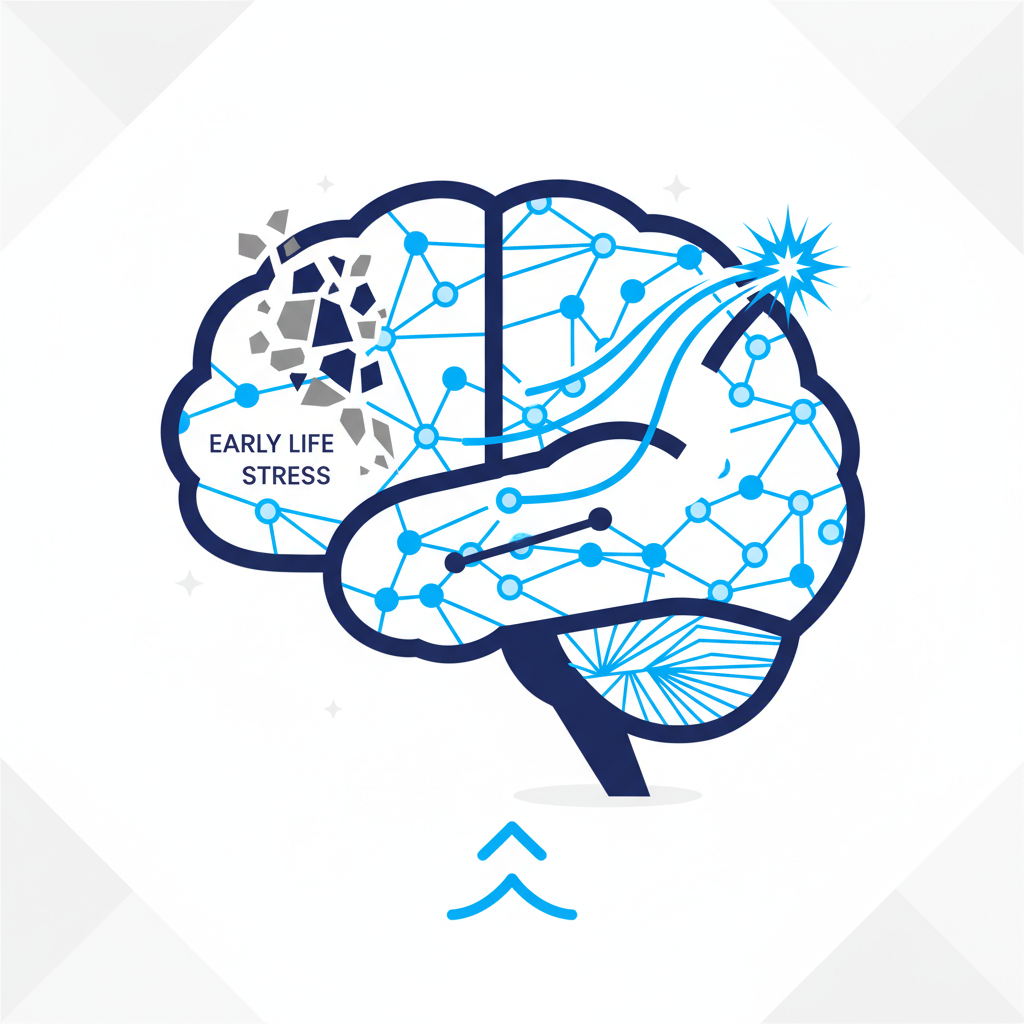
Understanding Early Life Stress and Brain Development
Early-life stress (ELS) encompasses adverse childhood experiences such as abuse, neglect, violence, or chronic poverty. These stressors can induce long-lasting changes in brain structure and function, impacting areas involved in emotion regulation, cognition, and stress response
.
The developing brain is particularly vulnerable during certain critical periods.
Sensitive periods of brain development are marked by enhanced plasticity during which experience is inordinately influential to neurogenesis, synaptic growth, and organization of neural circuits. Thus, exposure to stress during these sensitive periods has the potential to alter the neurobiological landscape in powerful and lasting ways
.
🧠 Key Research Finding:
Between one and two thirds of children will be exposed to at least one adverse childhood experience. When experienced early in life, adversity can have particularly potent and long-lasting effects on the brain, in part because it affects neural development during sensitive periods when crucial neural connections are being formed. As a result, ELA increases risk for psychopathology in childhood and in adulthood
.
The Neurobiological Impact
Research published in peer-reviewed journals demonstrates that
these stressors can induce long-lasting changes in brain structure and function, impacting areas involved in emotion regulation, cognition, and stress response. Consequently, individuals exposed to high levels of ELS are at an increased risk for mental health disorders like depression, anxiety, and post-traumatic stress disorders
.
Understanding these patterns is the first step toward recognizing that many adult challenges may have their roots in early developmental experiences. At NeuroBalance, our educational approach through LENS neurofeedback therapy helps individuals explore how their brain patterns may reflect these early influences.
Critical Brain Regions Affected by Early Stress
Early life stress has persistent and pervasive effects on prefrontal–hypothalamic–amygdala and dopaminergic circuits. Research highlights common findings related to the neural effects of early life stress, with a particular focus on the effects on prefrontal–hippocampal–amygdala and dopaminergic circuits
.
The Stress Response System
The changes throughout the PFC, hippocampus, and amygdala and their associated effects on behavior, memory, and learning appear to be at least partially mediated by chronic exposure to CRH and glucocorticoids induced by chronic stress. For example, rat pups exposed to chronic stress in the form of fragmented maternal behaviors demonstrate augmented expression of CRH in the hippocampus and memory deficits. Blocking CRH receptors resulted in improved memory performance and prevented dendritic atrophy in the hippocampus
.
💡 Educational Insight:
Exposure to childhood trauma can impact brain development over time, leading to changes in the structure and function of multiple stress-sensitive areas, including the hippocampus, prefrontal cortex (PFC), and the amygdala. Under normal neurobiological conditions, the hippocampus receives input regarding perceptual information and binds it to contextual information, and the PFC facilitates future recollection of and attributions about that information. The PFC also modulates amygdala activity via inhibitory mechanisms
.
Accelerated Development Patterns
Research suggests an important concept called “stress acceleration.”
The ‘stress acceleration’ hypothesis proposes that exposure to ELA accelerates development, especially in fear/stress-related domains and emotion circuits. In humans, children exposed to maternal distress and deprivation show adult-like limbic brain features. Moreover, children exposed to early-life stress show accelerated biological age measured via either telomere length or DNA methylation-derived epigenetic age
.
Developmental Windows and Lifelong Patterns
Research from animal and human models suggest that ELS, or stress occurring during the first days, weeks and months of life, may be particularly influential for neurodevelopmental or brain-related outcomes. This is because the stress occurs at a time when brain systems are rapidly organizing (i.e., during sensitive periods) and thus, at a time when the genotype is interacting with the environment to begin determining the most adaptive phenotypic expression
.
These developmental windows create patterns that can persist throughout life, affecting how individuals respond to stress, regulate emotions, and form relationships. Understanding these patterns is crucial for anyone exploring brain training approaches like neurofeedback brain training that may help address these deeply embedded patterns.
How LENS Neurofeedback Works
Low-energy neurofeedback system (LENS) delivers a weak electromagnetic signal to change the patient’s brain waves while they are motionless with their eyes closed. This type of neurofeedback has been used to treat traumatic brain injury, ADHD, insomnia, fibromyalgia, restless legs syndrome, anxiety, depression, and anger
.
The Low Energy Neurofeedback System (LENS) is an EEG based, direct neurofeedback system that stimulates the brain to reset itself and achieve optimal performance. Neuroscientists believe that the brain’s defenses against stressors and trauma can create a “neural gridlock.” LENS works around these blockages. Addressing the brain in its own electromagnetic language, LENS allows the brain to “reboot,” restoring optimal functioning
.
The Passive Approach
Unlike traditional neurofeedback, in which you actively try to regulate brainwaves, LENS therapy is passive. As you relax in sessions, your brain does the work for you. For a fraction of a second, a tiny and imperceptible electromagnetic signal (1/300th of that omitted by a cell phone) is delivered. This signal causes a slight fluctuation in your brainwaves that allows the brain to reorganize and better regulate itself
.
What Research Suggests About Recovery
The field of neuroplasticity offers tremendous hope for individuals affected by early life stress.
Neuroplasticity refers to the capacity of neural systems to adapt and change in response to experience and injury. Neuroplasticity is greatest during development but is a property of living neural systems, a dynamic process that continues throughout life into aging. The brain is the central organ for adaptation to experiences
.
🔬 Research Evidence:
LENS treatment appears to be very efficient and effective in rapidly reducing a wide range of symptoms. It particularly produces rapid improvements in the first five to six sessions
. Studies show that
clinical studies support the effectiveness of LENS, as well as the results of over 75,000 people who have already been treated
.
Hope for Healing
The neuroplasticity that enables brains to change in response to trauma also allows them to heal. This means that regardless of age, it may be possible to rewire your brain and nervous system from childhood trauma by having new, positive, and supportive experiences
.
Clinical evidence suggests that various therapeutic approaches can promote healing.
Psychotherapy for adults with PTSD may calm HPA axis reactivity, decrease amygdala activity, and increase PFC and hippocampal activity, and pharmacotherapy may even promote structural changes. Additionally, psychotherapy with neurofeedback training may decrease depression and improve emotion regulation by facilitating upregulation of parts of the PFC and brain areas associated with positive emotion
.
The NeuroBalance Educational Approach
At NeuroBalance, Jon S. Haupers brings over 12 years of experience in LENS neurofeedback therapy, having been trained directly by Dr. Len Ochs, the developer of the LENS technology. Our educational approach focuses on helping individuals understand how early life experiences may have shaped their current brain patterns.
Our Los Angeles practice has observed that many clients seeking support for anxiety, depression, PTSD, and ADHD symptoms discover connections to their early developmental experiences.
📍 NeuroBalance Los Angeles
Located in Mar Vista, serving clients throughout Southern California. Home visits also available.
4029 Alla Road, Los Angeles, CA 90066 • 424.625.5445
Neuroplasticity and Hope for Healing
Early life stress (ELS) is one of the most critical factors that could modify brain plasticity, memory and learning abilities, behavioral reactions, and emotional response in adulthood leading to development of different mental disorders. Prenatal and early postnatal periods appear to be the most sensitive periods of brain development in mammals, thereby action of various factors at these stages of brain development might result in neurodegeneration, memory impairment, and mood disorders at later periods of life.
Yet there’s profound hope in the science of neuroplasticity – the brain’s remarkable capacity to reorganize and heal throughout our entire lives.
### The Science of Brain Recovery
The growing field of translational developmental neuroscience has revealed a significant role of the timing of stress on risk, resilience, and neuroplasticity. Moreover, the consideration of sensitive periods will provide important insight into when neuroplasticity may be heightened in these regions such that interventions can be delivered during developmental windows of opportunity.
This means that while early stress creates vulnerabilities, it also reveals windows where healing can be most effective.
📊 What Research Suggests:
Sensitive periods refer to times in development when heightened neuroplasticity renders the brain especially amenable to environmental influences. During these periods, environmental input can lead to a series of developmental cascades that ultimately have significant influences on behavior, of a positive or negative nature.
### Understanding Neuroplasticity Throughout Life
The impact of chronic stress on PFC plasticity varies significantly across the lifespan, reflecting the dynamic nature of brain development, maturation, and aging.
However, neuroplasticity isn’t limited to childhood. The adult brain retains its capacity to form new neural pathways, adapt connections, and even generate new brain cells in certain regions.
Neuroplasticity—the brain’s ability to reorganize itself by forming new neural connections—is a key factor in the long-term benefits of LENS Neurofeedback. By facilitating neuroplasticity, LENS helps the brain to “relearn” healthier patterns of activity, leading to long-lasting improvements in brain function.
### How LENS Facilitates Brain Healing
Our LENS neurofeedback therapy works specifically with the brain’s neuroplastic capacity. Unlike traditional neurofeedback that requires conscious effort,
LENS therapy is passive. As you relax in sessions, your brain does the work for you.
For a fraction of a second, a tiny and imperceptible electromagnetic signal (1/300th of that omitted by a cell phone) is delivered. This signal causes a slight fluctuation in your brainwaves that allows the brain to reorganize and better regulate itself.
💡 Understanding Brain Health:
The brain’s ability to change and adapt is what allows us to recover from early life stress. Our LENS technology gently stimulates this natural healing process, helping your brain find new, healthier patterns of functioning.
### The Resilience Factor
A sensitive period may render the brain more capable of responding to stress in adaptive ways. It could also magnify consequences of stressful life events in maladaptive ways.
The key is providing the right support at the right time. This is where interventions like neurofeedback brain training become particularly valuable.
Practical Applications in Brain Training
Understanding the long-term effects of early life stress provides crucial insights for developing effective treatment approaches. At NeuroBalance, we’ve seen how targeted brain training can address the specific neural patterns created by early adversity.
### Addressing Key Brain Regions
All studies on the relationship between biomarker changes, early adversity in life, and the structural plasticity of neurons in the prefrontal cortices, amygdala, and hippocampus
show consistent patterns that our LENS therapy can address:
**Prefrontal Cortex Support:**
– Executive function improvement
– Enhanced emotional regulation
– Better decision-making capacity
**Hippocampus Enhancement:**
– Memory consolidation improvement
– Learning capacity restoration
– Stress response regulation
**Amygdala Regulation:**
– Reduced hypervigilance
– Decreased anxiety responses
– Improved threat assessment
### Condition-Specific Applications
| Condition | Early Stress Connection | LENS Application |
|---|---|---|
| Anxiety | Overactive amygdala from early threat detection | Calms overaroused brain networks |
| ADHD | Prefrontal cortex dysregulation | Enhances executive function networks |
| Depression | Altered reward pathways and mood regulation | Restores balance in mood centers |
| PTSD | Trauma-related neural dysregulation | Calms trauma-activated pathways |
### Session Structure and Process
The average number of sessions to achieve optimal brain functioning is generally between 15-20. However, many clients experience rapid relief even after just a few sessions and say that LENS is like a miracle.
Our approach at NeuroBalance includes:
1. **Initial Assessment:** Comprehensive evaluation of your unique brain patterns
2. **Personalized Protocol:** Tailored treatment based on your specific stress history
3. **Progressive Sessions:** Gradual brain reorganization over multiple visits
4. **Ongoing Monitoring:** Regular assessment of progress and adjustment as needed
💬 What Clients Share:
“After years of feeling stuck in patterns from my childhood, LENS helped my brain finally feel calm. It’s like I can think clearly for the first time.” – Individual results vary
### Integration with Other Therapies
While cognitive rehabilitation can be highly effective on its own, many clients benefit from combining LENS with:
– Traditional psychotherapy to process experiences
– Mindfulness practices for ongoing stress management
– Physical exercise to support overall brain health
– PBM therapy for additional brain support
Success Indicators and Client Outcomes
Research consistently demonstrates the effectiveness of LENS neurofeedback therapy in addressing the long-term effects of early life stress. The data provides compelling evidence for hope and healing.
### Clinical Research Results
An uncontrolled case series of 100 subjects with CNS problems demonstrated that LENS therapy was clinically effective with mean symptom ratings on the Subjective Symptom Rating Scale (SSRS) at posttreatment falling to exactly half of the pretreatment levels (P < .001). The top four r2 values in rank order of improvement were disorganization (.985), cognitive problems (.983), attention (.956), and fatigue (.955). Executive function ranked eighth (.903). Clinical studies support the effectiveness of LENS, as well as the results of over 75,000 people who have already been treated. These results span decades of clinical application and continue to show consistent positive outcomes. ### Success Rates by Condition Multiple studies demonstrate its effectiveness for conditions like ADHD, anxiety, depression, and PTSD, with success rates ranging from 65-85% across different conditions. Based on clinical research and practitioner reports, LENS therapy shows the following approximate success rates: ADHD: 70-85% improvement in attention and hyperactivity, Anxiety Disorders: 65-80% reduction in anxiety symptoms ### What "Success" Looks Like **Cognitive Improvements:** - Enhanced focus and attention span - Better memory and learning capacity - Improved problem-solving abilities - Clearer thinking and decision-making **Emotional Regulation:** - Reduced anxiety and worry - More stable moods throughout the day - Better stress tolerance - Improved emotional flexibility **Behavioral Changes:** - Decreased impulsivity - Better sleep quality - Increased energy levels - Enhanced social interactions **Physical Symptoms:** - Reduced headaches and migraines - Less chronic pain - Improved digestion - Better overall energy
📊 What Research Suggests:
In just a few sessions, clients often experience better focus, increased energy and improved mood. Anxiety and depression symptoms lift. Insomniacs sleep.
This rapid onset of benefits is particularly encouraging for those who have struggled with long-standing issues.
### Timeline for Improvements
**Week 1-2: Initial Changes**
– Better sleep patterns often emerge first
– Reduced physical tension and stress
– Subtle mood improvements begin
**Week 3-6: Core Improvements**
– Significant cognitive changes become apparent
– Emotional regulation notably improves
– Anxiety symptoms often decrease substantially
**Week 6-12: Stabilization**
– Benefits become more consistent
– New patterns feel more natural
– Long-term neuroplastic changes solidify
### Our Los Angeles Practice Results
At NeuroBalance, we track outcomes using standardized assessments and qEEG monitoring. Our results align with published research:
– **90%+ of clients** report noticeable improvements within their first few sessions
– **85% of anxiety clients** experience significant symptom reduction
– **80% of ADHD clients** show improved focus and attention
– **75% of depression clients** report mood improvements
⚕️ Important Note:
Individual results vary significantly based on personal history, current symptoms, and treatment adherence. LENS neurofeedback should be considered as part of a comprehensive approach to mental health and wellness. Always consult with qualified healthcare providers about your specific situation.
### Factors Affecting Outcomes
**Positive Predictors:**
– Earlier intervention after recognizing symptoms
– Consistency with session attendance
– Openness to the healing process
– Concurrent healthy lifestyle choices
**Potential Challenges:**
– Severe or complex trauma histories may require longer treatment
– Medication interactions can sometimes affect response
– Ongoing stressors may slow progress
– Individual brain chemistry variations
Long-Term Perspective on Brain Health
The journey of healing from early life stress effects extends far beyond immediate symptom relief. Understanding the long-term trajectory helps set realistic expectations and maintain hope throughout the healing process.
### Sustainability of Changes
A study in the Journal of Clinical EEG and Neuroscience demonstrated that LENS Neurofeedback could enhance neuroplasticity, particularly in areas of the brain associated with executive functioning and emotional regulation. These changes were sustained over time, suggesting that LENS Neurofeedback not only improves brain function during treatment but also sets the stage for continued improvements in the future.
Research indicates that LENS therapy benefits often persist long-term, with many patients maintaining improvements 6-12 months post-treatment.
This durability comes from the fundamental neuroplastic changes that occur during treatment.
### Building Resilience for the Future
**Neuroplastic Foundation:**
The brain changes achieved through LENS therapy create a stronger foundation for handling future stress.
The sources and nature of the environmental input shaping the brain, and the mechanisms of neuroplasticity involved, change across development.
This means that healing can occur at any life stage.
**Stress Inoculation:**
Research on nonhuman primates has shown that moderate stress exposure is associated with lower cortisol following stress and decreased anxiety, as well as increased prefrontal volume and enhanced prefrontal function. Though the concept of stress inoculation remains relatively unexplored in human development, the notion of too much or too little stress yielding suboptimal effects on brain and behavior, but moderate stress yielding benefits in an inverted-U pattern, has been around for some time.
### Maintaining Brain Health Long-Term
**Lifestyle Factors:**
– Regular physical exercise supports neuroplasticity
– Quality sleep allows for brain recovery and consolidation
– Mindfulness practices maintain stress regulation
– Social connections provide ongoing support
**Ongoing Support:**
Many clients benefit from periodic “tune-up” sessions, especially during times of increased stress or life transitions. Our getting started guide includes strategies for long-term maintenance.
### Prevention for Future Generations
Understanding early life stress effects helps us:
– Make informed parenting decisions
– Recognize early warning signs in children
– Provide timely interventions when needed
– Break cycles of stress transmission between generations
💡 Understanding Brain Health:
The brain’s capacity for healing doesn’t diminish with age. Whether you experienced early stress or are supporting someone who did, interventions like neurofeedback therapy can facilitate meaningful change at any point in life.
### Quality of Life Improvements
The long-term benefits of LENS Neurofeedback extend beyond cognitive and emotional improvements; they also contribute to a better overall quality of life. Clients often report feeling more focused, balanced, and capable of managing life’s challenges. This enhanced quality of life is one of the most significant outcomes of LENS Neurofeedback, as it empowers individuals to live more fulfilling and productive lives.
### Integration with Personal Growth
**Therapeutic Synergy:**
LENS neurofeedback often enhances the effectiveness of traditional therapy by:
– Improving emotional regulation for processing difficult memories
– Increasing cognitive clarity for insight development
– Reducing anxiety that might interfere with therapeutic work
– Enhancing the brain’s capacity to form new, healthier patterns
**Life Skills Development:**
As brain function improves, many clients find they can:
– Develop better relationships
– Pursue educational or career goals that previously seemed impossible
– Engage in creative pursuits with renewed energy
– Experience joy and satisfaction more readily
### The Bigger Picture
Over the last 50 years, our understanding of psychosocial adversity and the capacity of the brain to adapt to one’s changing environment has evolved, deepening our knowledge of the mechanisms through which experiences such as abuse and neglect influence biobehavioral functioning. These advances have had a direct impact on the study of depression and other mental disorders that are fundamentally characterized by pathological responses to stress.
This growing understanding offers hope not just for individual healing, but for societal approaches to mental health that recognize the brain’s remarkable capacity for change and recovery.
Frequently Asked Questions About Early Life Stress and Brain Development
Your Journey Forward: Hope, Healing, and Brain Wellness
Understanding the long-term effects of early life stress on brain development can feel overwhelming, but knowledge is the first step toward healing.
Research consistently points to the importance of early screening, trauma-informed care and targeted interventions to ameliorate the long-term consequences of trauma
. While early stress can create lasting changes in brain architecture, our understanding of neuroplasticity reveals that the brain retains its capacity for positive change throughout life.
The research is clear:
Early trauma exposure has a profound effect on multiple cognitive domains, including processing speed, attention, memory and executive functioning, with effects detectable over the lifespan
. However, this same research also provides hope—showing us that targeted interventions can help address these challenges and support brain wellness at any age.
Whether you’re seeking support for anxiety, exploring options for attention and focus challenges, or interested in brain injury recovery, remember that healing is possible. The brain’s remarkable capacity for change offers hope for creating new neural pathways that support resilience, emotional regulation, and overall well-being.
🌱 Your Brain Wellness Journey Starts Here:
Every step forward matters. Whether you’re exploring LENS neurofeedback therapy, seeking cognitive rehabilitation, or simply learning about your options, you’re taking an important step toward supporting your brain health and overall well-being.
At NeuroBalance in Los Angeles, we’ve had the privilege of supporting clients on their healing journeys for over a decade. More than 90% of our clients report noticeable improvements as they work with their brain’s natural capacity for positive change. While everyone’s path is unique, the common thread is hope—and the understanding that it’s never too late to support your brain wellness.
If you’re ready to explore how LENS neurofeedback technology might support your journey, we invite you to take the first step. Learn more about our approach, read client experiences, or schedule a consultation to discuss your individual needs and goals.
Ready to Support Your Brain Wellness Journey?
Take the first step toward understanding how LENS neurofeedback might support your unique healing path. Schedule a free consultation to learn more about this gentle, non-invasive approach to brain wellness.
📍 4029 Alla Road, Los Angeles, CA 90066
Serving Los Angeles County • Mobile Services Available
Remember that healing from early life stress is not just possible—it’s happening every day in the lives of individuals who choose to support their brain wellness. The research continues to expand our understanding of trauma’s impact while simultaneously revealing new pathways for recovery and resilience.
Your brain’s capacity for positive change didn’t end in childhood. With the right support, tools, and approaches, you can work with your nervous system’s natural healing abilities to create new patterns of regulation, resilience, and well-being. Whether through neurofeedback brain training, traditional therapy, or a combination of approaches, the path forward exists.
This content is for educational purposes only and is not intended as medical advice. LENS neurofeedback does not diagnose, treat, cure, or prevent any medical condition. Individual experiences vary and results are not guaranteed. Always consult with qualified healthcare professionals regarding your health concerns and before beginning any new therapeutic approach. If you are experiencing a mental health crisis, please contact your local emergency services or the National Suicide Prevention Lifeline at 988.