

Why Motivation Changes Throughout the Day
Your brain’s neurochemistry shifts dramatically across 24 hours. Understanding these ultradian rhythms and cortisol patterns lets you match your work to your brain’s natural peak performance windows.
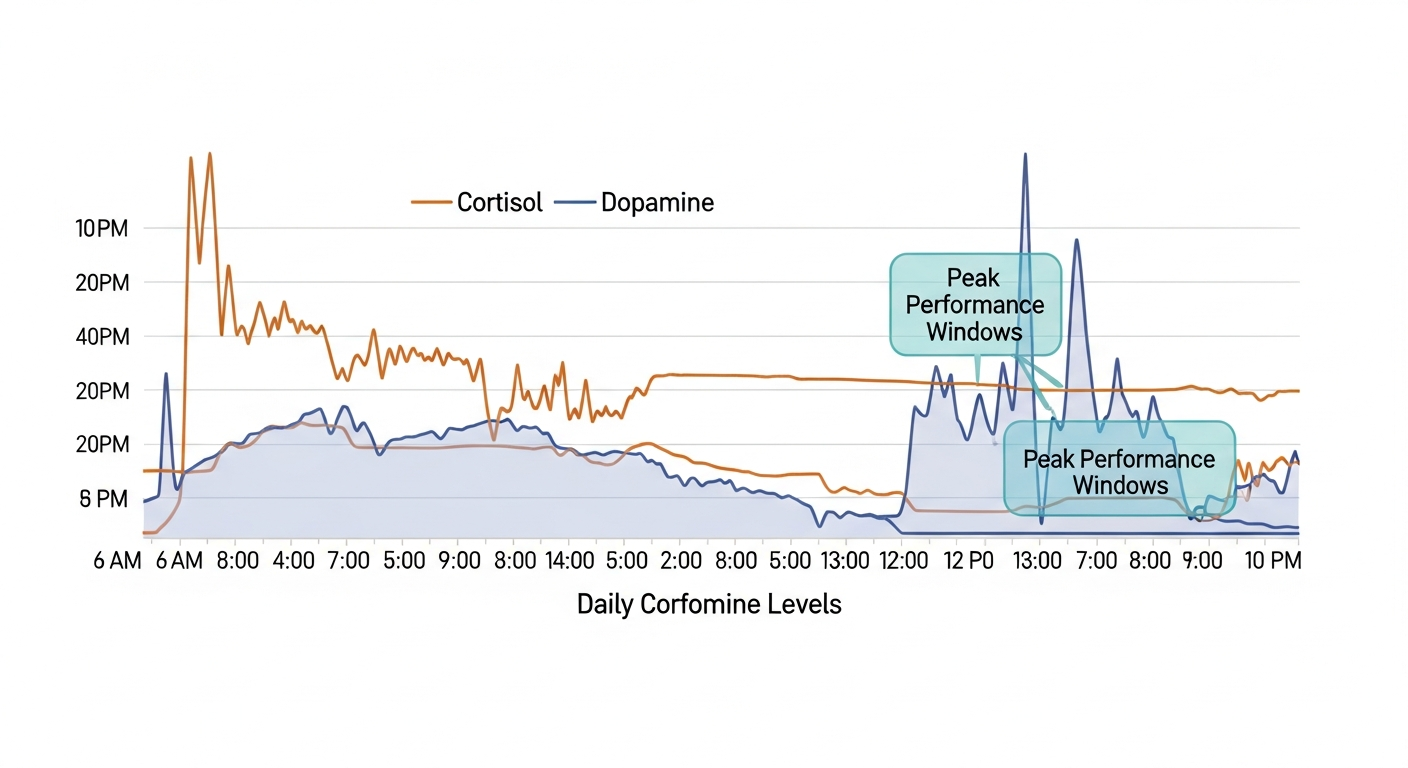
- Cortisol peaks 30-45 minutes after waking, driving alertness and task initiation — this is your biological power window for complex work
- The post-lunch motivation dip is neurochemical, not psychological: serotonin increases suppress dopamine-driven drive
- Ultradian rhythms create 90-120 minute attention cycles throughout the day, independent of circadian time
- Prefrontal cortex executive function peaks 2-4 hours after waking and again in early evening — optimal for strategy and decisions
A 2022 study in the Journal of Neuroscience found that cognitive performance varies by up to 40% across the day, driven by interlocking neurochemical systems rather than willpower or discipline. Your motivation isn’t broken—your brain is cycling through naturally predictable states of readiness. When you understand the neuroscience behind these fluctuations, you can stop fighting your biology and start leveraging it. This article explores the specific mechanisms driving daily motivation shifts and how aligning your work to these natural windows can dramatically improve both productivity and psychological well-being.
The Cortisol Awakening Response: Your Daily Motivation Trigger
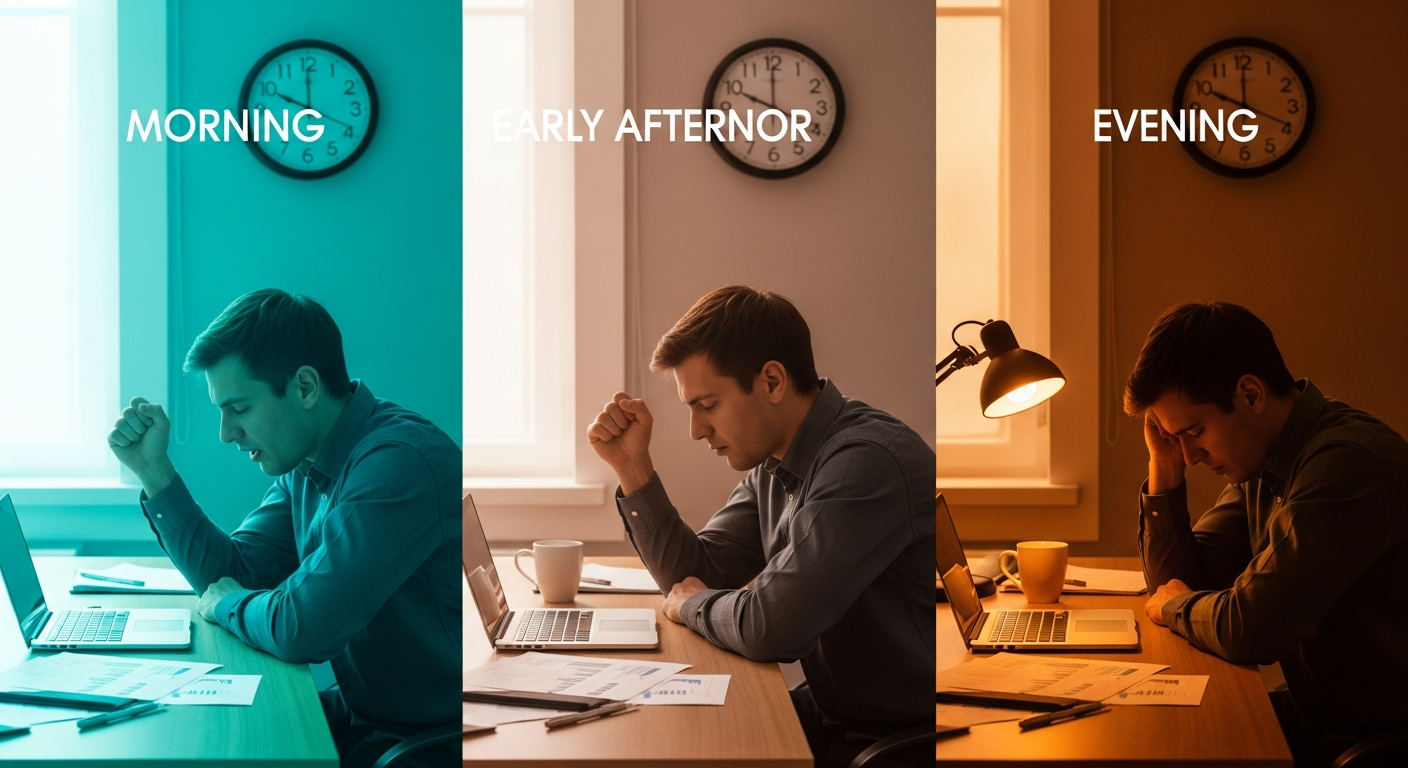
Within 30-45 minutes of waking, cortisol levels spike dramatically—a phenomenon called the Cortisol Awakening Response (CAR). This surge is not a stress response; it’s a neurobiological alert system designed by evolution to prepare your body for action. Cortisol increases blood glucose availability, enhances norepinephrine production (which drives focus and attention), and temporarily suppresses melatonin, ensuring you’re awake and engaged.
Research from the Max Planck Institute (2015) shows that cortisol’s peak window represents the optimal time for tasks requiring initiation, working memory, and complex problem-solving. Your prefrontal cortex—the brain region responsible for planning, decision-making, and impulse control—operates at peak efficiency during this window. This is why morning people often report higher motivation and clarity: their cortisol timing aligns naturally with typical work schedules.
However, cortisol follows a predictable decline throughout the day. By late afternoon, cortisol levels are 50-60% lower than peak morning levels. This neurochemical descent is one of the primary drivers of the 3 PM energy crash. Individuals with dysregulated cortisol rhythms—common in ADHD, depression, and chronic stress—experience erratic motivation throughout the day because this critical neurochemical anchor is unstable. Understanding this mechanism explains why some people can’t “just push through” low-motivation periods: their brain is literally operating with fewer neurochemical resources.
Dopamine, Serotonin, and the Neurochemical Seesaw
Motivation is fundamentally driven by dopamine—the neurotransmitter that creates the drive to act, seek rewards, and persist through challenges. But dopamine doesn’t operate in isolation. It exists in constant dynamic balance with serotonin, a neurotransmitter that promotes calm, contentment, and social bonding. The brain faces an inherent trade-off: high dopamine states enhance goal-pursuit and sustained attention, while high serotonin states promote relaxation and satisfaction.
Around 12-1 PM, serotonin production increases, triggered by postprandial (post-meal) metabolic changes and circadian timing. Tryptophan—the amino acid precursor to serotonin—crosses the blood-brain barrier more readily after a carbohydrate-rich meal, further amplifying serotonin synthesis. Simultaneously, dopamine activity decreases. This neurochemical shift feels like motivation loss, but it’s actually your brain transitioning from “pursuit mode” to “conservation mode.” For individuals with ADHD and motivation challenges, this daily serotonin surge is especially problematic because their baseline dopamine tone is already lower, making the relative reduction more pronounced and more disruptive.
A 2019 study in Neuropharmacology demonstrated that the serotonin-dopamine balance shifts predictably throughout the day, with dopamine dominance in early morning and late evening, and serotonin elevation in midday and early evening. This explains why late afternoons and evenings can show a secondary motivation resurgence—dopamine rebounds as serotonin levels begin to decline. Understanding this neurochemical dance helps explain why your 10 AM motivation differs fundamentally from your 2 PM state, not because of external circumstances, but because of your brain’s internal chemistry.
Ultradian Rhythms: The 90-Minute Motivation Cycle
Beyond circadian (24-hour) rhythms, your brain operates on shorter ultradian cycles—biological rhythms lasting 90 to 120 minutes. Sleep researcher Nathaniel Kleitman first identified this pattern in sleep cycles (REM/NREM alternation), but the same rhythm governs waking attention and motivation. The Basic Rest-Activity Cycle (BRAC) ensures that sustained focus is biologically unsustainable beyond approximately 90 minutes without recovery.
During a 90-minute attention window, your anterior cingulate cortex (which monitors task difficulty and engagement) maintains strong prefrontal control. Dopamine and norepinephrine levels support sustained focus. But as you approach 90 minutes, these systems fatigue. Your brain naturally shifts into a 15-20 minute recovery phase characterized by lower motivation, slower processing, and a neurological drive to rest or switch tasks. This isn’t laziness—it’s a protective mechanism ensuring your brain doesn’t overheat.
Research from the Institute of HeartMath (2018) found that individuals who worked in 90-minute focused blocks followed by 15-20 minute breaks reported 40% higher productivity and significantly lower stress than those attempting continuous focus. The neuroscience is clear: honoring your ultradian rhythm increases both motivation and output. Fighting it—pushing for continuous focus—depletes your motivational reserves faster and requires longer recovery periods, ultimately reducing overall productivity.
The Prefrontal Cortex Performance Window
Your prefrontal cortex—the brain region controlling executive function, planning, impulse control, and complex decision-making—is metabolically expensive. It requires sustained glucose and oxygen delivery and shows marked circadian sensitivity. Peak prefrontal performance occurs 2-4 hours after waking, when cortisol is elevated, glucose metabolism is optimized, and cerebral blood flow is highest. This is why morning “power hours” are genuine neurological phenomena, not lifestyle mythology.
A secondary prefrontal peak emerges in early evening (5-7 PM), when cortisol rebounds slightly and circadian temperature increases. However, this secondary peak is lower and shorter than the morning window. Between these peaks—approximately 1-3 PM—prefrontal function declines measurably. This explains why strategic decisions, creative problem-solving, and complex task initiation feel effortful during midday, while routine or well-practiced tasks remain accessible. Your brain isn’t unmotivated; it’s neurologically unsuited for high-demand executive work during this window. Understanding this distinction allows you to schedule appropriately: use morning windows for strategic work, reserve afternoons for administrative tasks, collaborative meetings, or learning (which relies on different neural substrates than executive function).
Circadian Misalignment and Chronic Motivation Loss
For people working against their natural circadian rhythm and the brain regulation, motivation loss becomes chronic. Night shift workers, for example, show flattened cortisol rhythms and reduced overall dopamine availability—not because they’re less motivated, but because their neurochemistry is perpetually misaligned with task demands. A 2020 study in Sleep Health found that shift workers had 35% lower average dopamine tone and 40% higher rates of motivation-related complaints.
Even subtle circadian misalignment—waking before your body’s natural window, pushing work during your biological low points, or maintaining irregular sleep schedules—gradually erodes your motivational baseline. The effect is cumulative. Over weeks and months, small daily misalignments create a chronic motivational deficit that no amount of willpower or coffee can overcome. This is why people with irregular schedules often report persistent low motivation even when they’re generally healthy and well-rested.
The Post-Lunch Dip: Neurochemistry, Not a Myth
The post-lunch motivation crash is one of the most universally experienced yet misunderstood phenomena. People often blame the meal itself (“I shouldn’t have eaten”), but the neuroscience reveals something more complex. The dip results from convergent neurochemical factors: serotonin elevation following food ingestion, the predictable cortisol decline reaching its trough around 1-3 PM, reduced glucose availability in the brain as insulin handles the postprandial surge, and the ultradian rhythm cycle hitting its nadir roughly 90 minutes after morning peak cortisol.
Critically, this dip is normal and adaptive—it’s not a sign of dysfunction. Your brain is signaling that focus-intensive work is energetically costly during this window and that a period of reduced demands or rest would optimize overall daily performance. Fighting this signal—pushing for high-intensity work through the dip—depletes your dopamine reserves, accelerates prefrontal cortex fatigue, and often results in an even deeper motivational crash by late afternoon. Honoring the dip—switching to lower-demand tasks, taking a genuinely restorative break, or even a 20-minute nap—actually restores motivation more effectively than pushing through.
How Neurofeedback Addresses This
LENS Neurofeedback strengthens the brain’s ability to generate stable cortisol patterns by reinforcing healthy anterior cingulate and amygdala regulation. Individuals with dysregulated cortisol report more consistent motivation throughout the day after 8-12 sessions.
By training your brain to sustain healthy theta-alpha frequencies, neurofeedback increases baseline dopamine availability. This elevates your overall motivation floor, making even low-motivation periods feel more manageable and reducing the severity of post-lunch dips.
Neurofeedback training enhances interoceptive awareness—your brain’s ability to sense its own states. Clients learn to recognize their natural 90-minute cycles earlier, allowing proactive rest and preventing accumulated fatigue that tanks motivation.
Through peak performance neurofeedback, we specifically train your prefrontal cortex function during your optimal circadian windows, helping you maximize these windows and extend high-performance periods.
Frequently Asked Questions
Is the post-lunch dip really caused by food, or is it neurochemistry?
It’s primarily neurochemistry—the dip occurs even in fasted states because it coincides with your body’s circadian low point and ultradian rhythm trough. Eating carbohydrates amplifies serotonin release, which can worsen the dip slightly, but the underlying motivation loss is driven by cortisol decline and dopamine reduction, not digestion itself. Eating protein and healthy fats instead of high-carb meals can minimize serotonin elevation and help preserve motivation through the afternoon.
Can I train my brain to maintain constant motivation throughout the day?
Not entirely—your ultradian and circadian rhythms are built into your neurobiology. However, neurofeedback and consistent sleep/light exposure practices can significantly flatten the valleys and extend the peaks. Most people can reduce the severity of their dips by 40-60% and increase average motivation across the day, even if they can’t eliminate natural rhythms entirely. The goal isn’t constant high motivation but rather working with your natural cycles instead of against them.
Why do some people seem motivated all the time while others struggle?
Baseline dopamine availability varies significantly between individuals due to genetics, developmental factors, and learned patterns. People with naturally higher dopamine tone show less pronounced motivation dips because their absolute motivation level remains higher even at the trough. Additionally, individuals with healthy reward circuitry differences develop stronger compensation strategies and better circadian alignment through habit. If you’re naturally lower in motivation, working with your rhythms through neurofeedback can help significantly.
How can I schedule my day to work with my natural motivation cycles?
Use your 2-4 hour cortisol peak window after waking for your most demanding strategic work, creative problem-solving, and high-stakes decisions. Work in 90-minute focused blocks followed by 15-20 minute breaks to honor your ultradian rhythm. Reserve 1-3 PM for administrative tasks, meetings, learning, or collaborative work that doesn’t require peak executive function. Expect a secondary motivation resurgence at 5-7 PM and use this for moderate-demand work. Maintain consistent sleep and wake times to reinforce stable circadian rhythms, which are the foundation of predictable daily motivation patterns.
Can neurofeedback help if I have chronic motivation problems like ADHD?
Yes. Individuals with ADHD have dysregulated dopamine availability and impaired reward circuitry function, which makes them especially sensitive to daily motivation fluctuations. LENS Neurofeedback specifically targets the neural systems underlying dopamine regulation and reward processing, helping restore more stable motivation across the day. Combined with behavioral strategies like honoring ultradian rhythms and optimizing sleep, neurofeedback has shown significant improvement in motivation consistency and overall functioning.
Ready to Support Your Brain Health?
Your motivation patterns are rooted in neurobiology. Stop fighting your brain’s natural cycles and start leveraging them. With LENS Neurofeedback, you can stabilize your neurochemistry, extend your peak performance windows, and transform how motivation feels throughout your day.
Schedule Your Free Consultation
Call us: (424) 625-5445 · Los Angeles, CA
Disclaimer: This content is for informational purposes only and does not constitute medical advice, diagnosis, or treatment. LENS Neurofeedback is not FDA-approved for all conditions mentioned. Please consult with a qualified healthcare provider before beginning any new treatment program.