

Why Resilience Is More Than Positive Thinking
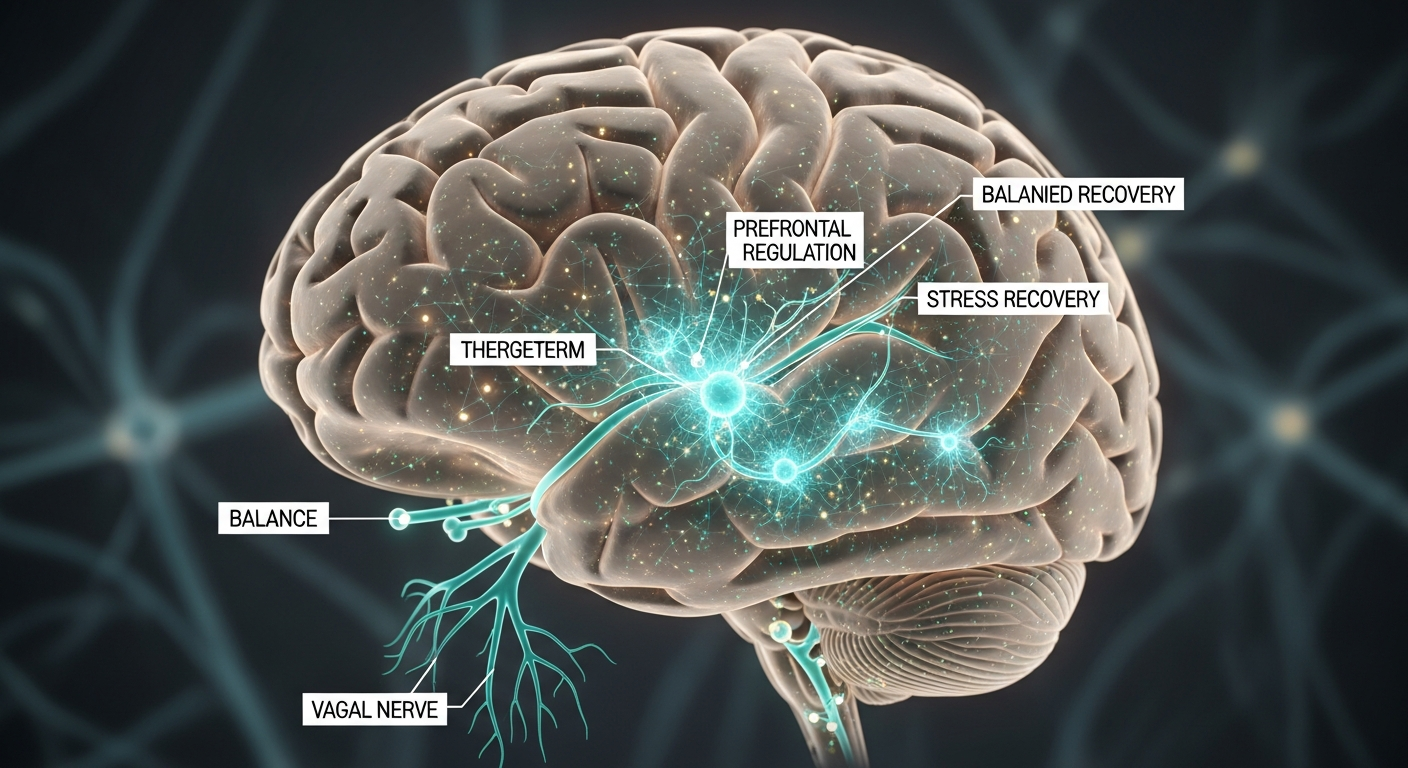
True resilience isn’t about willpower or mindset—it’s your nervous system’s ability to recover from stress. Neuroscience reveals that resilience depends on vagal tone, HPA axis regulation, and prefrontal cortex capacity, not thought patterns alone.
- Resilience is a nervous system property—your capacity to recover from stress, not suppress it
- The vagus nerve, HPA axis, and prefrontal cortex are the biological infrastructure of genuine resilience
- Positive thinking without nervous system regulation often masks dysregulation rather than solving it
- Neurofeedback directly trains the brain regions that control stress recovery and emotional regulation
You’ve probably heard the advice: think positive, reframe your thoughts, practice gratitude, and you’ll be resilient. But after a stressful meeting, financial worry, or personal conflict, positive affirmations alone don’t calm your racing heart or quiet the anxious chatter in your head. That’s because resilience isn’t a thought—it’s a physiological state. According to research from the American Psychological Association, approximately 65% of adults who rely solely on cognitive strategies for stress management report that their resilience plateaus after a few months, suggesting that thought-based approaches address only one layer of a multi-system problem. Genuine resilience emerges from a nervous system that can tolerate stress, recover quickly, and return to baseline. This article explores what neuroscience actually says resilience is, why it’s different from suppression or forced positivity, and how neurofeedback builds the foundational nervous system capacity that thoughts alone cannot create.
The Neurobiology of Resilience: Beyond Positive Thinking

Resilience in neuroscience is defined as your nervous system’s capacity to respond to a stressor, mobilize appropriate resources, and return to homeostasis. It’s not the absence of stress—it’s the speed and completeness of recovery. This recovery depends on three interconnected systems: the vagus nerve (which regulates your parasympathetic “rest and digest” response), the HPA axis (hypothalamic-pituitary-adrenal, which controls cortisol release), and the prefrontal cortex (which generates rational thinking and emotional regulation). When you experience a threat, your amygdala fires first—faster than conscious thought. Your HPA axis releases cortisol and adrenaline. Your heart rate rises, breathing quickens, and cognition narrows to survival mode. This is normal. Resilience isn’t preventing this response; it’s the ability to complete it. A resilient nervous system floods the prefrontal cortex with blood and neurotransmitters once the threat passes, allowing you to think clearly and calm down. A dysregulated nervous system stays locked in threat perception, keeping cortisol elevated and the prefrontal cortex offline. No amount of positive thinking will lower your cortisol if your vagus nerve isn’t signaling safety to your brain. This is where neurofeedback operates—at the level of nervous system training, not willpower.
Vagal Tone: The Hardware of Nervous System Resilience
The vagus nerve is the body’s primary communication highway between brain and body. It carries signals from your brain to your heart, lungs, digestive system, and back. Vagal tone—a measure of how efficiently the vagus nerve transmits these signals—is one of the strongest predictors of resilience. Higher vagal tone correlates with faster heart-rate recovery after stress, lower baseline inflammation, better emotional regulation, and greater social connection. Research published in Biological Psychiatry (2015) found that individuals with higher vagal tone showed significantly faster recovery from induced stress and reported better emotional well-being. The vagus nerve is like the accelerator and brake pedal for your nervous system: the sympathetic nervous system (accelerator) mobilizes you for action, and the parasympathetic nervous system (brake) via the vagus allows you to calm. A person with strong vagal tone can floor both pedals as needed—activating for challenge, decelerating for recovery. Someone with weak vagal tone gets stuck: either chronically activated (anxiety, hypervigilance) or unable to mobilize energy when needed (depression, fatigue). Positive thinking cannot strengthen vagal tone. Vagal tone is built through nervous system training: breathing patterns, biofeedback, movement, and increasingly through neurofeedback for resilience, which directly trains the brain regions that regulate the vagus.
The HPA Axis and the Difference Between Suppression and Regulation
The HPA axis (hypothalamus-pituitary-adrenal) is your body’s central stress response system. When you perceive threat, your hypothalamus releases CRH (corticotropin-releasing hormone), which signals the pituitary to release ACTH (adrenocorticotropic hormone), which signals the adrenal glands to release cortisol. This is healthy. Cortisol sharpens focus, increases blood glucose for muscle energy, and suppresses non-essential functions like digestion. The problem arises when this axis stays activated—when cortisol remains elevated hour after hour, day after day. This state, called allostatic load, accelerates aging, impairs memory consolidation, weakens immune function, and increases risk of depression and anxiety. Many people try to manage this through suppression: ignoring the feeling, pushing through, thinking themselves into calm, or using distraction. Suppression keeps the stress response active while pushing it out of consciousness. Regulation is different. It’s the nervous system’s ability to metabolize the stress response—to complete the cycle, process the experience, and return cortisol to baseline. A regulated response to a stressor looks like this: threat detected → sympathetic activation (heart rate up, focus sharp) → threat passes → parasympathetic activation (breathing slows, heart rate recovers, digestion resumes) → cortisol normalizes. An unregulated or suppressed response looks like: threat perceived → sympathetic stuck on → person intellectually tells themselves “it’s fine” → nervous system stays dysregulated → cortisol stays elevated. LENS neurofeedback works on HPA axis efficiency—training the brain to complete stress cycles rather than loop them, which is fundamentally different from cognitive reframing alone.
Prefrontal Cortex Capacity and the Limits of Willpower
Your prefrontal cortex—the region behind your forehead responsible for decision-making, planning, impulse control, and rational thought—is exquisitely sensitive to stress. When your amygdala detects threat, blood and glucose are redirected away from the prefrontal cortex and toward muscles and primitive brain regions. This is why panic makes you forget what you know. It’s not weakness; it’s neurobiology. A person with limited prefrontal capacity in moments of stress will struggle to access the thoughts they’ve practiced (gratitude, positive affirmations, reframes) because the neural resources to generate those thoughts aren’t available. They’re offline. Someone with robust prefrontal capacity—meaning their brain can maintain prefrontal activation even under moderate stress—can access those cognitive tools. But capacity isn’t built by thinking harder. It’s built by training the brain through exposure to manageable stress and recovery, which strengthens the circuits connecting the prefrontal cortex to the amygdala and other emotion-processing regions. This is where integrated brain health comes in: combining cognitive work with nervous system training ensures that both the thought capacity and the neurophysiological infrastructure to use those thoughts are actually present. Research in NeuroImage (2012) demonstrated that individuals with stronger prefrontal-amygdala connectivity showed significantly better emotional regulation under stress. Neurofeedback targets these exact circuits, building the brain capacity that willpower alone assumes already exists.
Allostatic Load: The Cost of Chronic Dysregulation
Allostatic load is the cumulative biological cost of chronic stress—the wear and tear on your body when the stress response runs continuously or incompletely recovers. It manifests in elevated cortisol, high blood pressure, impaired immune function, increased inflammation, metabolic dysfunction, and accelerated aging of the brain and body. A 2015 study in PNAS (Proceedings of the National Academy of Sciences) found that individuals with high allostatic load showed cognitive decline equivalent to 9.3 years of aging. The irony of relying solely on positive thinking is that it often coexists with high allostatic load: a person tells themselves everything is fine, practices gratitude, maintains a optimistic outlook—while their cortisol remains elevated, their heart-rate variability is low, and their immune function is compromised. The nervous system knows the truth. Over time, this gap between the narrative (“I’m resilient, I’m grateful, I’m handling it”) and the physiology (dysregulated, inflamed, exhausted) creates cognitive dissonance and often leads to burnout or sudden health crises. Real resilience reduces allostatic load. It allows the body to recover, cortisol to normalize, and inflammation to resolve. This requires nervous system healing, not just cognitive reframing. Understanding this distinction is especially important for people with negativity bias, which is a normal feature of human perception designed to keep us safe. Neurofeedback addresses the neural substrate beneath the bias, allowing for genuine threat assessment rather than forced positivity.
Why Neurofeedback Builds Resilience Where Positive Thinking Plateaus
Neurofeedback is a training system in which real-time feedback about your brain’s electrical activity (EEG) allows you to learn to regulate that activity. During a LENS (Low Energy Neurofeedback System) session, sensors measure your brain’s electrical patterns, and the system provides instantaneous feedback through audio-visual cues or subtle stimulation. Your brain learns through reinforcement: when it moves toward more optimal patterns, you receive positive feedback. Over sessions, your brain learns to sustain these patterns even without external feedback. The critical difference from cognitive approaches: you’re not deciding or thinking your way there. Your brain is learning autonomously, the way it learns to ride a bicycle or recognize faces—through repeated, reinforced experience. LENS Neurofeedback specifically targets the brain’s ability to reset after activation, to complete stress cycles, and to maintain regulation across different contexts. Research on LENS published in Journal of Neurotherapy (2019) found significant improvements in heart-rate variability, sleep quality, and emotional regulation. For anxiety treatment, this means the brain learns to deactivate the threat-detection system faster, not to argue with anxious thoughts. For stress resilience, it means your body recovers from challenge more completely. This is genuine, measurable change in nervous system function—not a shift in perspective, but a shift in capacity.
How Neurofeedback Addresses This
LENS Neurofeedback trains the ventral vagal complex, the evolutionarily newer part of the vagus nerve responsible for social engagement and calm alertness. Sessions progressively strengthen vagal tone, improving heart-rate recovery and emotional regulation without requiring conscious effort.
Neurofeedback teaches your brain to complete stress cycles—to activate when needed and deactivate completely when the threat passes. This normalizes cortisol rhythms, reduces allostatic load, and allows genuine recovery between challenges.
By improving amygdala-prefrontal communication, LENS increases your brain’s ability to maintain executive function under stress. This means cognitive tools (reframing, decision-making, planning) become accessible when you actually need them.
Rather than starting with thoughts and hoping the body follows, neurofeedback builds resilience from the nervous system up. When your physiology is regulated, positive thinking becomes authentic rather than a performance masking dysregulation.
Frequently Asked Questions
Does this mean positive thinking doesn’t work?
Positive thinking works best when the nervous system is already regulated enough to access prefrontal cortex resources. The limitation isn’t the value of cognitive reframing—it’s the false assumption that thought alone can regulate a dysregulated nervous system. Combining cognitive work with nervous system training (like neurofeedback) creates sustainable change because both the tool and the capacity to use it are present.
How quickly can neurofeedback improve resilience?
Most people notice subtle improvements in sleep, focus, or emotional reactivity within 2-3 weeks of regular LENS sessions. Measurable improvements in heart-rate variability, cortisol patterns, and stress tolerance typically emerge within 4-8 weeks. Full nervous system retraining usually takes 3-6 months of consistent sessions, but the improvements continue and compound over time.
Can I combine neurofeedback with therapy or coaching?
Absolutely. In fact, the combination is often more effective than either alone. Neurofeedback builds the nervous system capacity; therapy or coaching provides the cognitive frameworks and behavioral tools. Once your nervous system is more regulated, those cognitive and behavioral interventions become more accessible and produce faster results. Many clients find that insights from therapy make much more sense once their vagal tone improves.
What if I’ve tried everything and nothing helps?
Many people reach this point because they’ve been working at the cognitive or behavioral level without addressing the nervous system infrastructure. If thoughts, affirmations, exercise, and therapy haven’t shifted your baseline stress level, it often indicates nervous system dysregulation that requires nervous system retraining. This is exactly what neurofeedback addresses—the layer that other approaches may have missed.
Is LENS Neurofeedback right for me?
LENS works best for people who experience chronic stress, anxiety, sleep issues, emotional dysregulation, or burnout—especially those who’ve tried other approaches with limited success. During a free consultation, we assess your nervous system patterns, review your history, and determine whether LENS is the right next step. Even if it’s not the primary intervention, it often accelerates progress in other therapies.
Ready to Support Your Brain Health?
Resilience isn’t built through willpower alone—it’s built by training your nervous system to recover, regulate, and thrive. LENS Neurofeedback addresses the neurobiological foundation that positive thinking assumes is already present. Get started with a free consultation and discover how genuine nervous system resilience feels.
Schedule Your Free Consultation
Call us: (424) 625-5445 · Los Angeles, CA
Disclaimer: This content is for informational purposes only and does not constitute medical advice, diagnosis, or treatment. LENS Neurofeedback is not FDA-approved for all conditions mentioned. Please consult with a qualified healthcare provider before beginning any new treatment program.