

Why Some Children Thrive in Summer While Others Struggle
The difference isn’t motivation or parenting—it’s how a child’s nervous system processes change. Unstructured summer exposes fundamental neurological differences that thrive with structure or collapse without it.
- Summer success or struggle is rooted in nervous system regulation, not intelligence or willpower
- Unstructured time overwhelms children with ADHD, anxiety, and sensory processing challenges
- Predictability and external structure compensate for underdeveloped self-regulation circuits
- Neurofeedback can strengthen the brain’s ability to maintain calm, focus, and emotional balance during transitions
Summer break hits differently for every child. For some, it’s an explosion of freedom—they sleep in, play without agenda, and seem genuinely happy. For others, the loss of structure becomes a cascade of meltdowns, sleeping problems, screen addiction, and conflict at home. Research from the American Academy of Pediatrics (2023) found that approximately 30–40% of children experience significant behavioral escalation during unstructured summer months, yet this phenomenon is rarely explained through the lens of nervous system development. The culprit isn’t laziness, poor parenting, or a behavior problem—it’s that some brains are wired to need external structure to regulate. Understanding this distinction is the foundation for supporting your child through summer, and it opens the door to longer-term solutions like neurofeedback.
The Nervous System Cost of Unstructured Time

During the school year, structure is external. Bell schedules, teacher-directed transitions, lunch periods, and recess all create predictable frames that support developing brains. The prefrontal cortex—the brain region responsible for planning, impulse control, and emotional regulation—doesn’t fully mature until the mid-20s. For children whose nervous systems struggle with self-regulation (whether due to ADHD, anxiety, or differences in sensory processing), the school day is actually a scaffold that makes functioning possible. When summer arrives and that scaffold disappears, the nervous system must suddenly generate all that regulation internally, all day, with no external cues. For neurotypical children, this transition is manageable. For others, it’s exhausting and destabilizing.
Children with ADHD in children experience this acutely. The ADHD brain relies on immediate, external feedback to activate the dopamine systems that drive attention and behavior regulation. A teacher’s verbal cue, a visible checklist, a timer on the wall—these are neurochemically meaningful. They’re not “crutches”; they’re bridges between the developing nervous system and the demands of the environment. Remove them, and the child doesn’t automatically compensate. Instead, the brain defaults to stimulation-seeking (endless screen time, impulse buying snacks, picking fights with siblings) because it’s desperately trying to generate the dopamine and arousal it needs to feel organized. Studies from the National Institute of Mental Health (2022) confirm that children with attention dysregulation show a 40% increase in behavioral incidents during low-structure periods compared to school months.
How Sensory Processing and Emotional Regulation Collide in Summer
Beyond ADHD, many children struggle with sensory processing differences that summer exposes completely. During school, the sensory environment is moderately controlled—fluorescent lights, ambient noise, a structured pace. Summer is chaos: irregular sleep schedules, varied meal times, unpredictable social situations, unfiltered sensory input (pool days, crowded venues, changing locations). For children with autism spectrum differences or sensory processing sensitivities, this unpredictability triggers what clinicians call “sensory overload,” which the nervous system experiences as genuine threat. The result is dysregulation that looks like defiance, aggression, or emotional fragility—but it’s actually a nervous system in overdrive.
The interaction between sensory processing differences and emotional regulation creates a compounding effect. When a child is already sensorily overwhelmed, the brain’s capacity to regulate emotion shrinks dramatically. What would normally be a minor frustration (not being able to go to the park) becomes a full meltdown because the nervous system has no reserve left. A 2021 study in the Journal of Autism and Developmental Disorders found that children with sensory processing differences showed 2.5 times more behavioral escalation during unstructured versus structured days. Add irregular sleep (common in summer), and the dysregulation accelerates further.
Predictability as a Neurobiological Need, Not a Preference
Many parents are told to “let kids be kids” and avoid “over-scheduling.” This advice misunderstands how developing brains actually work. Predictability isn’t a luxury—it’s a neurobiological necessity for children with nervous system differences. The brain’s threat-detection system (the amygdala) is calibrated to notice novelty and unpredictability. In neurotypical brains, the prefrontal cortex quickly evaluates whether the change is actually dangerous and sends a “false alarm” signal that calms the amygdala. In brains with dysregulation, this signaling is slower or less effective. The result is that unpredictability itself becomes a source of chronic low-grade stress.
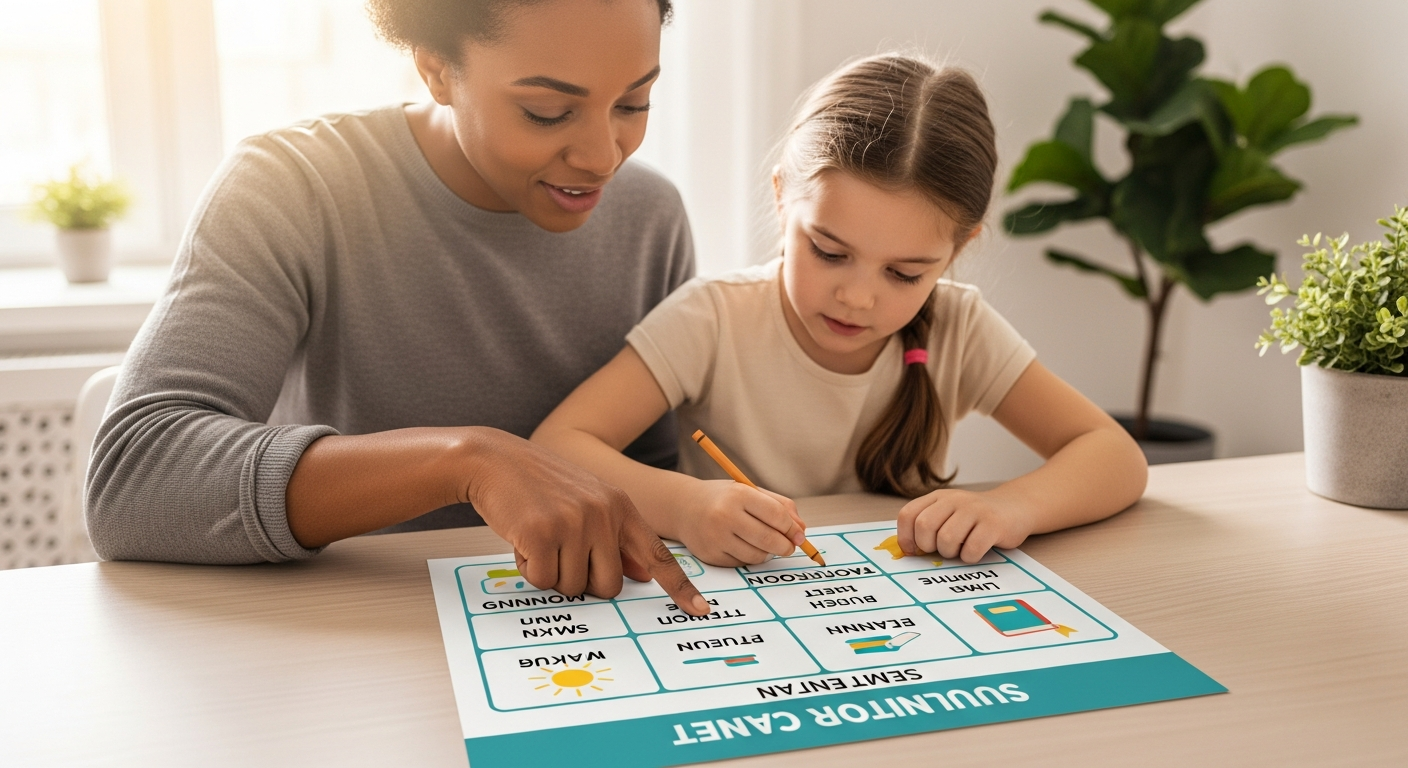
This is why structure—even modest structure—is transformative for many struggling children. Not because they’re “rigid” or “inflexible,” but because predictability allows their nervous system to downregulate its threat detection and actually invest energy in growth, creativity, and joy. A consistent wake time, a predictable meal schedule, set times for screen use, and planned transitions can be the difference between a summer of conflict and a summer where your child can actually relax. Paradoxically, children who need structure most often thrive most when given it—they develop better relationships, sleep better, show more creativity, and experience less anxiety.
The Cascade: How Summer Dysregulation Spirals
What starts as lost structure quickly becomes a cascade. Poor sleep (because the body clock has no anchor) leads to reduced emotional regulation. Reduced emotional regulation leads to childhood meltdowns and the brain escalates from manageable frustration to full dysregulation. Escalated behavior triggers parental stress and conflict, which the child senses, further destabilizing their nervous system. Screen time increases as a self-regulation tool (because it’s calming in the moment), which delays sleep further. By mid-summer, many families are stuck in a pattern of morning irritability, afternoon conflict, and evening dysregulation—and parents feel helpless because they’re trying to “let the kids relax,” when what the child’s nervous system actually needs is the opposite.
This spiral isn’t character failure—it’s neurobiology. The developing brain’s regulation systems are underdeveloped. Without external support, they deteriorate rather than improve. By August, many of these children have lost significant ground compared to June, and they return to school in September already dysregulated.
Why Some Children Genuinely Thrive (And What They Have in Common)
Children who thrive in summer typically share one key trait: their nervous systems are more resilient to unpredictability. This resilience is not earned; it’s neurobiological. They may have naturally higher dopamine availability (less ADHD-like symptoms), lower sensory sensitivity, or stronger default regulation in their prefrontal cortex. These children can genuinely function with minimal structure and use unstructured time to explore, play, and grow without dysregulation. This is genuine neurodiversity—not better or worse, just different. The challenge is that in a mixed family (where one child thrives unstructured and another crumbles), parents often assume the struggling child is “making a choice” or “being difficult,” when in fact the two children’s brains are responding to the exact same environment in completely different ways.
The Neurofeedback Opportunity: Building Regulation Capacity
While structure is essential for immediate support, there’s a longer-term solution: neurofeedback. LENS Neurofeedback is a non-invasive brain training approach that helps the nervous system develop stronger self-regulation capacity. By monitoring and gently correcting dysregulated brainwave patterns, neurofeedback teaches the brain to maintain calm, focused states even when external structure is reduced. Children who complete a course of neurofeedback often show increased resilience to transitions, better emotional regulation, improved sleep, and reduced reliance on external coping strategies like excessive screen time.
The goal isn’t to “fix” the child—it’s to strengthen the neural circuits that support regulation. This is especially valuable as children age and external structure (school) naturally decreases. A teenager who has built neurological regulation capacity through neurofeedback can handle summer, navigate college transitions, and manage real-world complexity in ways that brain training alone cannot teach.
How Neurofeedback Addresses Summer Dysregulation
Neurofeedback trains the brain to maintain calm, focused brainwave patterns independently. Children develop the capacity to self-regulate during unstructured time without constant external scaffolding.
Dysregulated nervous systems struggle with sleep transitions. Neurofeedback helps normalize sleep-wake cycles, which in turn reduces daytime dysregulation and emotional fragility.
As the brain learns to maintain regulated states, emotional responses become less reactive. Frustrations that once triggered meltdowns become manageable.
When the nervous system has built-in regulation capacity, children no longer need excessive screen time to self-soothe. They naturally seek varied activities and social connection.
Frequently Asked Questions
Why does my child struggle in summer but seem fine during school?
School provides external structure that supports developing regulation systems. The predictable schedule, environmental consistency, and immediate feedback from teachers compensate for any regulatory differences. Summer removes this support, and the child’s nervous system must generate all regulation internally. This isn’t a character flaw—it’s a mismatch between their current neurological capacity and the demands of an unstructured environment.
Is neurofeedback proven to help with summer dysregulation?
LENS Neurofeedback is supported by peer-reviewed research showing improvements in emotional regulation, sleep quality, and behavioral flexibility. While research is ongoing, hundreds of families report that neurofeedback completed before summer leads to noticeably better coping. The effects are strongest when combined with appropriate environmental structure—neurofeedback builds capacity, but structure still matters while that capacity develops.
Should I put my struggling child in summer camp or keep more structure at home?
Both can work, depending on your child. Some children thrive with structured camp (external regulation provided by counselors). Others find camp itself dysregulating (change of environment, new social demands). The best approach is usually a mix: consistent home structure with occasional structured activities. Crucially, avoid the pattern of letting them “decompress” with unstructured days—their nervous system may interpret this as permission to dysregulate.
How long does neurofeedback take to show results?
Most children show some improvements within 8–12 sessions. Significant, lasting changes typically emerge after 20–30 sessions. The timeline varies based on the severity of dysregulation and the consistency of treatment. If you’re considering neurofeedback before summer, starting in late spring allows time for meaningful progress before unstructured time begins.
Can I use structure and neurofeedback together, or should I choose one?
Use both. Structure is essential for immediate support and prevents the dysregulation spiral. Neurofeedback builds lasting capacity so your child eventually requires less external support. Think of it this way: structure is the bridge that gets your child through summer; neurofeedback is the foundation-building that makes future summers easier.
Ready to Support Your Child’s Brain Through Summer?
If summer dysregulation has been a pattern, neurofeedback can build the regulation capacity your child needs to truly thrive. We’ll assess your child’s specific nervous system patterns and create a personalized plan for the months ahead. Getting started is a simple conversation about what you’ve observed and what you want to change.
Schedule Your Free Consultation
Call us: (424) 625-5445 · Los Angeles, CA
Disclaimer: This content is for informational purposes only and does not constitute medical advice, diagnosis, or treatment. LENS Neurofeedback is not FDA-approved for all conditions mentioned. Please consult with a qualified healthcare provider before beginning any new treatment program.