

Why Some People Feel Exhausted After Socializing
Social exhaustion is a real neurological phenomenon rooted in how your brain processes sensory input and manages the cognitive load of social interaction. Understanding the mechanism explains why some people recover quickly while others need hours to recharge.
- Social exhaustion results from the brain’s inability to filter irrelevant sensory information during social engagement
- People with heightened sensory sensitivity, autism spectrum traits, or ADHD experience disproportionate cognitive load from socializing
- The thalamus acts as a sensory gate—when filtering is inefficient, your brain processes every sound, movement, and emotion
- Neurofeedback training strengthens neural efficiency, reducing recovery time after social events
Research from the American Psychological Association shows that approximately 30% of adults experience significant social exhaustion, with rates climbing to 50-70% among individuals on the autism spectrum or with ADHD (APA, 2023). The exhaustion isn’t psychological weakness—it’s a measurable outcome of how the nervous system allocates resources during social processing. When your brain must consciously filter sensory input that neurotypical brains filter automatically, the metabolic cost becomes real and cumulative.
The Sensory Overload Foundation
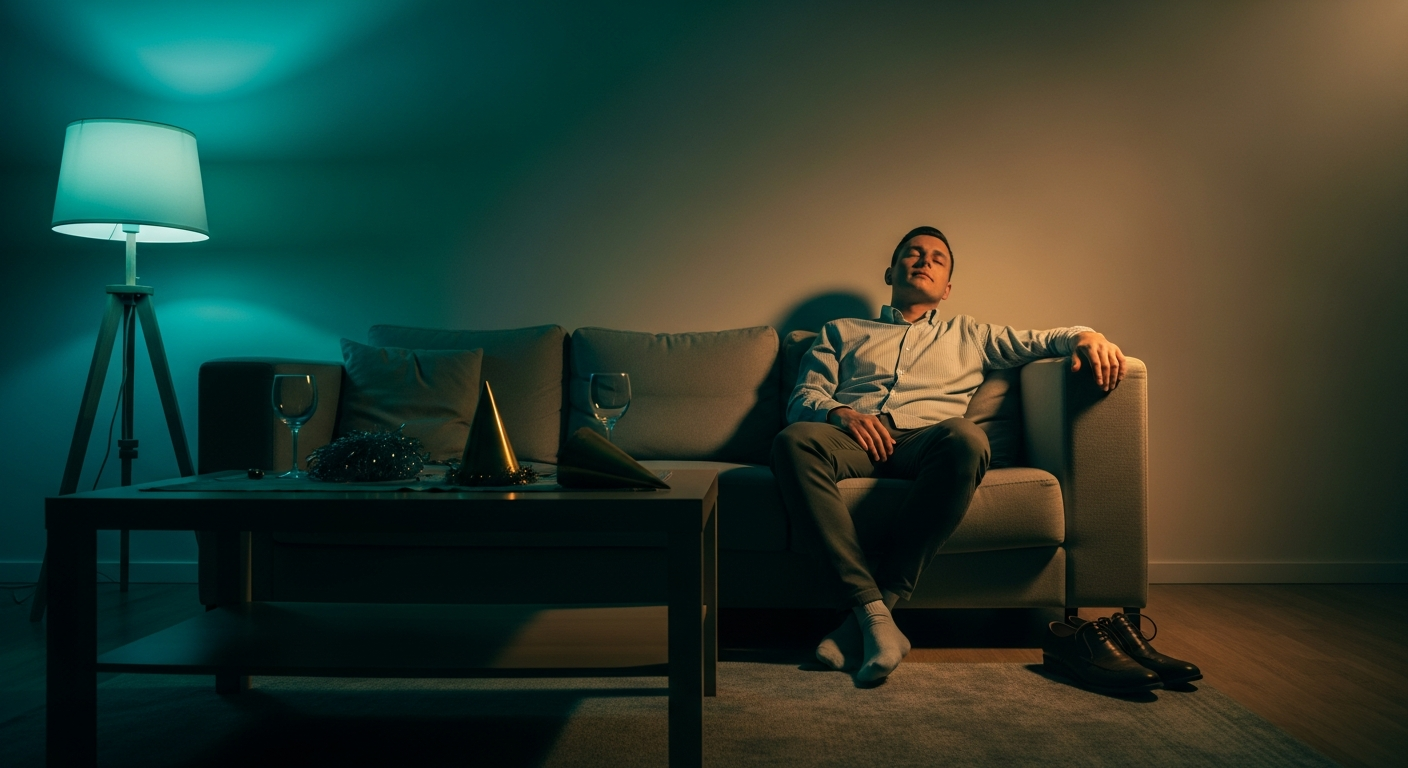
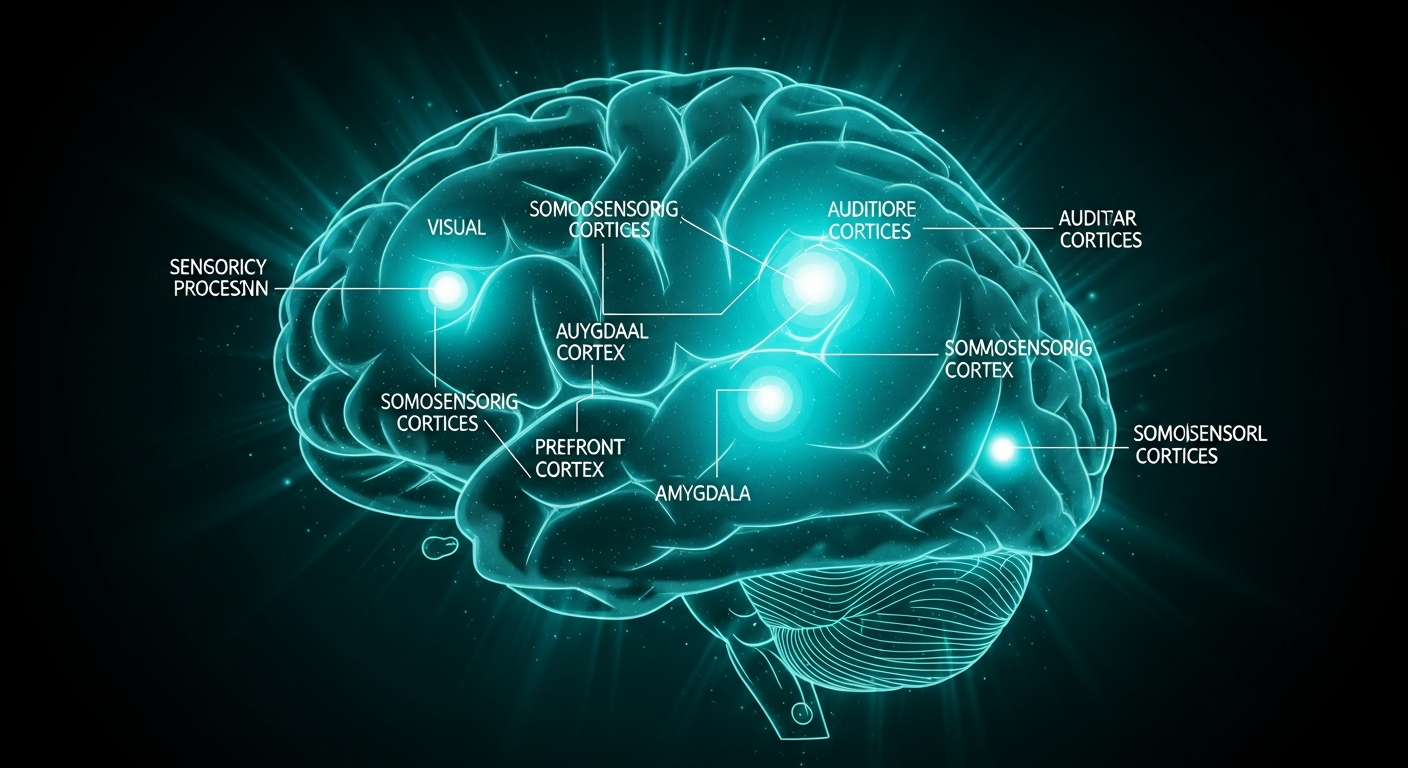
Social situations generate an overwhelming amount of sensory data. In a conversation with one person, your brain is simultaneously processing their voice tone, facial micro-expressions, body language, proximity, the ambient conversation around you, lighting changes, background music, and your own physiological responses. For most people, the thalamus—the brain’s sensory relay station—automatically filters out irrelevant information. You don’t consciously notice the hum of the air conditioning or the slight movement of someone’s chest during breathing. This automatic filtering is called sensory gating, and it operates below conscious awareness, preserving cognitive resources for meaningful social cues.
When sensory gating is inefficient, your thalamus fails to suppress the irrelevant signals. Instead of filtering, it broadcasts everything to your cortex for conscious processing. This is why people with heightened sensory processing sensitivities describe social settings as “loud,” “overwhelming,” or “too much”—not because the objective sound level is higher, but because their brain is processing every layer of acoustic information as though each signal carries equal importance. Over a 90-minute dinner party, this constant conscious processing exhausts the prefrontal cortex, the brain region responsible for attention, emotional regulation, and working memory.
The Social Cognition Tax
Social interaction demands extraordinary neural computation. Your brain must simultaneously track multiple people’s intentions, monitor your own behavior against social norms, predict what others are thinking (theory of mind), manage your emotional responses, and decide how to respond—all in real time. Neuroscience calls this the “social brain,” and it activates multiple networks: the mentalizing system (medial prefrontal cortex, temporoparietal junction), the mirror neuron system (premotor and parietal areas), and the amygdala-hippocampus network for emotional processing and memory encoding.
For neurotypical individuals, these networks operate efficiently. For people with ADHD and social energy constraints or autism spectrum traits, the same computation requires significantly more metabolic resources. Brain imaging studies show that individuals with autism experience heightened activity across sensory and social brain networks during social tasks—their brains are working harder to produce the same social output. This metabolic expenditure depletes glucose and neurotransmitters faster than baseline. After the social interaction ends, the brain enters a recovery state where these resources are replenished, which is experienced subjectively as the need to withdraw, be alone, and recover energy.
Interoception: Reading Your Own Nervous System
Interoception is the ability to sense your body’s internal state—your heartbeat, breath, muscle tension, gut signals, and overall nervous system arousal. During social engagement, your insula (the brain region that processes interoceptive information) works to maintain awareness of your physiological state so you can regulate your responses appropriately. However, when you’re in a high-sensory-load social situation, the brain must prioritize external sensory processing over internal monitoring. This creates a neural resource conflict.
Many people with social exhaustion report that they don’t realize how overwhelmed they are until the event is over—only then do they notice their elevated heart rate, muscle tension, or emotional dysregulation. This delayed recognition happens because interoceptive awareness was suppressed during the social demand. The nervous system was in sympathetic activation (fight-or-flight mode) the entire time, but conscious interoceptive feedback was downregulated in favor of social task performance. Once the external demand is removed, that suppressed interoceptive signal floods back, and people experience a “crash”—sudden fatigue, irritability, or the need for immediate solitude.
Why Recovery Takes So Long for Some People
The duration and intensity of recovery from social exhaustion varies dramatically. Some people need 30 minutes alone; others need 8+ hours. This variation reflects the degree to which sensory gating and social cognitive networks are dysregulated. When the thalamus is inefficient at filtering, and when social processing networks require excessive activation, the parasympathetic nervous system (rest-and-digest) must work harder to bring arousal back down to baseline.
Recovery isn’t laziness or introversion—it’s active neural recalibration. During this time, the brain is downregulating stress hormone production, rebalancing neurotransmitter levels (particularly serotonin and dopamine), and restoring glucose to depleted regions. The anxiety treatment literature shows that individuals with dysregulated nervous systems have a slower parasympathetic recovery curve, meaning their brains take longer to transition from sympathetic to parasympathetic dominance after a stressful event.
The Neurophysiology of Sensory Filtering
Healthy sensory gating depends on efficient communication between the thalamus (sensory relay) and the reticular activating system (RAS), a network in the brainstem that regulates arousal and attention. The RAS acts as a gate-keeper: it receives input from the thalamus and decides which signals warrant conscious attention and which should be filtered. This filtering is mediated by specific neural oscillations—electrical patterns in the brain called theta and alpha rhythms. When these rhythms are dysregulated, the gate opens too wide, and irrelevant sensory information floods consciousness.
The neurotransmitter GABA (gamma-aminobutyric acid) plays a critical role in this gating function by inhibiting unnecessary neural firing. When GABA signaling is suboptimal, the nervous system becomes hypersensitive and hyperactive. This is why people with ADHD, autism, and anxiety often experience social exhaustion—their systems have reduced capacity for GABA-mediated inhibition, meaning more neural noise gets through the filter.
Recognizing Your Personal Exhaustion Pattern
Social exhaustion manifests differently for different people. Some experience it as cognitive fog and difficulty concentrating. Others feel emotional overwhelm, irritability, or a sudden drop in mood. Physical symptoms include muscle aches, headaches, or a feeling of heaviness in the limbs. The key diagnostic feature is that these symptoms are triggered by social engagement and resolve with solitude and recovery time. If exhaustion occurs regardless of social engagement, the underlying cause may be integrated brain health factors like sleep deprivation, chronic stress, or metabolic dysfunction rather than social processing specifically. Understanding which pattern applies to you is essential for effective intervention.
How Neurofeedback Addresses This
Restores Sensory Gating Efficiency
LENS Neurofeedback trains the thalamus and RAS to filter irrelevant sensory information automatically, reducing the conscious processing load during social situations. By rebalancing theta and alpha oscillations, your brain naturally suppresses sensory noise without effort.
Strengthens Parasympathetic Recovery
Neurofeedback enhances your nervous system’s ability to downregulate arousal after social stress. Over multiple sessions, your recovery time decreases—what previously took 8 hours may take 2-3 hours, dramatically improving your quality of life.
Optimizes Interoceptive Awareness
By training the insula to maintain real-time interoceptive signals even during social engagement, neurofeedback allows you to recognize and regulate your nervous system state in the moment, preventing overwhelm and crashes.
Increases Social Stamina
As your brain becomes more efficient at processing social information, you’re able to engage socially for longer periods without exhaustion. This is not pushing through discomfort—it’s genuine neural optimization that expands your capacity.
Frequently Asked Questions
Is social exhaustion the same as introversion?
No. Introversion is a personality trait—a preference for solitude and smaller social settings. Social exhaustion is a neurological response to the sensory and cognitive demands of socializing. An introvert may enjoy socializing without exhaustion; a person with social exhaustion may want to socialize but physically cannot sustain it. The distinction is important because it changes how you approach treatment and self-care.
How long does neurofeedback take to show results for social exhaustion?
Most clients report noticeable improvements in recovery time within 4-8 weeks of twice-weekly LENS sessions. Some people notice changes in their capacity to filter sensory noise after just 2-3 sessions. The brain’s neuroplasticity allows for genuine change, but consistent training is required. Individual results vary based on the severity of dysregulation and your nervous system’s response to feedback.
Can I still have social exhaustion if I’m not autistic or have ADHD?
Absolutely. While autism and ADHD are strong predictors of social exhaustion, anyone with dysregulated sensory gating or anxious nervous system traits can experience it. Trauma, chronic stress, sleep deprivation, and certain genetic variations in GABA signaling all contribute. Neurofeedback is effective regardless of diagnosis because it addresses the underlying neural mechanism rather than the diagnostic label.
What if I need to attend social events before my neurofeedback training shows results?
Practical strategies can help immediately: limit the duration of social exposure, take planned breaks, reduce sensory complexity (quieter venue, smaller group), and schedule recovery time afterward. Inform trusted people that you need to leave early without judgment. These aren’t avoidance—they’re intelligent nervous system management while you’re undergoing treatment. As neurofeedback works, you’ll need these accommodations less.
Is medication a treatment for social exhaustion?
Medications like SSRIs or stimulants can help manage associated conditions like anxiety or ADHD, which may reduce some factors contributing to social exhaustion. However, no medication directly retrains sensory gating or enhances the thalamic filtering mechanism. Neurofeedback works at the neurophysiological level to actually improve the brain’s filtering capacity, making it uniquely effective for the core mechanism underlying social exhaustion.
Ready to Support Your Brain Health?
If social exhaustion has been limiting your relationships, career, or quality of life, neurofeedback offers a pathway to genuine change. Our LENS Neurofeedback specialists will assess your nervous system’s current state and design a personalized training protocol. Most clients experience measurable improvements in recovery time and social capacity within weeks.
Schedule Your Free Consultation
Call us: (424) 625-5445 · Los Angeles, CA
Disclaimer: This content is for informational purposes only and does not constitute medical advice, diagnosis, or treatment. LENS Neurofeedback is not FDA-approved for all conditions mentioned. Please consult with a qualified healthcare provider before beginning any new treatment program.