
Why a Child Can Hold It Together at School—and Fall Apart at Home
A child can be genuinely fine at school and genuinely not fine at home an hour later, and both reports can be accurate. Research on effortful control separates two kinds of self-regulation — the kind school mostly demands, and the kind an evening at home mostly demands — and they are not the same capacity.
- Effortful control is the capacity to suppress a dominant response and produce a different one — the machinery of holding it together.
- It is not one thing. ‘Cool’ control (inhibition, attention, go/no-go) and ‘hot’ control (suppressing an emotionally charged response) predict different outcomes (Kim et al., 2013).
- It is also not static. Across ages 10–19 it follows a U-shaped path — falling from 10 to 14, then rising to 19 (Atherton et al., JPSP, 2020).
- The specific claim that a school day depletes an evening’s regulation is plausible and not directly demonstrated. It is a reading of adjacent evidence, not a finding.
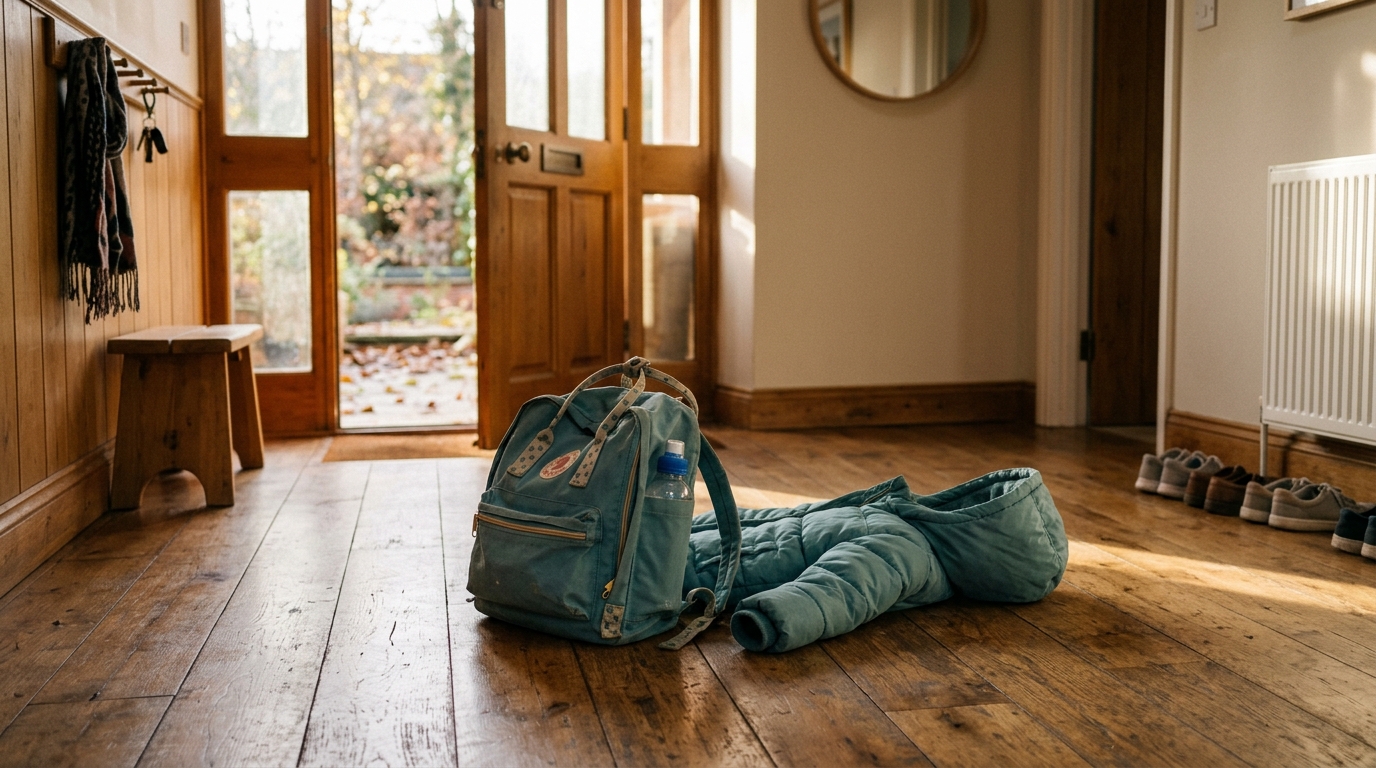
It is 3:20 and the child coming across the playground looks fine. The teacher, if you catch her, says the day went well — settled, joined in, no concerns. In the car the answers are short but not unusual. Then somewhere between the front door and the kitchen, over something genuinely small, the whole thing comes apart. Twenty minutes, from fine to not fine, with nothing visible in between to explain it.
Two Accurate Reports
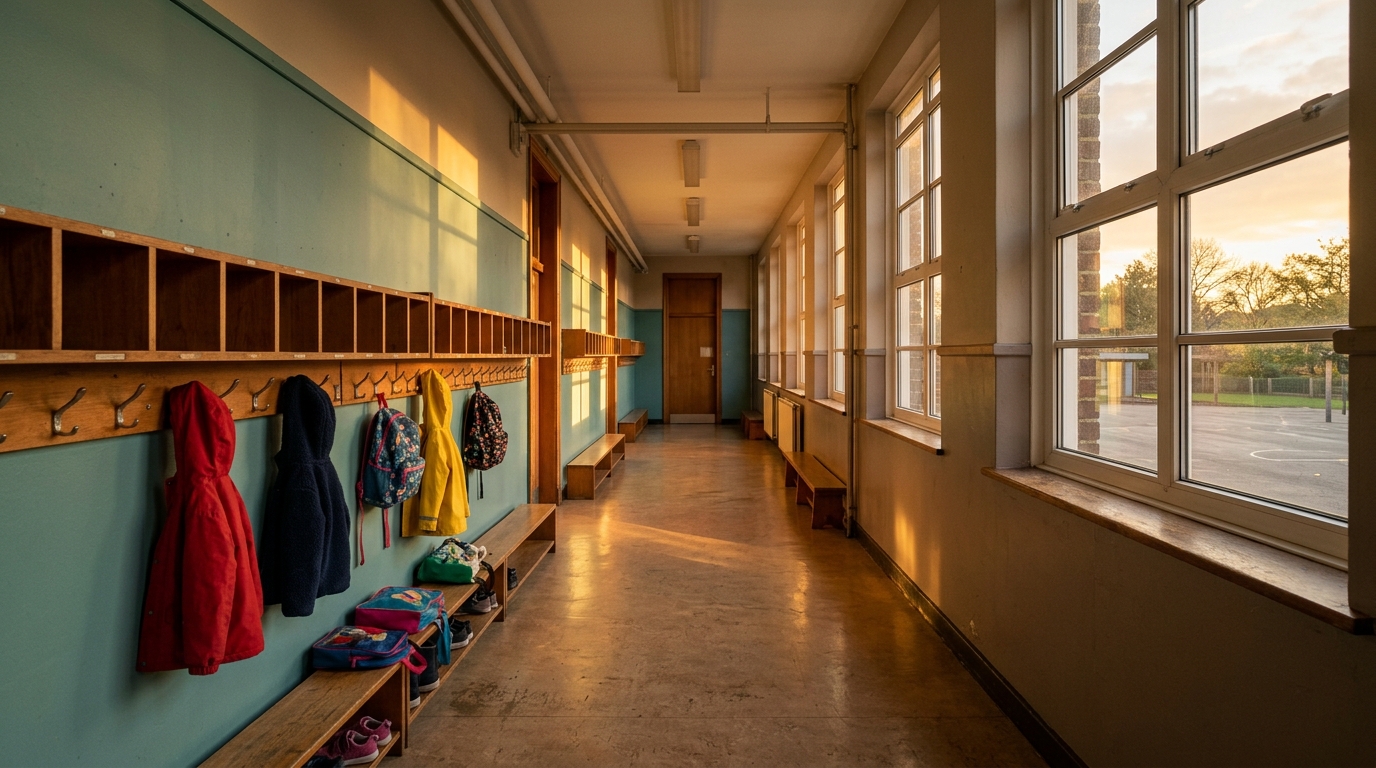
The instinct is to decide which report is the real one. Either school is missing something, or the behaviour at home is about something else — a manipulation, a habit, a problem with the evening routine.
There is a third possibility, which is that both reports are accurate and they are describing different demands. That is not a rhetorical dodge. There is a distinction in the research literature that makes it concrete.
Effortful Control Is Not One Thing
Effortful control is the technical name for the capacity in question: deliberately suppressing a dominant response in order to produce a different one. Not wanting to sit still and sitting still anyway. Wanting to answer back and not answering back.
A 2013 study asked whether treating that as a single capacity was hiding something, and separated it into two kinds. ‘Cool’ effortful control covers the more abstract functions — motor inhibition, go/no-go tasks, Stroop-like effortful attention. ‘Hot’ effortful control covers suppressing an emotionally charged response, measured with delay-of-gratification tasks (Kim et al., Journal of Abnormal Child Psychology, 2013).
The reason the split matters is that the two predicted different outcomes: one tracked with behaviour problems, the other with academic performance. If they were the same underlying capacity measured two ways, that would not happen.
What a School Day Mostly Asks For
Look at a school day through that distinction and it is heavily weighted toward the cool side. Sit here. Attend to this. Wait your turn. Stop what you were doing and start something else because the bell went. Ignore what is happening at the next table.
That is a long, continuous demand, and it is scaffolded — the structure carries a lot of the load, expectations are explicit, and there is very little unallocated time in which a difficult moment can develop.
An evening at home is weighted the other way. Less structure, fewer external cues, and the demands that do arise are the emotionally charged ones: being told no, losing at something, a sibling, the end of screen time. That is hot control territory.
Where the Evidence Stops
Here is the part usually left out. The research above establishes that hot and cool effortful control are distinguishable and predict different things. It does not establish that a day of cool demand depletes the hot capacity available later.
That step — the one that makes the story satisfying — is an inference. It is a reasonable one, consistent with what is known about effortful tasks being effortful, and it has not been demonstrated in the form in which parents usually hear it.
So the honest version is narrower: the capacity to hold it together is real, measurable, made of at least two separable parts, and finite in the ordinary sense that everything effortful is finite. Whether school specifically spends the part that the evening needs is not something these studies answer.
It Also Changes With Age, in a Direction That Surprises People
A longitudinal study following 674 young people at ages 10, 12, 14, 16 and 19 found effortful control was moderately stable across that whole span (a correlation of .47 from 10 to 19) — but its trajectory was not a straight climb.
It followed a U-shape: decreasing from age 10 to 14, then increasing from 14 to 19 (Atherton et al., Journal of Personality and Social Psychology, 2020).
A dip in the capacity to regulate impulses through the early teens, followed by recovery, is worth knowing about for its own sake. It means a child getting harder to live with at twelve is doing something the population data also does, and that the direction of travel afterwards is upward.
What Actually Follows From This
Mostly that the after-school hour is a poor moment to draw conclusions from, and a poor moment to schedule anything requiring negotiation.
It also suggests the question worth asking is not ‘what happened today’ — which often produces nothing, because frequently nothing did — but whether the pattern is specific to the transition or general. A child who is difficult only in that window and settled afterwards is telling a different story from one who is struggling across the day.
The other half of this, the part that is measurable rather than inferred, is sleep: the September schedule change subtracts from it at exactly the time of year this pattern is most noticed. And where the difficulty looks less like tiredness and more like too much incoming signal, that is a different question about filtering.
What the Research Supports — and What It Doesn't
Two Kinds of Control
‘Hot’ and ‘cool’ effortful control are distinguishable and predict different outcomes — behaviour problems versus academic performance.
A Real, Finite Capacity
Suppressing a dominant response is effortful. That much is established and measurable.
Depletion Is an Inference
That a school day spends the capacity an evening needs is a plausible reading of adjacent evidence, not a demonstrated finding.
It Dips, Then Recovers
Across ages 10–19 effortful control falls to about 14 and rises after — a population pattern, not a prediction about one child.
Frequently Asked Questions
Is my child behaving badly on purpose at home?
The research described here does not support reading it that way, and it does not support the opposite conclusion either. What it establishes is that the capacity for deliberate self-control is real, effortful and made of separable parts, and that the demands of a structured school day and an unstructured evening are not the same demand.
What is the difference between 'hot' and 'cool' self-control?
‘Cool’ effortful control covers abstract functions — motor inhibition, go/no-go tasks, effortful attention. ‘Hot’ effortful control covers suppressing an emotionally charged response, measured with delay-of-gratification tasks. In a 2013 study the two predicted different outcomes, which is the evidence that they are not simply one capacity measured twice.
Does school 'use up' a child's self-control for the evening?
That specific claim has not been demonstrated. It is a reasonable inference from the fact that effortful tasks are effortful and that hot and cool control are separable, but the studies here did not test a school day depleting an evening’s capacity. It is worth holding as a plausible reading rather than a finding.
Should I be worried that it gets worse around age twelve?
A longitudinal study of 674 young people found effortful control decreased from age 10 to 14 and then increased from 14 to 19 — a U-shape at the population level. That is context rather than reassurance about any individual, but a dip in that window is a documented population pattern rather than a sign of something going wrong.
When is this worth taking further?
When the difficulty is not confined to the transition home, when it does not ease as a term settles, or when it is causing real distress to the child or the household. Group findings about self-regulation cannot tell any parent what is happening with their own child, and persistent difficulty is worth discussing with a qualified professional.
Sources
- Kim S, Nordling JK, Yoon JE, Boldt LJ, Kochanska G. Effortful control in "hot" and "cool" tasks differentially predicts children's behavior problems and academic performance — Journal of Abnormal Child Psychology, 2013
- Atherton OE, Lawson KM, Robins RW. The development of effortful control from late childhood to young adulthood — Journal of Personality and Social Psychology, 2020
When the Pattern Doesn't Settle
Research describes what is typical across groups of children. Understanding one child means sitting down with that child. NeuroBalance is a small independent practice in Los Angeles — private one-to-one sessions, the same practitioner each visit, in a quiet setting, over fourteen years. A brain health assessment is where that starts.
Schedule Your Free Consultation
Call us: (424) 625-5445 · Los Angeles, CA
Disclaimer: This content is for informational purposes only and does not constitute medical advice, diagnosis, or treatment. LENS Neurofeedback is not FDA-approved for all conditions mentioned. Please consult with a qualified healthcare provider before beginning any new treatment program.

A balanced brain is a better brain for a happier life.